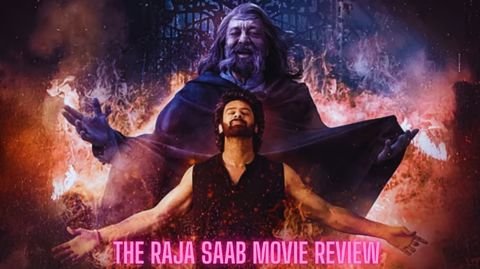
Introdaction
In Indian cinema, few stars command the kind of attention, patience, and faith that Prabhas does. Ever since Baahubali transformed him from a regional superstar into a pan-Indian phenomenon, every project carrying his name has arrived not merely as a film, but as an event. The Raja Saab is no exception. However, what makes this film particularly intriguing is not just the presence of Prabhas, but the unusual genre, tonal ambition, and the creative risk it represents in the current landscape of big-budget Indian cinema.
Directed by Maruthi, a filmmaker primarily known for light-hearted entertainers and emotional family dramas, The Raja Saab promises a blend of horror, comedy, romance, and mass appeal. This combination alone makes it one of the most curious pre-release prospects in recent years. Can a star of Prabhas’s magnitude successfully anchor a genre that relies as much on subtle humor and timing as it does on spectacle? Can a director known for smaller emotional narratives handle a project mounted on a massive scale? And most importantly, can The Raja Saab balance fan expectations with cinematic freshness?
This pre-release review examines The Raja Saab not as a finished product, but as a cinematic promise—based on promotional material, creative choices, industry context, and audience psychology.

The Weight of Expectations
To understand The Raja Saab, one must first understand where Prabhas currently stands in his career. Post-Baahubali, the actor has faced a paradox: unparalleled stardom paired with mixed critical reception. Films like Saaho, Radhe Shyam, and Adipurush carried immense hype but struggled to convert that anticipation into unanimous acclaim. Yet, Prabhas’s fan base has remained remarkably loyal, demonstrating a rare patience that most stars only dream of.
With Salaar, Prabhas reconnected with the mass action space, reaffirming his box office strength. The Raja Saab, however, takes a different route entirely. It steps away from brute force and mythology and instead leans into entertainment that is playful, spooky, romantic, and character-driven. This shift itself feels like a conscious decision—a reminder that Prabhas is not only a larger-than-life action figure but also an actor capable of warmth and humor.

A Genre Cocktail: Horror Meets Humor
One of the most discussed aspects of The Raja Saab is its genre. Horror-comedy is a tricky territory. When done well, it creates memorable cinematic experiences (Stree, Bhool Bhulaiyaa, Kanchana). When mishandled, it can descend into tonal confusion.
From early glimpses, The Raja Saab appears to draw inspiration from classic haunted-house narratives, infused with a modern commercial sensibility. The visual palette suggests an eerie yet colorful world—abandoned palaces, ancestral secrets, shadowy corridors, and supernatural elements balanced by humor and romance.
What works in the film’s favor is its apparent self-awareness. The Raja Saab does not seem to take itself too seriously. Instead of aiming for pure terror, it leans toward atmospheric spookiness mixed with situational comedy. This approach aligns well with director Maruthi’s strengths, as he has always excelled in extracting humor from everyday human reactions rather than slapstick exaggeration.
Prabhas: Reinventing the “Darling” Persona
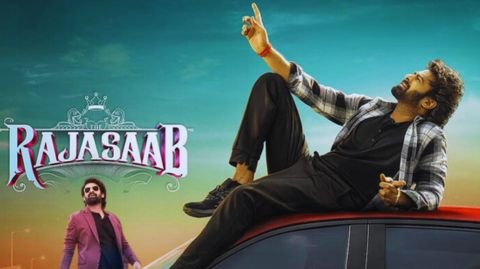
Perhaps the most refreshing aspect of The Raja Saab is the version of Prabhas it brings back. Promotional content hints at a character that is charming, playful, slightly awkward, and emotionally accessible. This is a far cry from the stoic warriors and intense action heroes he has portrayed in recent years.
There is a clear attempt to revive the “Darling” image—an actor who connects with audiences through simplicity and warmth. In a genre like horror-comedy, this becomes crucial. The audience must believe in the character’s vulnerability for the supernatural elements to work, and Prabhas’s natural screen presence has always excelled in evoking empathy.
Physically, Prabhas appears more relaxed and expressive here. The styling is lighter, the body language less rigid, and the dialogue delivery more conversational. This suggests a performance driven less by grandeur and more by relatability—a welcome change that could broaden the film’s appeal beyond hardcore fans.
Direction: Maruthi’s Biggest Test
For director Maruthi, The Raja Saab is undoubtedly the most ambitious project of his career. Known for films like Bhale Bhale Magadivoy and Mahanubhavudu, Maruthi has built his reputation on humor rooted in character flaws and emotional conflicts. Translating that sensibility into a large-scale horror-comedy is both a risk and an opportunity.
Early signs indicate that Maruthi is not trying to imitate big-budget spectacle filmmakers. Instead, he appears focused on storytelling clarity and emotional coherence. The narrative seems designed to flow naturally between comedy, romance, and suspense rather than force abrupt tonal shifts.
If Maruthi succeeds, The Raja Saab could become a case study in how directors from mid-budget cinema can scale up without losing their creative identity. If he fails, the film risks becoming an uneven experiment. The stakes, therefore, are unusually high—not just for the film, but for the director’s career trajectory.
Music and Background Score: Setting the Mood
Music plays a vital role in horror-comedy. Songs must enhance romance and entertainment, while the background score must subtly build tension without overwhelming the viewer. The promotional tracks released so far suggest a blend of melody and mass appeal.
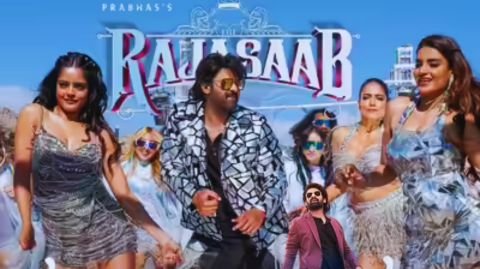
The songs appear designed to be visually rich rather than narratively intrusive. This is a positive sign, as excessive song placement often disrupts the pacing of genre films. Meanwhile, the background score seems to rely on atmospheric cues rather than loud jump scares—a choice that could elevate the film’s storytelling sophistication.
If the full soundtrack maintains this balance, it could significantly enhance the immersive experience The Raja Saab aims to deliver.
Visuals, Production Design, and Scale
From a technical standpoint, The Raja Saab looks polished. The production design, especially the haunted settings, suggests attention to detail. Grand interiors, decaying architecture, and eerie lighting contribute to an environment that feels lived-in rather than artificial.
Visual effects appear to be used sparingly, which is encouraging. Horror often works best when it relies on suggestion rather than excess. Overuse of CGI can strip fear of its psychological impact, turning suspense into spectacle. The restrained approach hinted at in the promos suggests that the filmmakers understand this delicate balance.
Cinematography also seems to play a key role, with shadow play and camera movement used to create unease rather than relying solely on sound effects.
Supporting Cast and Characters
While Prabhas is undeniably the film’s centerpiece, the success of The Raja Saab will depend heavily on its supporting cast. Horror-comedy thrives on ensemble performances—friends, family members, comic relief characters, and mysterious figures who populate the haunted world.
The casting choices suggest an attempt to mix experienced performers with youthful energy. Female leads appear to have more narrative relevance than decorative presence, which is crucial in a genre that often sidelines women despite centering supernatural elements around them.
If the supporting characters are well-written, they could add layers of humor and emotional grounding, preventing the film from becoming overly star-centric.
Audience Expectations and Market Positioning
The Raja Saab enters a highly competitive cinematic environment. Audiences today are more discerning, exposed to global content, and less forgiving of half-baked ideas. At the same time, there is a growing appetite for genre experimentation, provided it is executed with sincerity.
The film’s biggest strength lies in its promise of entertainment rather than pretension. It does not aim to redefine cinema or deliver social commentary. Instead, it positions itself as a fun, spooky ride—something audiences can enjoy with families and friends.
This positioning could work strongly in its favor, especially if the film manages to appeal across age groups and regions.
Potential Risks
Despite its promise, The Raja Saab carries inherent risks:
- Tonal imbalance: Shifting between horror and comedy requires precision.
- Fan expectations: Some fans may still expect action-heavy sequences from Prabhas.
- Genre fatigue: Horror-comedy has seen many entries recently; freshness is essential.
- Runtime and pacing: Comedy and suspense both suffer when pacing falters.
How the film navigates these challenges will ultimately define its legacy.
Final Pre-Release Verdict
The Raja Saab stands at an interesting crossroads of ambition and restraint. It is not the loudest film on Prabhas’s filmography, nor the safest. Instead, it feels like a conscious attempt to reconnect with audiences on a more personal, entertaining level.
If the film delivers on its promise, it could mark a turning point—not just for Prabhas, but for how star-driven cinema approaches genre storytelling. At the very least, The Raja Saab deserves credit for daring to be different in an industry that often plays safe at the top.
As audiences wait for its release, one thing is clear: The Raja Saab is not just another movie. It is a test of trust—between star and audience, between spectacle and story, and between expectation and experience.

The Story: Simple by Design
At its core, The Raja Saab tells a straightforward story. A seemingly carefree man finds himself entangled in an ancestral mystery involving a haunted property, buried secrets, and supernatural forces that refuse to stay silent. What unfolds is less about fear and more about how human emotions—greed, love, guilt, and courage—interact with the unknown.
Maruthi’s script avoids unnecessary complexity. There are no confusing timelines or excessive mythological explanations. Instead, the narrative moves in a linear fashion, allowing the audience to settle into the world before gradually introducing its supernatural elements. This simplicity works in the film’s favor, especially in the first half, where humor and character establishment take precedence over scares.
The second half leans more into the horror aspect, though it never becomes genuinely terrifying. The film seems aware that its primary audience is families and Prabhas fans rather than hardcore horror enthusiasts. As a result, the scares are atmospheric rather than shocking, and the tension is often softened by humor.
Prabhas: A Performance Built on Ease, Not Ego
The biggest takeaway from The Raja Saab is Prabhas himself. This is not the towering, stone-faced hero of Salaar or the mythic figure of Baahubali. This is a Prabhas who laughs, stumbles, flirts, and reacts like an ordinary man placed in extraordinary circumstances.
There is a visible comfort in his performance. He is not burdened by the need to dominate every frame. Instead, he allows scenes to breathe, shares space with co-actors, and leans into timing rather than intensity. His comedic moments work not because of punch dialogues, but because of subtle expressions and body language—something long-time fans will recognize from his earlier films.
Emotionally, Prabhas delivers a controlled performance. The film does not demand heavy dramatic breakdowns, but in moments of vulnerability, he remains convincing. This version of Prabhas feels less manufactured and more human, and that alone makes The Raja Saab an important film in his career trajectory.
Direction: Maruthi Plays to His Strengths
Maruthi has always been a director who understands everyday emotions. In The Raja Saab, he applies that understanding to a genre that often relies on excess. His direction is careful, sometimes even conservative, but rarely careless.
The humor is situational rather than slapstick. Jokes arise from fear, misunderstanding, and human weakness instead of forced comedy tracks. While not every joke lands, the film maintains a pleasant rhythm that prevents it from becoming tiring.
Maruthi’s biggest achievement is tonal control. The film shifts between comedy, romance, and horror without feeling disjointed. This is no small feat, especially in a film led by a superstar whose presence alone can disrupt narrative balance. That Maruthi manages to keep the story intact speaks to his clarity of vision.
However, the same restraint that gives the film coherence also limits its impact. At times, the film feels too safe, too unwilling to fully embrace the madness that horror-comedy can offer.
Horror Elements: More Atmosphere Than Fear
Those expecting edge-of-the-seat horror may walk away disappointed. The Raja Saab does not aim to terrify. Instead, it builds a mildly eerie atmosphere through lighting, sound design, and setting.
The haunted locations are convincingly designed, with decaying interiors and shadow-filled corridors that add texture to the narrative. The supernatural elements are introduced gradually, allowing suspense to build rather than explode.
That said, the film often pulls back just when it could push further. Potentially frightening moments are softened by background music cues or quick comedic relief. While this makes the film accessible to a wider audience, it also robs it of lasting tension.
Music and Background Score: Functional, Not Memorable
The songs in The Raja Saab are pleasant but largely forgettable. They serve their purpose without disrupting the narrative, which in itself is a compliment. None of the tracks feel forcibly inserted, and their picturization is visually appealing.
The background score does more heavy lifting. It effectively supports suspense and emotional beats, though it occasionally becomes repetitive. Importantly, it avoids overpowering scenes—a common flaw in horror-comedy films.
Supporting Cast: A Necessary Backbone
The supporting characters in The Raja Saab play a crucial role in maintaining balance. The ensemble cast contributes to both humor and emotional grounding, preventing the film from becoming a one-man show.
While not all characters are deeply developed, they serve clear narrative purposes. Some performances stand out more than others, particularly those involved in the film’s comedic arcs. The female leads are given reasonable screen presence and narrative relevance, though the film stops short of fully exploring their potential.
Technical Aspects: Polished but Restrained
Technically, The Raja Saab is solid. Cinematography effectively captures both grandeur and intimacy, especially in interior sequences. The color palette shifts subtly as the film transitions from lightheartedness to suspense, reflecting the story’s progression.
Visual effects are used sparingly and mostly work, though a few sequences reveal limitations. Thankfully, the film does not rely heavily on CGI, choosing practical sets and lighting instead.
Editing is mostly tight, but the second half could have benefited from trimming. A few scenes linger longer than necessary, slightly affecting pacing.
Audience Response and Theatre Experience
In theatres, The Raja Saab elicits consistent engagement rather than explosive reactions. There are smiles, occasional laughter, and attentive silence during suspenseful moments. It is not a film that generates thunderous applause, but it holds attention—a rare achievement in an era of distraction.
Family audiences, in particular, seem receptive. The film’s clean humor and moderate scares make it suitable for group viewing, which could aid its box-office longevity.
Strengths and Weaknesses
What Works:
- Prabhas’s relaxed, charming performance
- Clear storytelling and tonal balance
- Family-friendly entertainment value
- Controlled direction
What Doesn’t:
- Limited horror impact
- Predictable narrative beats
- Songs that lack lasting appeal
- A second half that plays too safe
Final Verdict
The Raja Saab is not a film that aims to redefine cinema or rewrite genre rules. Instead, it seeks to entertain without exhausting, to charm without overwhelming, and to tell a story without unnecessary noise.
For Prabhas, the film represents a quiet course correction—a reminder that stardom does not always require spectacle. For audiences, it offers a pleasant, if imperfect, cinematic experience that values mood over madness.
In a cinematic climate obsessed with scale and shock value, The Raja Saab succeeds by choosing moderation. That choice may not create history, but it earns something equally valuable: goodwill.