A Day Written in Gold: When Passion Met History
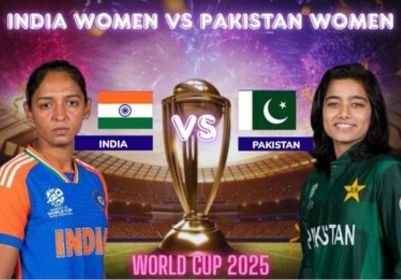
On a crisp autumn morning at the iconic Melbourne Cricket Ground, the world witnessed yet another chapter in one of cricket’s most electrifying rivalries — India Women vs Pakistan Women. It wasn’t just a game. It was emotion, history, rivalry, and pride all woven into a single unforgettable afternoon.
The 2025 ICC Women’s World Cup had already produced its share of thrills, but nothing came close to the anticipation that surrounded this fixture. The moment the schedule was announced months ago, millions circled this date. Social media buzzed with energy, cricket fans across Asia braced themselves, and the players knew — this was more than a match; this was legacy.
The Build-Up: Roar of the Subcontinent
In the days leading up to the clash, the cricketing atmosphere across both nations reached fever pitch. For India, led by Harmanpreet Kaur, this was a chance to reaffirm their dominance and continue their flawless World Cup campaign. For Pakistan, captained by Nida Dar, it was about rewriting the script, breaking the mental barrier, and earning respect on the biggest stage.
Posters filled the streets of Mumbai, Lahore, Karachi, and Delhi. News channels ran countdowns. Every discussion panel debated one question — Can Pakistan finally beat India in a World Cup match?
The players, meanwhile, spoke with calm determination. Harmanpreet, at the pre-match press conference, said, “We don’t play the name, we play the game.” Nida Dar responded, “Records are made to be broken, and we’re ready to make our own history.”
The tension was palpable. The fans knew — when India and Pakistan share a cricket field, something special always happens.
The Toss: A Moment of Strategy
The MCG was packed — 85,000 fans, flags waving, colors of blue and green dominating the stands. The temperature hovered around 23°C, perfect for cricket. The pitch looked flat but held a slight tinge of green that promised early seam movement.
At the toss, Harmanpreet called right and chose to bat first, confident her batters could post a daunting total. “We’ve been playing good cricket. Runs on the board in a big match always help,” she said with a smile.
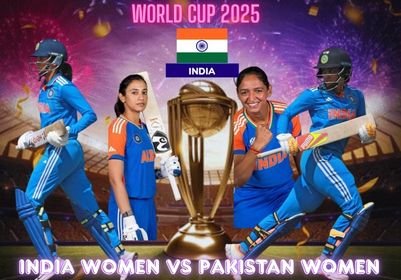
The stage was set. The Indian openers — Smriti Mandhana and Shafali Verma — walked out to a roar that echoed across continents.
The Indian Innings: Poetry in Motion and Grit in Crisis
The first over was cautious. Pakistan’s spearhead Diana Baig started with discipline, shaping the ball away from Mandhana. But by the third over, the Indian openers found their rhythm. Smriti’s trademark cover drive pierced the infield, while Shafali’s fearless pull over mid-wicket drew thunderous applause.
By the 10th over, India had raced to 62/0. The partnership looked unstoppable — a perfect blend of aggression and elegance.
However, cricket is never predictable. The breakthrough came when Fatima Sana delivered a beautiful outswinger that kissed Shafali’s edge — caught behind for 32 off 26. Pakistan erupted. The noise from their section of the stands was deafening.
Then came Jemimah Rodrigues, calm and composed, joining Smriti. Together, they rebuilt. The partnership flourished with singles, sharp running, and occasional boundaries. Smriti reached her half-century in 54 balls — raising her bat to the sea of blue in the crowd.
But just when India looked comfortable, Nida Dar struck. Her flighted delivery deceived Jemimah, who chipped a catch to mid-off. India were 121/2 in 22 overs.
Enter Harmanpreet Kaur — India’s warrior captain. She began cautiously, rotating strike, letting Smriti dominate. The duo stitched a crucial 75-run stand, guiding India past 200 in the 38th over.
Smriti’s innings was a masterclass — 93 runs off 105 balls, filled with grace and grit. But heartbreak struck as she fell short of a century, bowled by Nashra Sandhu trying to accelerate.
Harmanpreet, sensing the need for a big finish, switched gears. Her aggressive intent turned the last 10 overs into a spectacle. Boundaries flowed off her bat — cuts, lofted drives, and a thunderous six straight down the ground that sent Indian fans into a frenzy.
India ended at 287/6 in 50 overs — a competitive total on a surface that was beginning to slow down. Harmanpreet remained unbeaten on 68, her knock a blend of maturity and muscle.
Pakistan knew the chase would demand their best.
Pakistan’s Chase: Courage Under Pressure
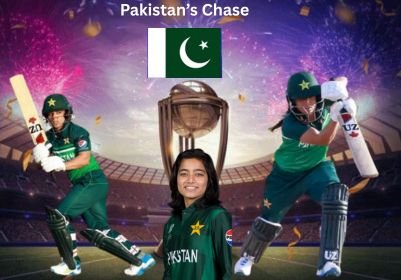
The Pakistan openers — Sidra Ameen and Muneeba Ali — walked in amid high tension. The Indian bowlers, led by Renuka Singh and Pooja Vastrakar, were fired up. The first few overs were tight, testing Pakistan’s technique and nerve.
Renuka, in her second over, struck gold. A sharp inswinger trapped Sidra Ameen plumb in front for 8. The crowd erupted. India had drawn first blood.
Muneeba, however, played with resilience. Her footwork was crisp, her timing assured. Partnering with Bismah Maroof, she steadied Pakistan’s innings, rotating strike smartly and punishing loose deliveries.
At 75/1 in 15 overs, Pakistan looked in control. But then came the twist — Deepti Sharma’s golden arm. She tossed one up, deceiving Muneeba, who mistimed her shot to long-on for 42. The momentum shifted.
Bismah and Nida Dar took charge, rebuilding with caution. Their partnership brought Pakistan to 134/3 in 30 overs — still within reach, but requiring acceleration.
The Indian fielding unit was electric — diving stops, boundary saves, and sharp throws. Every run was hard-earned. The tension in the air was thick.
Then, the decisive phase arrived.
In the 33rd over, Harmanpreet introduced herself into the attack. On her third ball, she tempted Nida with flight, and the Pakistani skipper went for the slog — only to find Shafali Verma at deep midwicket. Caught!
The Indian captain punched the air; the crowd roared. Pakistan were 145/4.
From there, wickets fell at regular intervals. Deepti Sharma’s control and Rajeshwari Gayakwad’s spin choke left Pakistan gasping for runs. Bismah tried to anchor, but the mounting pressure forced errors.
The score read 198/8 in the 45th over. Despite a valiant lower-order fight, the Indian bowlers tightened their grip.
In the 48th over, Renuka Singh returned to finish things off — a fiery yorker dismantling the stumps of Nashra Sandhu. Pakistan were all out for 214.
India won by 73 runs — maintaining their perfect record against Pakistan in World Cup history.
The Roar of Victory: Emotion Unleashed
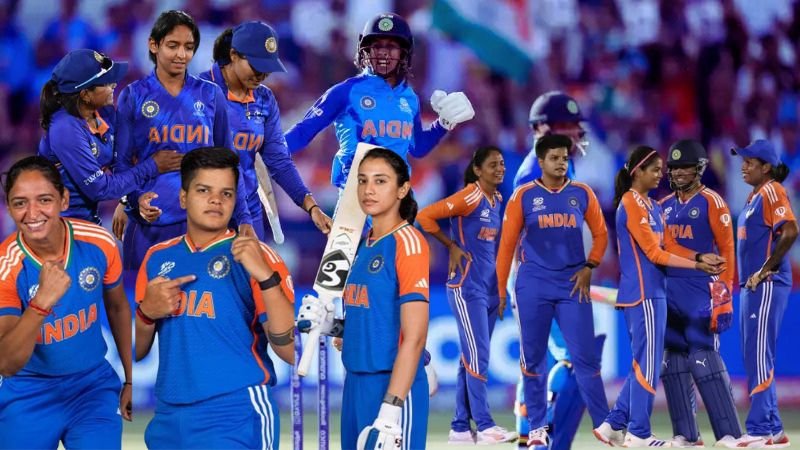
As the final wicket fell, the MCG erupted in an ocean of blue. The Indian players rushed together, hugging, shouting, crying — the pure joy of victory spilling out.
Harmanpreet Kaur, ever the picture of calm intensity, raised her hands to the sky in silent gratitude. Smriti Mandhana was declared Player of the Match for her 93 — a knock that set the foundation for India’s win.
“Every time we play Pakistan, it’s emotional,” Smriti said in the post-match ceremony. “We are determined to keep our attention fixed on the game.”
Today, we stuck to our plans and it worked beautifully.”
Nida Dar, gracious in defeat, praised her opponents. “India played better cricket today. We fought hard, but we couldn’t convert our partnerships. Still, proud of how our team showed fight.”
The spirit between both sides was commendable. Players shared handshakes, smiles, and even a few friendly words — proof that while the rivalry is fierce, the respect runs deep.
Analysis: Why India Dominated
India’s victory wasn’t just about one innings or one spell — it was the culmination of superior planning, temperament, and execution.
- Top-Order Stability – The partnership between Smriti and Harmanpreet was the backbone of India’s total. Their calm handling of pressure and shot selection neutralized Pakistan’s bowling threat.
- Smart Middle-Overs Strategy – India avoided reckless shots during the spin phase, focusing instead on singles and doubles. The awareness of match rhythm was evident.
- Bowling Discipline – Renuka’s early breakthroughs and Deepti’s spin control created pressure that Pakistan couldn’t escape.
- Fielding Excellence – India saved at least 20–25 runs through sharp fielding, something that defined the difference in the contest.
Pakistan’s Perspective: Lessons and Positives
For Pakistan, the loss was painful but not without positives. Muneeba Ali’s form was a bright spark, and Bismah Maroof’s calm presence remained vital. However, their inability to convert starts into big scores hurt them badly.
Bowling-wise, Fatima Sana and Nida Dar were economical, but they lacked support from the others during the middle overs.
Pakistan’s cricket is evolving — the team is fitter, mentally tougher, and technically improving. They may have lost the battle, but the intent they displayed promises a stronger comeback.
The Rivalry: More Than Cricket
Every India-Pakistan match carries stories that go beyond runs and wickets. It’s about culture, emotion, and shared history.
For many fans, it’s a celebration of identity. Stadiums transform into seas of color — blue and green flags waving together, divided by allegiance but united by love for the game.
The 2025 World Cup clash once again proved that women’s cricket is no longer secondary. The passion, intensity, and audience engagement matched — if not surpassed — any men’s fixture.
Television ratings shattered records. It was all over social media: hilarious memes, hot takes, and people sharing their love. From Bollywood celebrities to former cricketers, everyone chimed in.
Virat Kohli tweeted: “Brilliant performance by our women in blue! Smriti and Harman, you made us proud again.”
Sana Mir, Pakistan’s legend, wrote: “Our girls fought bravely. We’re closing the gap. Keep believing!”
The global cricketing fraternity took note — the rivalry had reached a new level of respect and competitiveness.
Fan Reactions: Emotions Overflow
In India, celebrations lit up the night. From Mumbai’s Marine Drive to Delhi’s Connaught Place, fans danced, waved flags, and chanted “Bharat Mata Ki Jai!”
In Pakistan, though disappointed, fans applauded their team’s effort. “We’re getting closer,” one Lahore fan said. “Next time, we’ll make history.”
The atmosphere on social media was electric — Instagram reels flooded with match highlights, Twitter trends topped by “#IndvsPakWomen2025”, and YouTube videos dissecting every shot, every wicket.
Expert Voices: What This Win Means
Cricket analysts across the world hailed India’s win as a statement of intent. Former England captain Charlotte Edwards said, “India are setting the standard in women’s cricket — both technically and mentally.”
Indian veteran Jhulan Goswami, now a mentor, spoke emotionally post-match. “I’ve seen this team grow from being underdogs to global giants. This win means more than numbers — it’s about inspiring millions of young girls who now dream of holding a bat and representing their country.”
Harmanpreet’s Leadership: The Heart of the Team
Under Harmanpreet Kaur’s leadership, India have found balance — aggression mixed with calm, belief paired with strategy. Her decision to bat first, rotate bowlers smartly, and maintain composure even when partnerships built, showcased her evolution as a leader.
When asked about her mindset, she said, “We’ve learned from our past. Every time we face Pakistan, we remind ourselves it’s not about emotion — it’s about execution. Today, we did both.”
Her leadership has created a fearless culture — one where youngsters like Shafali and Jemimah can play with confidence, knowing their captain stands firmly behind them.
The Road Ahead: Title Dreams Alive
With this win, India maintained their unbeaten streak in the tournament, booking their place in the semifinals. The performance reinforced their status as favorites for the title.
For Pakistan, the road to qualification became steeper, but not impossible. Their next matches will demand consistency and composure.
The rivalry may be settled — for now — but both teams know that cricket is a journey, not a destination.
A Moment That Transcended Sport
As the players took a lap of honor around the MCG, flags of both nations waved side by side. The crowd — though divided by allegiance — joined together in applause.
It was a sight that captured the essence of cricket — competition and respect, rivalry and unity.
One little girl in the stands, holding a poster that read “Smriti Didi, I want to be like you!”, represented what this match truly meant. Inspiration. Empowerment. Legacy.
Closing Thoughts: The Spirit of the Game
The India vs Pakistan Women’s World Cup 2025 clash wasn’t just another entry in the record books — it was a testament to how far women’s cricket has come. The skill, professionalism, and emotional depth on display proved that these athletes are not just cricketers — they are role models, leaders, and icons.
India may have won the match, but the real winner was women’s cricket itself.
The match reminded us why we love this game — the uncertainty, the brilliance, the humanity. When Smriti’s drives met the turf, when Harmanpreet punched the air, when Nida Dar’s eyes held both pride and pain — those were the moments that defined the day.
Final Scorecard
India Women:287/6 (50 overs)
Smriti Mandhana – 93 (105)
Harmanpreet Kaur – 68* (64)
Jemimah Rodrigues – 37 (42)
Fatima Sana – 2/46, Nida Dar – 1/43
Pakistan Women: 214 all out (47.3 overs)
Muneeba Ali – 42 (58)
Bismah Maroof – 39 (51)
Renuka Singh – 3/42
Deepti Sharma – 2/36
Rajeshwari Gayakwad – 2/33
Result: India Women won by 73 runs
Player of the Match: Smriti Mandhana (India)
Epilogue: The Rivalry Lives On
As the sun set behind the Melbourne skyline, fans began leaving the ground, their faces painted with pride or disappointment — but every one of them knew they had witnessed something special.
Because when India and Pakistan meet, cricket becomes art, drama, and poetry all at once.
The ICC Women’s World Cup 2025 just etched another golden chapter in cricketing folklore — and this time, it belonged to the Women in Blue.
Smriti’s Moment: The Calm Queen of Indian Batting
When Smriti Mandhana walked into the press conference later that evening, applause greeted her. Her 93-run masterpiece wasn’t just about numbers — it was about grace under fire.
She smiled humbly as journalists bombarded her with questions.
“My main goal is always to help the team in any way I can.” “When you play Pakistan, it’s never a normal game. You feel the energy, the pressure — but also the privilege.”
Reporters asked if she regretted missing her century. She laughed.
“A hundred would’ve been nice, but the win is sweeter. I’d trade that milestone any day for this feeling.”
Her composure, maturity, and poise have made her not just India’s most dependable batter, but also one of the global faces of women’s cricket.
Harmanpreet Kaur: A Captain Forged by Fire
Harmanpreet’s leadership has transformed Indian women’s cricket. Her tactical clarity and emotional intelligence were on full display during the game. In the press conference, she reflected on the journey.
“Every time we face Pakistan, it’s about control — not just of the game, but of our emotions. I told the girls before we went out: play your cricket, not your rivalry.”
When asked about the young players, her face lit up.
“Shafali’s energy, Jemimah’s composure — they’re the future. My job is to guide, not overshadow.”
Her respect for her Pakistani counterparts was also evident.
“Nida Dar’s team is improving. We have to give credit to them. They challenged us. That’s how cricket grows.”
In that single line, Harmanpreet captured the spirit of modern women’s cricket — competition built on mutual respect.
The Pakistani Spirit: Pride Amid Pain
While defeat stings, Pakistan’s performance earned admiration. Nida Dar spoke with dignity at the post-match presser.
“We came here to fight, and we did. India played better, no excuses. But we’re not far behind. Our goal is to close the gap — and soon.”
She singled out Muneeba Ali’s innings and the young bowlers’ fightback.
“They showed heart. That’s what I want from this team — not fear, but fire.”
Pakistan’s fielding and intent showed visible improvement — the kind that signals a team on the rise. Analysts noted their sharper athleticism and smarter bowling plans compared to past World Cups.
“If they continue at this pace,” said former captain Sana Mir, “Pakistan will become a force to reckon with by 2027. They’re learning to fight without flinching.”
Inside the Indian Camp: Celebration and Reflection
Later that night, the Indian team gathered at their hotel in Melbourne for a small dinner celebration. There were no loud parties, just laughter, storytelling, and the shared joy of victory.
Jhulan Goswami, now part of the coaching staff, addressed the players briefly.
“You made the tricolor fly high again. Remember — victories fade, but legacy lasts. Keep playing like champions.”
Harmanpreet raised a toast — with energy drinks instead of champagne — to the spirit of togetherness.
“To every Indian girl who dreams of playing this game. Tonight, we played for her.”
Smriti, still with her match bat in hand, looked around and smiled. “We’re not done yet,” she said. “This is just the beginning.”
The Global Reaction: Cricketing World in Awe
As dawn broke across Asia, reactions poured in from around the world.
Former cricketers, celebrities, and fans flooded social media with admiration.
- Sachin Tendulkar tweeted: “Incredible composure and class from Smriti and Harmanpreet. India continues to lead the way in women’s cricket.”
- Babar Azam, Pakistan’s men’s team captain, posted: “Hard luck to our women’s team. You fought with heart. Respect to India for a great contest.”
- Mithali Raj wrote: “This isn’t just a win. It’s proof of the evolution of women’s cricket in both nations.”
International media outlets like BBC Sport, The Guardian, and Cricbuzz hailed the match as one of the best spectacles in recent women’s cricket history.
“A rivalry reborn with power, passion, and poise,” read the CricInfo headline.
“Mandhana’s masterclass lights up MCG,” said The Times of India.
“Pakistan show grit despite defeat,” noted Dawn News.
For one day, the world’s attention was completely captured by the women of cricket.
Fans Speak: The Pulse of Two Nations
In Mumbai, children played street cricket chanting, “Smriti! Smriti!” while in Lahore, a small group of fans proudly held banners reading, “We believe in our girls.”
Fan stories poured in:
- A young Indian student in Delhi said, “Watching this match with my mother was emotional — it felt like history repeating itself, but this time, for women who never got the limelight before.”
- A Pakistani schoolteacher in Karachi told a reporter, “Even in defeat, I felt proud. Our girls gave it everything. That’s what matters.”
The border rivalry had momentarily turned into a bridge of shared admiration.
The Analysts’ Corner: What Defined This Match
Cricket pundits dissected the match in detail.
Former England all-rounder Isa Guha said:
“The difference between the sides was composure. India’s experience in high-pressure games gave them the edge.”
Ex-India spinner Anjum Chopra observed:
“Harman’s tactical use of bowlers was outstanding. Bringing herself on just when Nida Dar looked set was a game-changing move.”
From Pakistan, Urooj Mumtaz highlighted a key point:
“Pakistan are on the right track. Their intent was visible, but they need to learn how to finish innings under pressure. That’s the next big leap.”
The Numbers That Tell the Story
- India’s dot-ball percentage was only 38% — showing how well they rotated strike.
- Pakistan, in contrast, played 68 dot balls between overs 25–40 — the phase that killed their chase.
- Harmanpreet’s decision to save Renuka Singh’s overs for the death worked perfectly — she took 2 wickets in her last 2 overs.
- Smriti’s control percentage — 93% — was the highest in the tournament so far.
These weren’t just statistics. They were indicators of a team that knew how to win big games.
The Larger Picture: Women’s Cricket in the Spotlight
This India-Pakistan encounter wasn’t just a match — it was a milestone for women’s sport in South Asia.
The TV ratings for this game surpassed all previous women’s cricket broadcasts in both countries. According to ICC data, the match was watched by over 150 million viewers globally.
Stadium attendance was another record — over 85,000 fans, making it the second-highest-attended women’s match in history, after the 2020 T20 World Cup final.
Young girls watching from small towns and cities across both countries saw themselves reflected on that grand stage. Coaches and academies in India and Pakistan reported an immediate surge in inquiries the very next day.
“After last night, we had 12 new girls asking to join our cricket camp,” said a coach from Lucknow.
“The match did what no advertisement could — it inspired,” added a Pakistani trainer from Faisalabad.
ICC’s Recognition: A New Benchmark
The International Cricket Council (ICC) released a statement congratulating both teams for delivering an “unforgettable contest that elevated women’s cricket globally.”
ICC President Greg Barclay said:
“India and Pakistan have set the standard for intensity, quality, and sportsmanship. This rivalry will continue to define the future of the women’s game.”
Plans are reportedly underway to schedule more bilateral India-Pakistan women’s series post-World Cup — a proposal welcomed by both boards.
Behind the Cameras: The Making of a Spectacle
The match wasn’t just played on the field — it was captured brilliantly off it. Drone shots of tricolor and crescent flags waving side by side went viral. Emotional close-ups — Smriti’s grin, Nida’s determination, Harman’s relief — became the talk of social media.
Broadcasters reported record-breaking engagement across all platforms. Commentators Harsha Bhogle and Lisa Sthalekar, both moved by the occasion, called it “a festival, not just a fixture.”
“For two hours after the game, people didn’t leave the stadium,” Lisa said later. “They were soaking in history.”
The Indian Team’s Morning After
The next morning, the Indian team had a light recovery session followed by a team breakfast. Spirits were high, but focus remained. Their next match — against Australia — loomed large.
Harmanpreet reminded the team,
“Enjoy the win, but remember — every match is a new story. Let’s write another good one.”
Smriti, sipping coffee, looked at her teammates and said with a grin,
“Let’s make sure the Aussies know what’s coming.”
The laughter that followed wasn’t arrogance — it was confidence built on belief and togetherness.
For Pakistan: Regrouping With Dignity
In the Pakistan camp, coach Umar and captain Nida held a closed-door meeting. The mood was serious but constructive. They analyzed their middle-over collapse, the lack of boundary hitters, and the need for calm under pressure.
“We’re not far off,” Nida told the team. “Next time, we’ll finish stronger.”
Bismah Maroof comforted younger players, reminding them that every great team learns from pain. “I remember our first World Cups — we used to lose badly. Now, we’re competing. That’s progress.”
The unity within the Pakistan side despite defeat was heartwarming — a sign of a maturing cricket culture.
Journalists’ Verdict: A Rivalry That Defines Women’s Sport
Global journalists covering the World Cup agreed that the India-Pakistan 2025 clash was a watershed moment.
Australian journalist Melinda Farrell wrote:
“It felt like the 2011 men’s semifinal — the same noise, same intensity, but this time, led by women who’ve broken barriers.”
ESPN’s Firdose Moonda noted:
“What makes this rivalry special is how it transcends politics. It’s women rewriting narratives once dominated by men.”
The consensus was clear: this wasn’t just a cricket match — it was a cultural phenomenon.
Beyond the Boundary: The Human Stories
In Patiala, an eight-year-old girl named Simran held her bat tightly as she watched Smriti’s highlights on TV. “I want to be just like her when I play, Papa.”
In Karachi, a school principal decided to start a girls’ cricket team after watching the match. “We’ve been waiting for a reason — this was it.”
Stories like these began surfacing across both nations — proof that sport, at its best, inspires change beyond the scoreboard.
Final Reflections: The Legacy of a Match
As the World Cup rolls on, the echoes of this India-Pakistan clash will linger long after the tournament ends. It wasn’t about who won or lost — it was about how the game united, inspired, and moved millions.
In the words of Harmanpreet Kaur:
“Cricket gave us a platform. We just want to make sure the next generation stands on it higher and stronger.”
And Nida Dar’s final words summed up the spirit perfectly:
“Today we lost the match. But women’s cricket — we all won.”
Epilogue: Beyond Borders, Beyond Boundaries
The sun set again on Melbourne, but this time it carried a different glow — one of pride, promise, and progress. The rivalry that once divided fans now stands as a symbol of shared evolution.
The India vs Pakistan Women’s World Cup 2025 match will forever be remembered not just for India’s victory — but for the moment when millions realized that women’s cricket had truly come of age.
The field may have been marked by boundaries, but the impact of this game went far beyond them.


1 thought on “India Women vs Pakistan Women – ICC Women’s World Cup 2025: A Battle Beyond Boundaries”