Introduction: More Than Just a Game
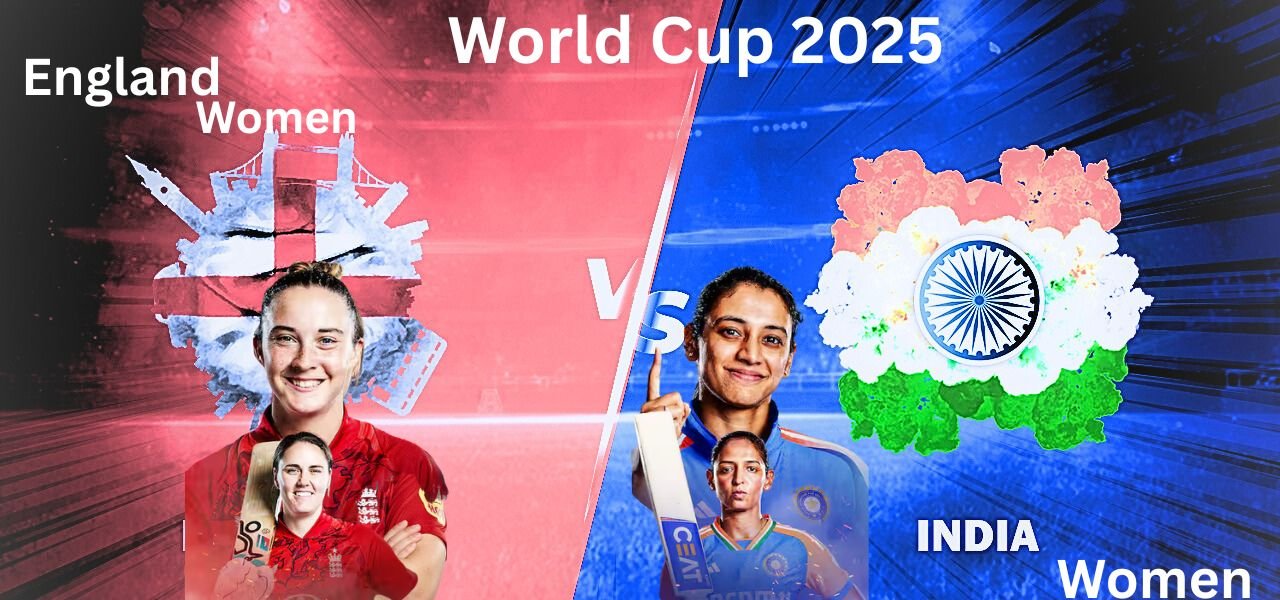
When England Women meet India Women on the cricket field, the spectacle transcends sport. It is not merely about runs, wickets, or the toss of the coin. It is about history, resilience, pride, and the global rise of women’s cricket. Over the past decade, the rivalry between these two teams has grown into one of the most eagerly anticipated clashes in the women’s game. From Lord’s in 2017, where a packed crowd witnessed a World Cup final that changed perceptions, to the bilateral series of 2021 and 2022, and to the high-pressure contests in ICC tournaments, England vs India has consistently delivered drama.
This latest encounter was no different. With both teams stacked with world-class talent and youngsters eager to prove themselves, the stage was set for another classic. Fans expected intensity, passion, and perhaps a touch of unpredictability — all hallmarks of this growing rivalry.
Historical Rivalry: From Quiet Beginnings to Global Headlines
The England Women vs India Women rivalry is not new, though it was for long overshadowed by other contests. England, as pioneers in women’s cricket, held the upper hand for decades. With professional contracts, experienced coaches, and a strong domestic structure, they built a team that often looked unbeatable.
India, meanwhile, were late bloomers. Though legends like Mithali Raj and Jhulan Goswami kept them competitive, victories against England were rare until the mid-2000s. The breakthrough moment came during the 2005 World Cup, when India defeated stronger opponents to reach the final. Though Australia crushed them there, the world began to take notice of India’s potential.
But nothing transformed the rivalry like the 2017 ICC Women’s World Cup Final at Lord’s. On a sunlit July afternoon, England and India played a match that has since been described as “the day women’s cricket changed forever.” India, led by Mithali Raj and powered by Harmanpreet Kaur’s blistering 171* in the semi-final, came within touching distance of their first world title. England, however, held their nerve, thanks to Anya Shrubsole’s six-wicket haul that sealed a dramatic nine-run win. The heartbreak for India was immense, but the impact was bigger: millions of Indians, for the first time, followed women’s cricket with passion.
Since then, the rivalry has grown fiercer. India began to challenge England not only at home but also in away conditions. Memorable draws in Test matches, hard-fought ODI series, and high-scoring T20 thrillers have cemented this contest as a highlight of the women’s cricket calendar.
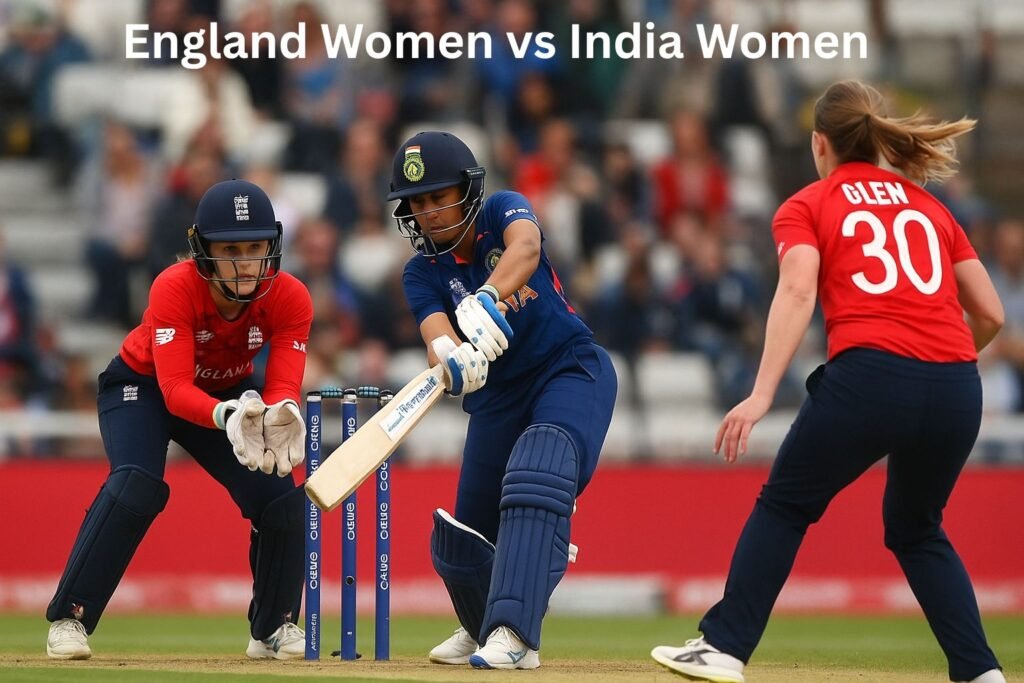
Evolution of Women’s Cricket: England Women vs India Women
The paths of England and India in women’s cricket have been different yet converging.
- England’s Evolution:
England were among the first to embrace professionalism in women’s cricket. Central contracts provided financial security, and the Kia Super League (later replaced by The Hundred) created a platform for players to develop under pressure. Legends like Charlotte Edwards, Claire Taylor, and Katherine Brunt laid the foundation, while modern stars like Heather Knight, Nat Sciver-Brunt, and Sophie Ecclestone have taken the game forward. - India’s Evolution:
India’s story is one of late bloom and rapid rise. Until the mid-2010s, women cricketers struggled for recognition and resources. Yet, performances in ICC tournaments changed perceptions. The launch of the Women’s Premier League (WPL) in 2023 has been a game-changer. Suddenly, young Indian cricketers were rubbing shoulders with the world’s best, gaining experience in pressure situations, and improving their fitness and skills. Today, India boasts not just a strong XI but a pipeline of talent hungry for success.
When these two contrasting cricketing cultures meet, the result is often breathtaking: England’s discipline versus India’s flair, England’s structured plans against India’s fearless improvisation.
Team Strengths and Weaknesses
England Women
- Strengths:
- Consistent top-order anchored by Tammy Beaumont and Heather Knight.
- World-class all-rounder Nat Sciver-Brunt, capable of match-winning contributions with both bat and ball.
- Bowling attack led by Sophie Ecclestone, arguably the best spinner in the world, supported by pacers like Kate Cross and Lauren Bell.
- Weaknesses:
- Struggles against spin in subcontinent conditions.
- Over-dependence on Sciver-Brunt to rescue games.
- Occasional batting collapses under pressure.
India Women
- Strengths:
- Explosive openers in Smriti Mandhana and Shafali Verma.
- Middle-order power with Harmanpreet Kaur and Richa Ghosh.
- Spin depth with Deepti Sharma, Rajeshwari Gayakwad, and Radha Yadav.
- Youthful energy, bolstered by WPL experience.
- Weaknesses:
- Inexperience in seam-friendly overseas conditions.
- Gaps in leadership after the retirement of stalwarts like Mithali Raj and Jhulan Goswami.
- Inconsistent lower order that sometimes fails to support the top batters.
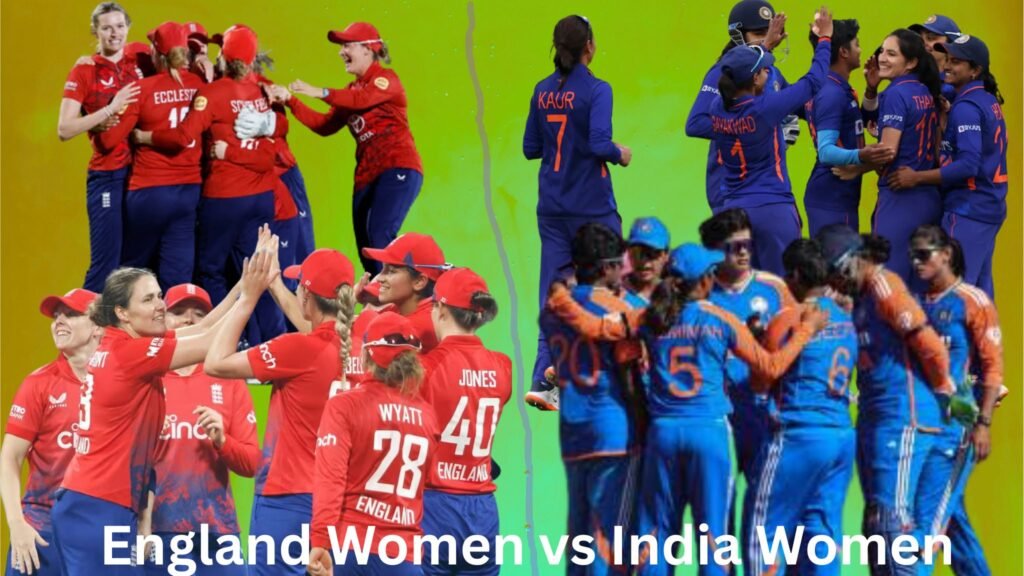
Key Players to Watch
- Nat Sciver-Brunt (England): The engine room of England’s batting, capable of counterattacking under pressure.
- Sophie Ecclestone (England): Her left-arm spin has been India’s biggest challenge in recent years.
- Smriti Mandhana (India): Elegant stroke-maker, especially strong against pace.
- Harmanpreet Kaur (India): India’s captain and their heartbeat; her 171* in 2017 still haunts England.
- Shafali Verma (India): Fearless at the top; can change the game in a handful of overs.
- Richa Ghosh (India): The rising finisher who brings raw power and calmness under pressure.
Tactical Analysis
- England’s Strategy:
England’s game plan revolves around stability at the top, acceleration from Sciver-Brunt, and wicket-taking spells from Ecclestone. Against India, they focus on neutralizing Mandhana early and using spin to choke runs in the middle overs. - India’s Strategy:
India aims to attack England’s pacers in the powerplay and build a cushion. They rely on spinners to exploit English batters’ discomfort and count on Harmanpreet or Richa to finish strong.
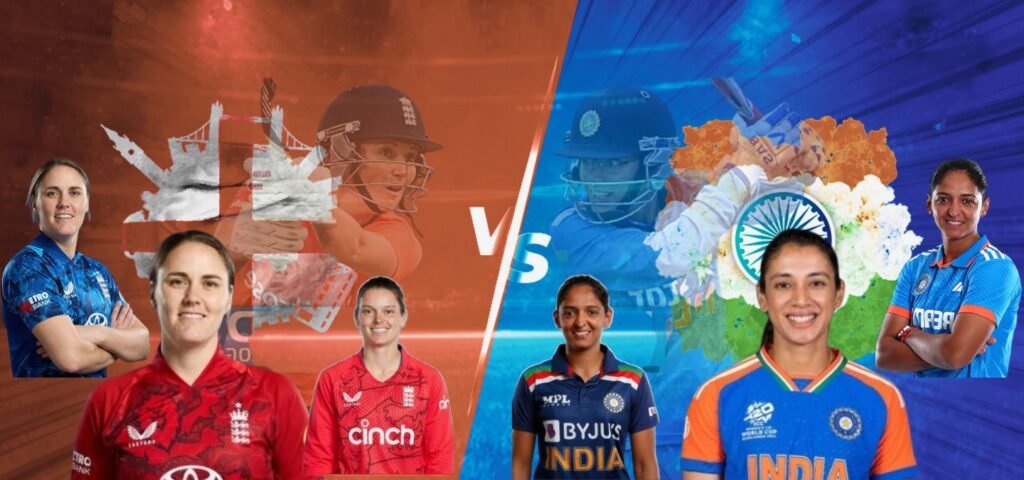
Venue & Conditions
The match was played at a venue that added intrigue. Flat pitches generally suit India’s batters, but England’s adaptability with their seamers and spinners meant conditions would play a significant role. Dew in evening matches, short boundaries, and crowd support for India tilted the equation slightly in the hosts’ favor.
The Match Story: Innings by Innings
The anticipation was palpable as the two teams walked out. A sea of supporters filled the stands, waving both the Union Jack and the Indian tricolor. The roar of the crowd reflected not just the rivalry but the shared respect and admiration for women’s cricket’s progress.
India Batting First
India won the toss and chose to bat — a decision that reflected their confidence in setting a challenging total. The pitch looked good for batting, though there was some early moisture that promised swing for England’s pacers.
The Powerplay:
Smriti Mandhana and Shafali Verma opened the innings with their characteristic contrast — elegance and aggression. Mandhana leaned into her drives, sending the ball racing past cover. Shafali, meanwhile, went after the short deliveries, pulling fiercely. The first six overs produced 48 runs, but England struck back when Kate Cross found movement to dismiss Shafali for a quick 28.
Middle Overs:
Jemimah Rodrigues joined Mandhana, and together they steadied the innings. They rotated the strike, frustrating the English bowlers. But Sophie Ecclestone, brought in early, immediately tightened the screws. Her flight and accuracy slowed the scoring, and she eventually had Mandhana caught at long-off for 42.
From there, the responsibility fell on captain Harmanpreet Kaur. True to her reputation, she mixed caution with aggression. Her six over long-on against Charlie Dean drew a thunderous cheer. India crossed 150 in the 32nd over, but wickets at intervals kept them in check. Jemimah fell to Nat Sciver-Brunt’s clever slower ball, and Deepti Sharma perished while trying to accelerate.
The Finish:
Richa Ghosh entered in the 40th over and injected momentum. Her clean hitting — two sixes off Lauren Bell — pushed India’s score toward respectability. Harmanpreet’s dismissal for 67 threatened to derail things, but Richa’s 38 off 22 balls ensured India posted a competitive 265/7 in 50 overs.
England’s Chase
Chasing 266, England’s task was challenging but not impossible. Their batting depth and experience gave them confidence, but India’s spin-heavy attack loomed as the real test.
The Powerplay:
Tammy Beaumont began with intent, cutting and driving crisply. Heather Knight, anchoring at the other end, looked determined. However, Renuka Singh’s new-ball spell was fiery. She dismissed Beaumont with an outswinger that kissed the edge, giving India a vital breakthrough. England reached 52/1 after 10 overs.
Middle Overs:
The entry of India’s spinners shifted the tone. Deepti Sharma bowled with nagging accuracy, while Rajeshwari Gayakwad extracted sharp turn. Nat Sciver-Brunt counterattacked, smashing a six over midwicket to relieve pressure. Knight and Sciver-Brunt added 72 runs, threatening to tilt the game.
The turning point came when Harmanpreet turned to Shafali Verma for a surprise over. Shafali, part-time off-spinner, lured Knight into a mis-hit that was caught at deep midwicket. The dismissal broke the partnership and reinvigorated India.
The Collapse:
Sophie Dunkley and Amy Jones tried to rebuild, but Ecclestone’s counterpart, Deepti, was relentless. Her dismissal of Sciver-Brunt for 55 was massive. Soon after, Rajeshwari trapped Dunkley LBW, and suddenly England were 170/5 in the 35th over.
The Fightback:
Amy Jones played bravely, farming the strike and picking boundaries. Ecclestone, with the bat, joined her to form a defiant partnership. With 50 needed from the last 6 overs, tension skyrocketed.
Final Overs:
Renuka returned for her second spell and bowled a gem. She uprooted Jones’ stumps with a yorker that swung in late, silencing the English dugout. With 28 needed off 3 overs, India sensed victory.
England’s tail resisted, but Richa Ghosh’s sharp work behind the stumps ended their hopes when she stumped Lauren Bell. The final wicket fell with 12 balls remaining, England all out for 247.
India won by 18 runs, sparking wild celebrations in the stands.
Post-Match Reactions
- Harmanpreet Kaur (India captain):
“This was a total team effort. Our batters gave us a fighting total, and the bowlers showed great discipline. England are always tough, so this win means a lot.” - Heather Knight (England captain):
“We had our chances, but losing wickets at key moments hurt us. Credit to India’s bowlers, especially Deepti and Renuka, for holding their nerve.” - Richa Ghosh (Player of the Match):
“I just wanted to play my natural game. The crowd gave us so much energy, and I’m glad I could contribute at the end.”
Expert Analysis
Pundits highlighted several takeaways:
- India’s lower-order hitting, once a weakness, now looks stronger with Richa Ghosh emerging as a dependable finisher.
- England’s over-reliance on Sciver-Brunt was again exposed. Once she was dismissed, their chase faltered.
- Sophie Ecclestone’s brilliance with the ball (2/38) kept England in the contest, but her teammates couldn’t match her consistency.
- Renuka Singh’s opening and death spells showcased why she is India’s new pace spearhead.
Impact on Rankings & Future Tournaments
The result boosted India’s ranking points in both ODIs and the ICC Women’s Championship, improving their qualification path for the next World Cup. For England, the loss raised questions about their middle-order depth and adaptability in Asian conditions.
Looking ahead, both teams will meet again in the Women’s T20 World Cup. This ODI clash serves as a psychological boost for India, while England will be desperate to regroup.
Broader Significance for Women’s Cricket
Matches like this are not just about the scoreboard. They symbolize the growing stature of women’s cricket globally. The packed crowd, prime-time broadcast slots, and passionate fan reactions underscored how far the women’s game has come.
For India, the victory validates the impact of the Women’s Premier League, where players have learned to handle pressure. For England, the contest reinforces the importance of The Hundred, which continues to produce players capable of thriving under intense scrutiny.
This rivalry, once one-sided, now feels like cricket’s version of a heavyweight boxing match — every contest evenly poised, every result unpredictable.
Conclusion: A Rivalry Redefined
The 18-run victory will go down as another memorable chapter in the India–England women’s cricket rivalry. It had everything: elegant batting, skillful spin bowling, tactical shifts, and a nail-biting finish. More importantly, it reflected the rise of women’s cricket as a sport capable of captivating audiences worldwide.
England vs India is no longer just a match. It is a narrative of tradition versus transformation, discipline versus flair, and experience versus youthful energy. And as the crowd dispersed, one thing was certain — the rivalry has redefined itself as a cornerstone of global women’s cricket.



order cannabis vapes online with quick delivery