Mumbai — A wave of shock washed over Bollywood and beyond on Tuesday, November 11, 2025, as multiple news outlets and social‐media posts claimed that veteran actor Dharmendra had passed away at the age of 89 in Mumbai’s Breach Candy Hospital. Moments later, the actor’s family issued statements refuting the reports—saying he is still alive and recovering—leading to confusion, condemnation of media practices and a wider conversation about fake news in the digital age.
The Initial Report and Its Fallout
The first public spark of the news came when alert followers of Bollywood channels and social media flagged that Dharmendra might have died at 89 in Breach Candy Hospital. Several outlets carried the story citing unnamed sources. The legend, fondly referred to as “He–Man of Bollywood,” had reportedly been admitted to hospital after complaining of breathlessness.
Prominent figures began posting their condolences—Rajnath Singh (India’s Defence Minister) tweeted that he was “deeply saddened” by the demise. The flood of tributes and sombre posts came as many sections of the media and public took the death report at face value. Yet within hours, the family stepped in. His wife, Hema Malini, and daughter Esha Deol issued sharp rebukes of the rumours, stating Dharmendra was stable, recovering, and that the spread of false news was “unforgivable” and “extremely disrespectful”.
What Really Happened – Hospitalisation & Health Update
According to credible reports, Dharmendra was admitted to Breach Candy on November 1 for a routine check‐up after experiencing breathlessness. On November 10, his condition apparently worsened, prompting increased hospital observation and rumours of ventilator support.
However, the actor’s team clarified that while he is under medical care and being closely monitored, the claims of his demise or critical condition were incorrect. According to Esha Deol: “My father is stable & recovering. Thank you for your love and for respecting our family’s need for privacy.
Legacy of a Legend
Dharmendra, born on December 8, 1935 in Nasrali, Punjab, rose from humble beginnings to become one of the most iconic stars of Hindi cinema. Over a career spanning more than six decades, he appeared in over 300 films, winning audiences with his muscle-man image, romantic charisma and comic timing.
Some of his landmark films include Sholay (1975), which remains a cult classic in Indian cinema, and other hits like Anupama (1966), Phool Aur Patthar (1966) among many others. His influence extended beyond acting—he served as a producer and politician as well.
For generations of cine-goers he symbolised rugged charm, integrity and effortless style. As one fan put it on Reddit:
“The media should just respect their privacy and wait for them to announce anything officially.”
The Family Behind The Star
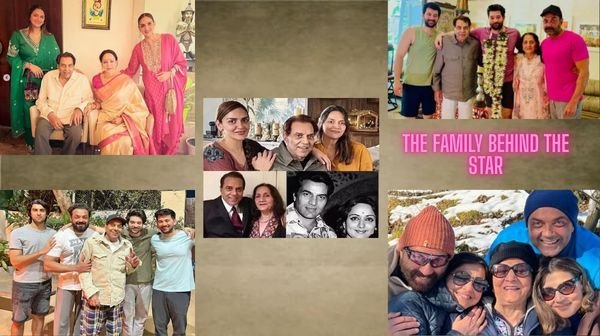
Dharmendra’s personal life too has been part of public fascination. He married Prakash Kaur, with whom he had children, and later married Hema Malini, and together they built a large family. Among his children are notable actors such as Sunny Deol, Bobby Deol and daughters Esha Deol and Ahana Deol.
When rumours of his death emerged, family members and extended film fraternity rushed to his side at the hospital, adding to the swirl of images, speculation and emotion. Hema Malini’s social media resonance—calling the false reports “unforgivable”—revealed how emotionally taxing the incident was for the family.
Media Ethics, Misinformation and the Ripple Effect
What this incident underlined was not just concern for a beloved actor’s health, but the deep vulnerabilities in the modern media‐ecosystem.
Speed over verification
False reports of Dharmendra’s death spread rapidly, even prompting official figures to issue condolences before fact‐checking. As one online commentator noted:
“Who knows? … our media doesn’t verify … some person of stature tweets and lol.”
The emotional cost
For fans, colleagues and the actor’s family, this was more than a social-media whiplash—it triggered grief, confusion and panic. Several celebrities rushed to the hospital. Messages of “RIP” floated around before the family clarification.
A call for responsibility
“We are disappointed to see the circulation of baseless news regarding my health, especially when I am actively responding to treatment and improving.” It was a sharp reminder that in the race for clicks, media outlets and social platforms bear responsibility for the human impact of misinformation.
What’s Next for Dharmendra
As of now, the family has asked for privacy and expressed gratitude for the public’s prayers. The actor remains under medical observation. There has been no verified statement of his passing. The entertainment industry and fans continue to await any official update.
Professionally, at age 89, Dharmendra’s presence still looms large, symbolising an era of Bollywood that continues to influence new generations.
Why This Matters
This episode is significant for several reasons:
- Cultural impact: Dharmendra’s stature in Indian cinema means that news of his health or death reverberates through popular culture, media and society.
- Information reliability: It underscores the hazards of breaking news without verification—especially where emotions run high and the public looks to trusted media for clarity.
- Human dimension: Behind every celebrity lies a family, private pain, and the burden of public speculation. The request for dignity and privacy by the actor’s family resonates beyond celebrity culture.
- Legacy conversation: Even amid health concerns, the discourse shifts to what it means to build a legacy in the film industry—how stars become part of public memory, identity and cinema history.
Bollywood Reacts: A Wave of Shock, Relief, and Reflection
When the false news of Dharmendra’s passing broke, the Bollywood industry was shaken to its core. Actors, directors, producers, and co-stars—many of whom shared decades-long memories with him—reacted in disbelief. The social media timeline of the Indian film world turned into a space of confusion, grief, and then relief once the truth surfaced.
Veteran actor Amitabh Bachchan, Dharmendra’s long-time colleague and friend from classics like Sholay and Chupke Chupke, initially wrote, “We’ve lost a pillar of our cinema.” But within hours, upon learning the truth, he posted again:
“I’m relieved to know Dharamji is very much with us. The heart almost stopped for a moment. May God bless him with strength and good health.”
Similarly, actor Anupam Kher commented that the incident reminded everyone of the need to verify news before spreading it:
“It’s shocking how quickly social media kills someone. We must have sensitivity toward people who are still fighting for life.”
Young actors such as Ranveer Singh and Ayushmann Khurrana also joined the chorus, calling Dharmendra a “living monument of Indian cinema” and praying for his recovery.
Esha Deol’s Statement: A Daughter’s Anguish
Among the family members, Esha Deol’s reaction stood out for its emotional clarity. She took to her verified Instagram handle and posted a long note:
“My father is stable and under medical care. I am shocked and deeply saddened that irresponsible rumours are being circulated about his death. We request the media to refrain from spreading such baseless news. Please give our family and my father the respect he deserves.”
Her message was not just a denial—it was a daughter’s emotional plea to a nation that loves her father. The post quickly gained millions of views and supportive comments, with fans apologizing for reacting to unverified news. Many users wrote, “We are praying for Dharamji. May he recover soon.”
Hema Malini’s Words: A Reminder of Humanity
Hema Malini, Dharmendra’s wife and one of Bollywood’s most respected actresses, expressed visible distress in an interaction with journalists outside the hospital. She said:
“What is happening is unforgivable. My husband is alive, responding to treatment, and we are hopeful. Yet, some channels and online pages are declaring him dead for views. Where is humanity? Where is decency? Please, let us be in peace.”
Her tone was both firm and sorrowful. She further emphasized that such acts of irresponsible reporting add to a family’s trauma during vulnerable times.
She concluded with a heartfelt line:
“Dharmendra has faced many storms in his life. He will face this one too—with the same courage that defined his films and his soul.”
The Fans’ Frenzy: Grief and Gratitude
In the hours following the false report, thousands of fans flocked to Dharmendra’s official social media handles. Many left emotional comments—some expressing grief, others expressing gratitude after learning he was alive. Twitter trends like #RIPDharmendra and later #LongLiveDharmendra dominated the Indian digital space for nearly 24 hours.
Outside Breach Candy Hospital in Mumbai, hundreds of fans gathered, holding flowers, posters, and photos of the actor. Some even lit candles, only to later replace them with smiles and prayers once the clarification came out.
An emotional fan from Ludhiana, Dharmendra’s birthplace, told reporters:
“We all panicked when we saw the news. He is like a family member to us. We grew up watching him. When they said he was gone, it felt like losing a father.”
The emotional intensity of the moment showed how deeply the actor’s life had intertwined with that of his audience.
A Look Back: The Journey of Dharmendra
Born as Dharam Singh Deol in 1935 in Punjab’s Ludhiana district, Dharmendra’s life was not destined for glamour. His early years were humble—he was the son of a school teacher and grew up with a simple dream: to make something of himself.
He was a film lover from childhood, inspired by Dilip Kumar’s performances. When he moved to Bombay in the late 1950s after winning the Filmfare New Talent Award, he had no connections, no background, and no money—just passion.
His debut came in 1960 with Dil Bhi Tera Hum Bhi Tere. The audience saw a new kind of hero—tall, strong, yet gentle. By the mid-1960s, he was starring in romantic films like Anupama and Bandini, showing remarkable emotional depth.
Then came Phool Aur Patthar (1966), the film that changed his life. The shirtless scene that made him Bollywood’s first true “He-Man” icon created a revolution. He was not just handsome—he was heroic.
In the 1970s, he achieved superstardom with Sholay, Yaadon Ki Baaraat, Chupke Chupke, and Seeta Aur Geeta. He balanced action and comedy with equal ease—an actor who could punch villains and make audiences laugh in the same breath.
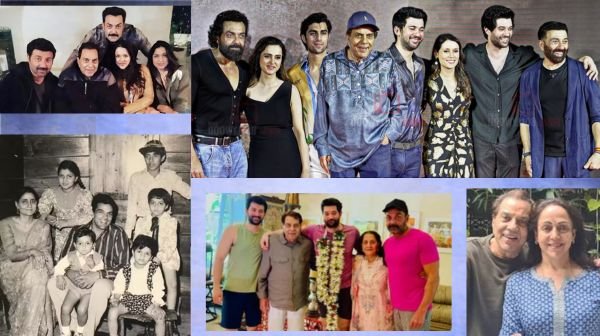
By the 1980s, he transitioned into more character-driven and patriotic roles. His legacy was further cemented when his sons Sunny Deol and Bobby Deol entered the industry, carrying forward the family banner.
Dharmendra’s Influence on Modern Cinema
The modern Bollywood hero—physically strong, emotionally vulnerable, and deeply romantic—owes much to Dharmendra’s on-screen persona. His combination of masculinity and tenderness became the blueprint for later generations of actors.
Directors like Rajkumar Santoshi and Karan Johar have openly admitted that Dharmendra’s presence defined a cinematic era.
In a recent interview, director Anurag Kashyap once said:
“If you want to understand Indian masculinity on screen, watch Dharmendra in Sholay and Satyakam. He was powerful without arrogance. That’s rare.”
His co-stars often spoke about his humility. Actress Shabana Azmi once described him as “a star with no ego—a man who never forgot his roots.” Even today, his famous line from Sholay, “Basanti, in kutton ke saamne mat nachna,” continues to be quoted, parodied, and celebrated in Indian pop culture.
The Deol Dynasty: A Legacy of Stardom
The Deol family is among Bollywood’s most respected dynasties.
- Sunny Deol, known for his fiery patriotism and dialogues like “Yeh dhai kilo ka haath,” became a symbol of 90s heroism.
- Bobby Deol, who made a strong comeback with Animal and Aashram, carries his father’s charm and gentleness.
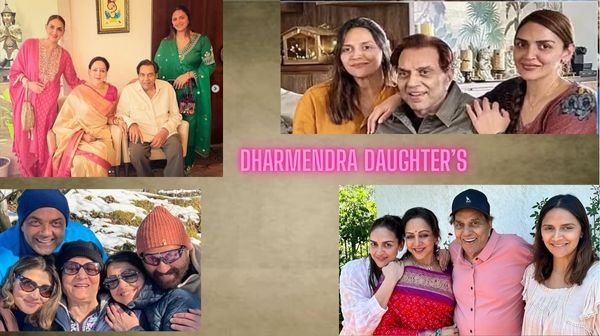
- Esha and Ahana Deol, Hema Malini’s daughters, have both represented the grace and strength of their parents.
Dharmendra always expressed pride in his children, calling them his “greatest films.” In interviews, he often said, “If my sons are doing well, it means I did something right.”
Public Debate: The Dangers of Digital Misreporting
The false death report sparked a wider conversation about the role of digital journalism and accountability. Within minutes, dozens of portals copied the initial story, many of them relying solely on social media posts rather than verified medical sources.
Senior journalist and media ethicist Rajdeep Sardesai commented on the controversy, saying:
“We live in a time where misinformation spreads faster than truth. The Dharmendra incident should serve as a wake-up call for all of us. The rush for views is killing credibility.”
Online misinformation expert Dr. Meera Kaur explained how such fake news circulates:
“When a celebrity’s name trends, bots and clickbait networks amplify it. Once a few verified accounts fall for it, the narrative becomes believable.”
The incident exposed a grim reality—many readers share headlines without reading the actual articles. The emotional weight of “death” drives engagement, regardless of authenticity.
Dharmendra’s Philosophical Approach to Life
Interestingly, Dharmendra himself has often spoken about mortality with calm acceptance. In one of his older interviews, he said:
“We are all travellers. I’ve lived a beautiful life. I want to go smiling when the time comes.”
He has been open about his health struggles, especially during his 80s. Yet, his sense of humor and humility always shone through. During a 2023 appearance on The Kapil Sharma Show, he joked,
“Old age is like a sequel of life—you can’t change the plot, but you can still enjoy the dialogue.”
That attitude explains why millions love him—not just for his films, but for his humanity.
Reflections from Co-Stars and Directors
Actor Dharmendra’s co-star Jaya Bachchan said in a statement to a news outlet:
“His kindness is a rare and beautiful constant in my life. Working with him on Sholay and Guddi was like being around a big brother. He brings laughter even in silence.”
Director Ramesh Sippy, who made Sholay, once said:
“I didn’t cast Dharmendra just for his looks. I cast him for his eyes—they could fight and love at the same time.”
Younger actors like Varun Dhawan, Vicky Kaushal, and Tiger Shroff have also cited him as an inspiration. “He was the original action hero, the first fitness icon of Bollywood,” Tiger once said.
From Punjab to Bollywood: The Man, The Myth, The Emotion
Even today, when one travels to Punjab, Dharmendra’s face appears in dhabas, tea stalls, and truck art. His name is synonymous with pride and simplicity.
Locals from his village Nasrali recall that he never forgot his roots. He built schools, helped struggling families, and frequently visited his ancestral land. Villagers affectionately call him “Punjab da puttar, duniya da hero”—the son of Punjab, hero of the world.
In 2004, when he entered politics as a Member of Parliament from Bikaner, Rajasthan, he carried the same humility, often joking,
“I’m still learning politics the way I learned acting—by observing life.”
Bollywood’s ‘He-Man’ Still Standing Tall
Even in his late 80s, Dharmendra continued to appear in films. His recent performance in Rocky Aur Rani Kii Prem Kahani (2023) was a heartwarming comeback. Critics praised his gentle portrayal of Kanwal, a character that reminded everyone of his timeless grace.
Director Karan Johar later wrote on X (formerly Twitter):
“Working with Dharmendra Sir was a dream come true. He brings warmth to every frame. There’s magic in his eyes.”
That film reminded a new generation why the world fell in love with him in the first place.
The Moral of the Chaos
The false death rumours, though deeply distressing, ultimately reaffirmed Dharmendra’s enduring connection with millions of Indians. In the rush of modern life, the brief panic made everyone pause and remember a man who defined an era.
When the truth came out—that he was alive and recovering—the collective sigh of relief across the nation wasn’t just about a celebrity’s health. It was about love, nostalgia, and the power of shared emotion.
Final Words: A Living Legend Beyond Time
As of now, Dharmendra remains under medical care, surrounded by his family, love, and prayers.
The incident, painful as it was, served as a powerful reminder that Dharmendra is not just a name in film history—he is an emotion deeply embedded in Indian hearts.
He once said in an interview:
“When I’m gone, I want to be remembered with joy, not sorrow. I want them to smile and say—he lived, he loved, and he never changed.”
And perhaps, that’s the truest legacy of all—
Not in fame or awards, but in the love of millions who still whisper, “Basanti, in kutton ke saamne mat nachna.”
Dharmendra—our He-Man—remains very much alive, not just in the hospital, but in the collective heartbeat of a nation that refuses to let him go.
Summary
In a dramatic Senate of media frenzy, rumors of Dharmendra’s death took hold before the facts could be verified. The 89-year-old Bollywood icon remains alive and recovering, according to his family, who have condemned the rash circulation of false news. Amid the confusion lie deeper questions about media ethics, fan culture and how society processes news in the digital age. For now, the story isn’t about the end of life—but about the fragility of communication and the resilience of a legend whose name remains woven into the fabric of Indian cinema.
More news:-Delhi Blast: Fear, Chaos, and Resilience in the Heart of India 2025
https://blindspotnews.com/delhi-blast/