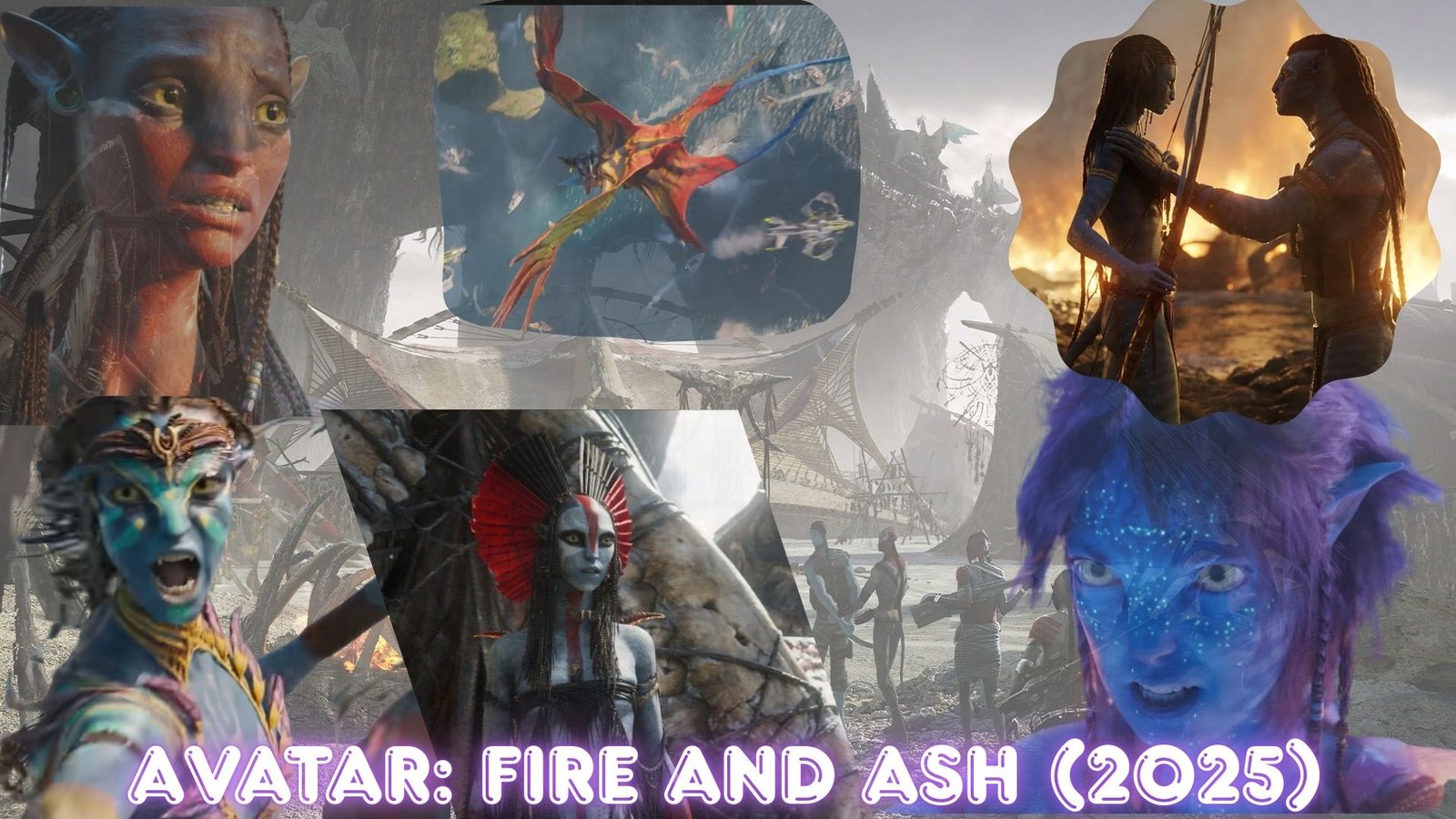
When James Cameron first introduced audiences to Pandora in 2009 with Avatar, he redefined what cinematic immersion meant. Thirteen years later, Avatar: The Way of Water expanded that vision by plunging us into Pandora’s oceans with groundbreaking underwater performance capture and remarkable world-building. Now, in 2025, Cameron returns with Avatar: Fire and Ash—a film every bit as ambitious, fiery, and awe-inspiring as its predecessors, but sharper in theme, grander in scope, and heavier with emotional stakes. At just over three hours, Fire and Ash positions itself as Cameron’s most daring chapter yet—a film not only about the survival of a family and a planet, but also a searing allegory for humanity’s relationship with destruction and rebirth. It is spectacle fused with simmering political allegory, myth with technology, and dazzling visual achievement balanced by intimate storytelling.
A Bold Expansion of the Saga
Avatar: Fire and Ash picks up not long after the events of The Way of Water. Jake Sully (Sam Worthington) and Neytiri (Zoe Saldaña) find their family tested again, shifting from the peaceful rhythms of oceanic clans to new frontiers in the volcanic and ash-ridden landscapes of Pandora. The metaphor here is as clear as the fiery glow dotting the screen: what was once an Eden of waters now confronts devastation from resource extraction and militarized expansion.
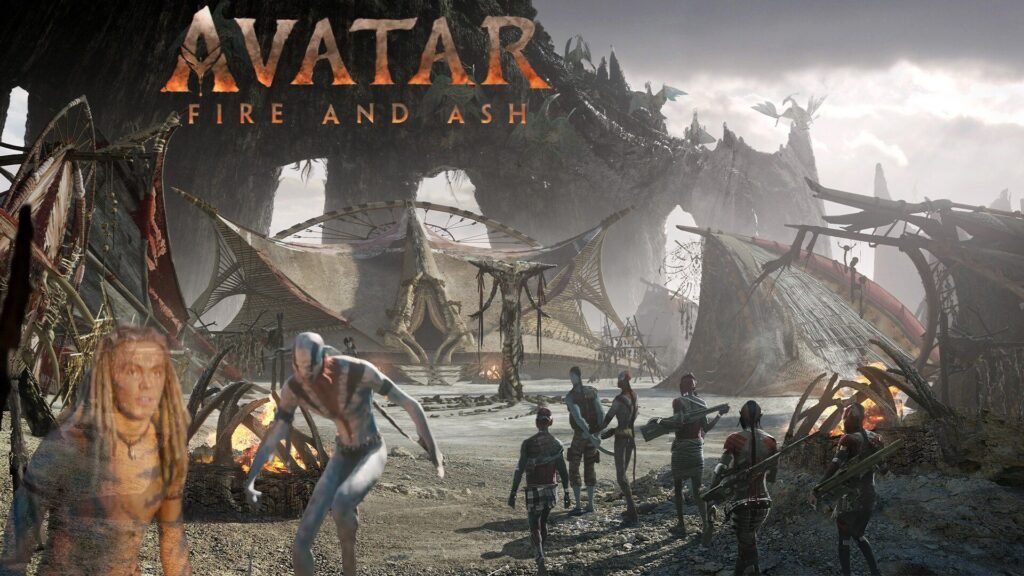
Unlike the lush forests of the first film or the endless seas of the second, the new environment—dominated by fire, ash, molten rivers, and unstable terrains—unfolds as both breathtaking and nightmarish. Cameron has said the third installment would “explore a darker side of Pandora,” and indeed, Fire and Ash delivers. Yet darkness is not synonymous with hopelessness; the Na’vi culture expands with the introduction of the Ash People, a volcanic-dwelling tribe whose ways of life challenge Jake and Neytiri’s perspectives on balance, spirituality, and warfare.
By anchoring the saga in new cultures and terrains, Cameron avoids repetition and crafts a living, breathing world whose diversity mirrors Earth itself.
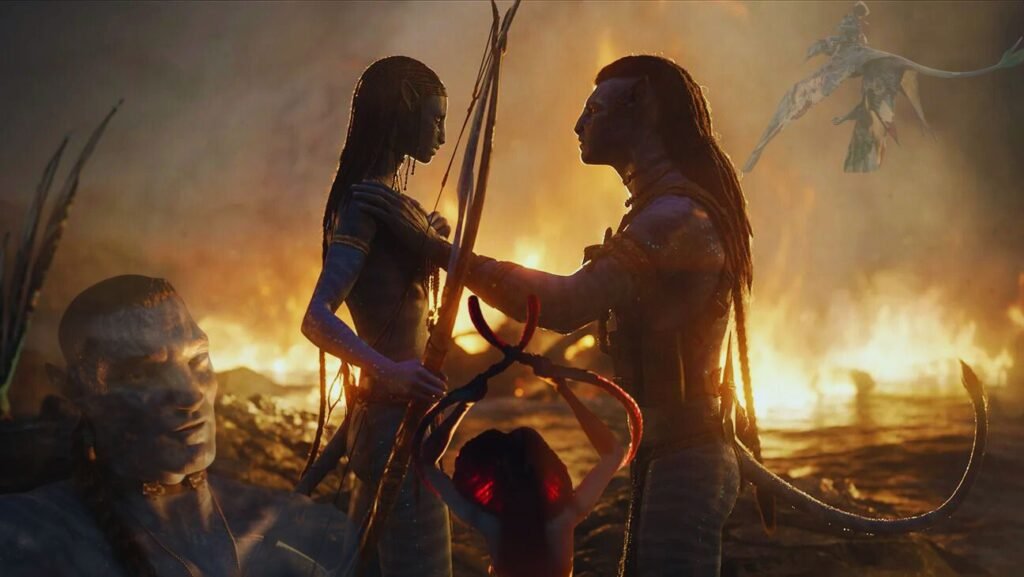
Plot Themes: Survival, Rebirth, and the Cycle of Destruction
Narratively, Avatar: Fire and Ash weaves together at least three major threads:
- The continuing legacy of family, as Jake and Neytiri’s children take more central roles.
- The escalation of humanity’s military-industrial assault on Pandora, now more desperate and ruthless.
- The metaphysical undercurrents that explore Pandora’s living consciousness, Eywa, and what destruction means when a planet itself fights back.
The “Avatar: Fire and Ash” of the title operates on dual layers. On the one hand, it represents the literal volcanic landscapes and destructive weapons humanity deploys. On the other, it symbolizes ashes of grief and loss, countered by the fire of resilience and rebirth.
Eywa is not just a passive force in this installment—it responds to imbalance fiercely, shaping much of the narrative tension. When volcanoes erupt in Pandora, it feels less like nature running wild and more like a planetary immune system rejecting human toxicity.
Characters at a Crossroads
Where the first two films centered Jake and Neytiri almost exclusively, Avatar: Fire and Ash transitions toward generational storytelling. Kiri (Sigourney Weaver’s reincarnated role as Jake’s adopted daughter) deepens her enigmatic bond with Eywa, a mystery that grows more central to the series. Lo’ak continues his troubled but heroic growth, emblematic of the Sully family’s next protector.
Jake himself, once the lionhearted warrior, feels the difficult transition into a leader tested by his own children’s independence. Neytiri, grieving yet fierce, emerges as the film’s emotional anchor, wrestling with her hatred for humanity yet preparing her children to lead in a hybrid world of conflict.
The Ash People, led by new characters played by Oona Chaplin and others, embody a harsher Na’vi ethos: forged in flame, wary of outsiders, and existentially shaped by the violent territory they inhabit. Their introduction redefines the Na’vi not as a single monolithic culture, but as a tapestry of diverse societies, each with its own philosophy and flaws.
Context: The Awaited Fire
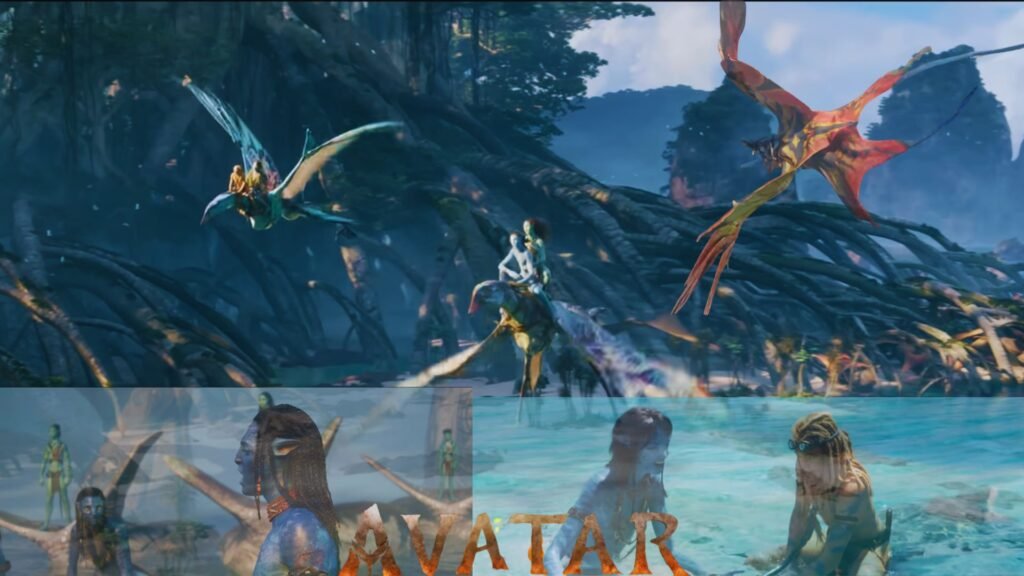
The announcement that Cameron’s third installment would pivot thematically toward the elements of fire stirred excitement years before cameras rolled. Where the franchise’s first two entries positioned the Na’vi across verdant forests and sprawling oceans, Avatar: Fire and Ashdemanded an elemental inversion: the beauty of destruction.
Cameron has often spoken of the difficulty in creating convincing fire and volcanic sceneries within motion capture frameworks. In interviews, he referred to it as “the most hostile environment we’ve ever tried to render for Na’vi.” Such ambition reflects his ethos: cinema is always about reinvention.
Against this backdrop of anticipation, Avatar: Fire and Ashentered 2025 not just as a sequel, but as one of the most heavily scrutinized films of the decade. Could it justify its existence beyond spectacle? Could it resonate with real-world anxieties in the age of climate upheaval? Would audiences still care, after years of shifting media landscapes, superhero fatigue, and streaming dominance?
The result, now before us, leaves no doubt.
The Story: Families in Flames
Avatar: Fire and Ash continues directly in the aftermath of The Way of Water. Jake Sully (Sam Worthington) and Neytiri (Zoe Saldaña) face new peril as their family must abandon familiar seas and instead seek refuge among the Ash People, a volcanic clan of Na’vi adapted to survival amid burning landscapes, plumes of smoke, and riverbeds of molten rock.
Jake—once the confident warrior—is drawn into the role of weary patriarch, torn between defending his family and leading a world teetering under renewed human aggression. Neytiri embodies the heart of the struggle: grieving fallen kin, clinging to tradition, yet fiercely protective of Pandora’s spiritual sanctity.
The Sully children, much like in The Way of Water, take on larger arcs. Lo’ak finds himself increasingly alienated, bridging Na’vi and outsider roles. Kiri deepens in her enigmatic union with Eywa, her scenes shimmering with allegorical resonance about humanity’s fractured relationship with the sacred living world.
The Ash People represent a break from the harmonious, edenic clans of earlier entries. Hardened by fire, survivalist in culture, they view coexistence not as balance but as constant vigilance. Their worldview challenges both Sully idealism and human colonial arrogance, reshaping the narrative stakes.
Technological Influence on Filmmaking
The innovations in motion capture, CGI, and virtual cinematography demonstrated in Avatar: Fire and Ashare influencing the broader film industry. Other filmmakers now look to the franchise as a benchmark for integrating technology with storytelling. The film’s use of hybrid techniques—combining practical sets, motion capture, and fully digital environments—sets a new standard for immersive world-building in cinema.
Educational programs in visual effects, animation, and cinematography have begun referencing the film as a case study for advanced production methods. Students and professionals alike study the integration of character performance with digital rendering, the manipulation of light and color, and the use of virtual camera systems to achieve seamless, cinematic storytelling.
Cultural Preservation and Global Dialogue
Beyond technology and entertainment, Avatar: Fire and Ash fosters global dialogue about cultural preservation. The Na’vi’s traditions, rituals, and social structures highlight the importance of protecting cultural heritage in the face of external pressures. Audiences are encouraged to consider how human societies interact with indigenous communities, local customs, and shared ecosystems.
The film’s cultural messaging resonates globally, prompting discussions on ethical engagement, respect for different ways of life, and the value of collective responsibility. By portraying a fictional society with authentic, relatable struggles, the movie provides a lens through which viewers can examine real-world cultural and social issues.
Long-Term Legacy
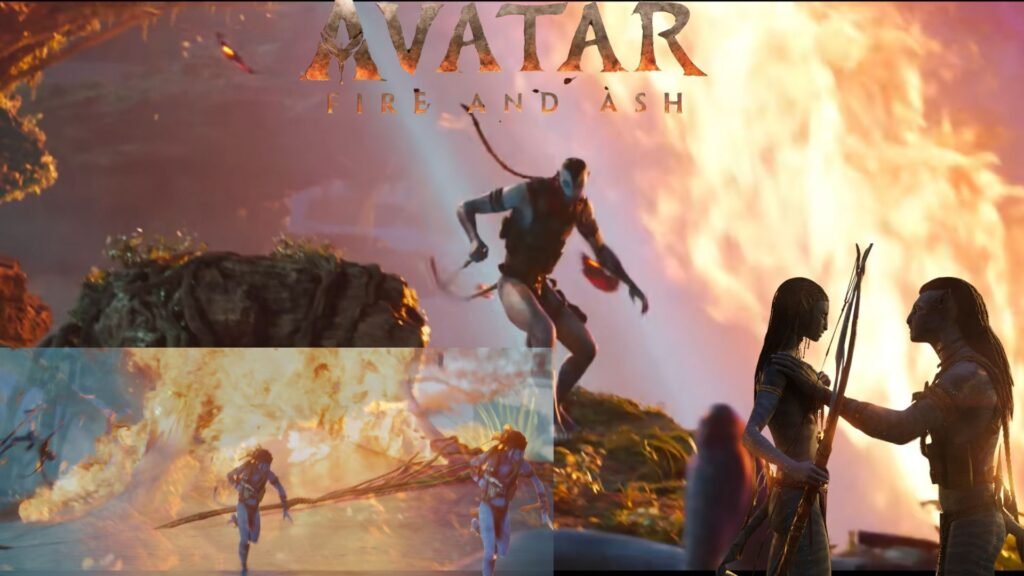
The legacy of Avatar: Fire and Ash will likely extend far beyond its box office success. Its influence on pop culture, environmental advocacy, technological standards, and narrative depth ensures that it will remain a reference point for future cinematic projects. Fans continue to engage with its universe, while creators draw inspiration from its storytelling methods, visual innovation, and thematic richness.
Moreover, the film strengthens the Avatar franchise as a multi-generational phenomenon. Its blend of entertainment, education, and cultural resonance ensures that future sequels will be anticipated not only for spectacle but also for their meaningful contributions to social and environmental discourse.
Themes: (Avatar: Fire and Ash)
The choice to center “fire” and “ash” is more than cinematic gimmickry. It functions as layered allegory:
- Fire as destruction and renewal: Long a symbol of transformation in literature and myth, fire here becomes a dual force—ravaging landscapes yet purifying for rebirth. Pandora burns, yet in its fire lies the challenge to evolve.
- Ash as grief and legacy: Ash is residue, what remains when flames subside. The Sully family wrestles with their grief not as paralysis, but as seeds for resilience. Ash becomes the memory of what was lost, and the foundation for what can rise.
- Volcanoes as planetary immune systems: Eywa’s eruptions read not as accidents but conscious rejections of imbalance, much like Earth’s current feedback loops—storms, quakes, climate intensity—reminding viewers that we are not masters of our world, but stewards or intruders.
Together, Cameron ties these elements to modern anxieties: resource extraction, fossil fuel devastation, and the consequences of unchecked militarization.
Visuals and Technology: Fire as the Final Frontier
Cameron’s technological ambition once again collides with audiences’ imagination. If underwater performance capture was the marvel of The Way of Water, Avatar: Fire and Ash grapples with one of CGI’s most complex effects: fire, smoke dynamics, and light diffusion through ash-choked skies.
The result is a spectacle of contrast: molten rivers glowing against silhouette mountains, ash storms swirling with eerie beauty, Na’vi skin luminescent against volcanic backdrops. Cameron uses 3D not for gimmicks, but spatial depth. Watching Neytiri move through an ash-filled valley, embers drifting between audience and screen, creates profound immersion.
Reports suggest Cameron collaborated with volcanologists and chemical engineers to replicate realistic pyroclastic behaviors. In true Cameron fashion, real science grounds spectacle in reality—making the unreal feel hauntingly tangible.
Character Arcs: Generations in Transition
While Avatar has always been collectively about cultures and worlds, Avatar: Fire and Ash narrows focus onto family legacy and generational responsibility.
- Jake Sully: He struggles not just against humans, but with the fear of raising children in war. His power is offset by growing uncertainty.
- Neytiri: Once the fierce warrior of resistance, now a grieving mother, torn between vengeance and faith in Eywa.
- Kiri: The mystical anchor of the narrative, her role expands with telepathic communion to Eywa, leaving audiences to question if she embodies Eywa’s “chosen vessel.”
- Lo’ak: His arc continues from outcast to reluctant leader, embodying Cameron’s recurring theme of broken sons who find greatness under fire.
- Ash People leaders: New figures (notably played by Oona Chaplin) embody tension between ferocity and pragmatism. They force the Sullys to reckon with unfamiliar survival ethics.
The result is a tapestry of generational conflict—an allegorical mirror of humanity’s own questions: what world do we leave for those who inherit Earth’s ash?
Behind the Scenes: A Production Forged in Trial
Avatar: Fire and Ash road to release was neither simple nor calm. Pandemic delays, the complexity of reinventing motion-capture against simulated fire and smoke, and rising industry economics all contributed to its lengthy gestation. Cameron, ever uncompromising, reportedly ordered entire sequences re-rendered when fire core dynamics felt “too digital.”
Sources say multiple volcano simulation engines were designed specifically for the film, capable of layering pyroclastic waves, ashfall, and dynamic particle interactions invisible to average moviegoers, but essential for grounding Pandora’s new environments. One crew member summarized it: “We weren’t animating fire. We were animating physics.”
Cultural Echoes: A Story for Our Time
Beyond Hollywood spectacle, Avatar: Fire and Ashechoes climate anxieties, environmental collapse, and cultural resilience. Much as Avatar in 2009 stirred conversations about deforestation and indigenous rights, Avatar: Fire and Ash resonates in a world rocked by wildfires, volcanic eruptions, and the accelerating tolls of climate breakdown.
Cameron crafts Pandora not as escapism but as mirror: the violence we wreak on ecosystems reflects back upon us. Humanity’s villains in the film are not faceless monsters, but pragmatic militarists and desperate industrials, eerily resembling contemporary extractive industries.
The Ash People themselves symbolize those Earth communities—indigenous, displaced, survivalist—coping amid ruined climates. Their worldview is not idealistic but defiant realism. In creating them, Cameron resists the fantasy of a perfect noble savage and instead broadens cultural authenticity toward complexity and moral ambiguity.
Reception: Early Impact
As Avatar: Fire and Ash premiered, reactions ranged from stunned awe to critical debate. Visuals were universally praised—some calling it “the greatest fire ever captured on screen.” Others debated whether the trilogy risks heavy-handed allegory. Yet no critic questions Cameron’s singular commitment to pushing cinema’s boundaries.
Audiences resonate particularly with Neytiri’s arc and Kiri’s luminous connection to Eywa, solidifying Sigourney Weaver as the franchise’s mythic spiritual center.
Financial prospects suggest another runaway success; though production costs remain astronomical, the Avatar brand’s longevity remains unrivaled.
Analysis: Myth, Memory, and the Human Condition
Ultimately,Avatar: Fire and Ashis less about spectacle than myth-making. Cameron positions the Avatar saga as a kind of modern folklore—earth-rooted cautionary tales disguised as interstellar odyssey.
The Sully family becomes an archetype: warrior parents guiding children amid apocalypse. The Ash People represent worldviews forged by trauma. Eywa embodies our planet’s sacred, unyielding soul.
In every ember and ashfall lies an implicit warning: no civilization endures if it forgets balance. Like volcanic cycles, humanity too stands at a threshold—destruction or rebirth.
Cultural Echoes and Environmental Allegories
Like its predecessors, Avatar: Fire and Ash is more than art—it is allegory. Cameron ties Pandora’s ecological crisis to Earth’s ongoing environmental destruction. If the first film echoed the Amazon rainforest and the second resembled coral reef depletion, the third is a fable about fossil fuels, climate devastation, and the scars of extractive industries.
The Ash People’s survival instincts symbolize resilience amid ruined lands, while Eywa’s fiery backlash underscores a universal message: Earth—or Pandora—will fight back if pushed past the brink. Humanity’s inability to learn from its mistakes mirrors real-world existential threats, making Avatar: Fire and Ash as much a work of cultural critique as a cinematic epic.
Performances
Zoe Saldaña delivers her most stirring work in the trilogy, balancing Neytiri’s strength with raw vulnerability. Sam Worthington carries Jake in quieter tones, evolving into a father figure torn between protector and liberator. Weaver’s Kiri is fascinating, ethereal, simultaneously human and divine.
New additions, particularly Chaplin’s role among the Ash People, add depth. Their philosophy—less harmonious, more survivalist than other Na’vi tribes—complicates the viewer’s perception of what Pandora’s balance really means.
Reception and Legacy
Early reactions to Avatar: Fire and Ash already frame it as a landmark entry in the Avatar saga. Where The Way of Water was rapturously received for its visuals, Avatar: Fire and Ash resonates with its themes and character arcs. Many critics note how Cameron has transitioned from pure spectacle-building toward complex myth-making, positioning Avatar: Fire and Ash less as a franchise and more as folklore unfolding on the big screen.
The film invites audiences to reflect on family, legacy, destruction, and survival—not only for characters but for our world. With more sequels on the horizon, Avatar: Fire and Ash feels less like a midpoint and more like a seismic shift in Cameron’s storytelling tapestry.
Conclusion
Avatar: Fire and Ash (2025) is not simply another blockbuster. It is James Cameron at his most ambitious—painter, innovator, futurist, philosopher, and storyteller rolled into one. Avatar: Fire and Ash become not only cinematic metaphors but lenses through which humanity can glimpse both its ruin and its chance at renewal.
In conclusion, the marketing and promotion of Avatar: Fire and Ash exemplify modern cinematic advertising at its finest. By integrating traditional media, digital campaigns, fan engagement, experiential marketing, and strategic merchandising, the film built unparalleled anticipation prior to its release. These efforts not only maximized box office potential but also deepened the cultural impact of the film, creating an immersive, multi-platform experience that resonates with audiences worldwide.
More news :-Zubeen Garg’s Death in Scuba Diving Accident: The Silence of Assam’s Voice on 2025
https://brackingnews.com/2025/09/19/zubeen-gargs-death-in-a-scuba-diving-accident/



2 thoughts on “Avatar: Fire and Ash (2025) – A Cinematic Inferno That Redefines Sci-Fi Storytelling”