Chennai
In the crowded political and cultural landscape of Tamil Nadu, very few figures manage to transcend cinema, ideology, and generation. Fewer still evolve into symbols of hope, resistance, and aspiration. Today, as conversations across tea shops, college campuses, corporate boardrooms, and village streets converge on a single name, one title is spoken with increasing conviction: “Jana Nayagan”—the People’s Leader. And at the heart of this growing phenomenon stands Thalapathy Vijay.
For over three decades, Vijay has been a commanding presence in Tamil cinema. But the story unfolding now is larger than box-office numbers or fan-club celebrations. It is the story of a star reshaping his public identity, redefining leadership, and positioning himself at the crossroads of art, responsibility, and people’s power.
This is not merely a film star’s journey. It is a social narrative—one deeply intertwined with the hopes of millions.
The Rise of a Reluctant Star
Joseph Vijay Chandrasekhar did not burst into Tamil cinema as a prodigy hailed by critics. His early years were marked by skepticism, comparisons, and relentless scrutiny. Yet what set Vijay apart was not instant brilliance but quiet perseverance.
Film after film, he refined his craft—improving his acting, sharpening his screen presence, and learning the language of mass cinema. By the late 1990s and early 2000s, Vijay had established himself as a reliable leading man. But it was during the following decade that something deeper began to form. Audiences did not merely watch Vijay’s films; they began to see themselves in him.
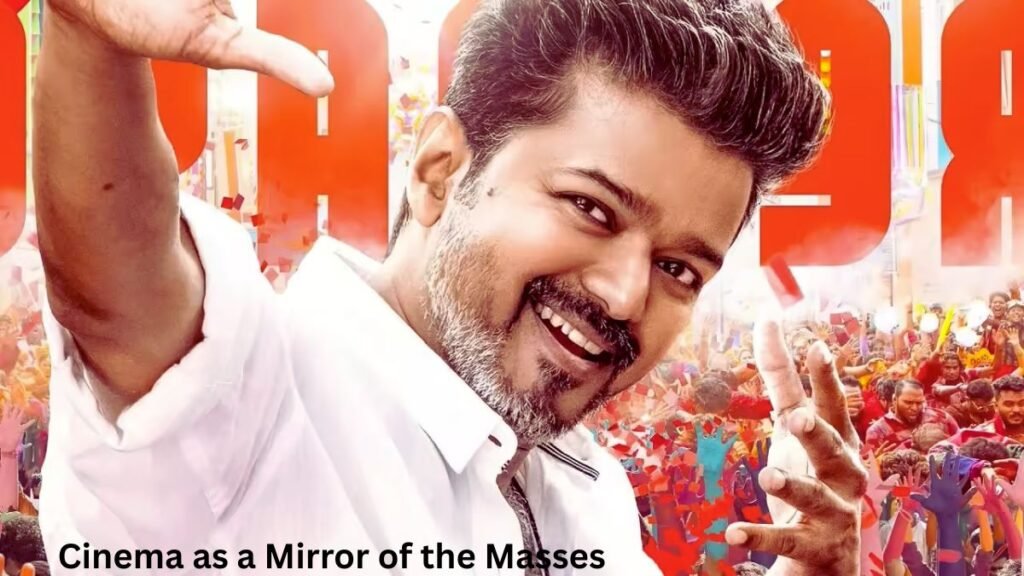
Cinema as a Mirror of the Masses
Vijay’s most impactful films share a common thread: the ordinary man confronting extraordinary injustice. Whether portraying a student challenging an oppressive education system, a villager standing up to corporate exploitation, or a citizen resisting political corruption, Vijay’s characters increasingly reflected collective frustration.
Films like Ghilli, Thirupaachi, Kaththi, Thuppakki, Mersal, Sarkar, and Master were not just commercial successes. They became discussion points, especially among the youth.
Dialogues from these films turned into protest slogans. Songs transformed into motivational anthems. Scenes were dissected not for entertainment alone, but for their ideological undertones. Cinema critics began noting a shift: Vijay was no longer just playing heroes—he was articulating a public conscience.
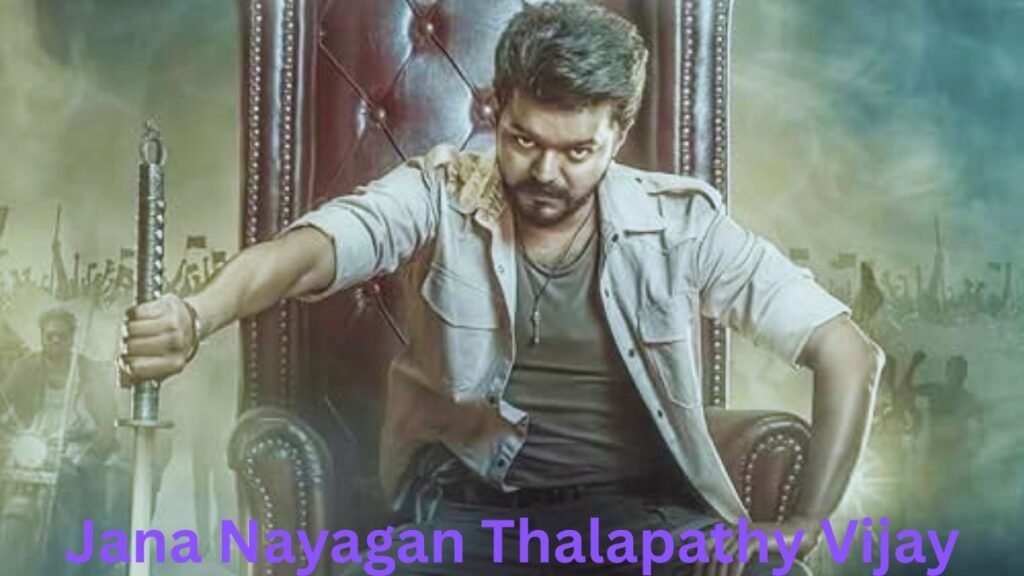
The Birth of “Jana Nayagan”
The term “Jana Nayagan” did not originate in a press release or a branding exercise. It emerged organically—from fan banners, social media posts, and grassroots conversations.
“Thalapathy” represented command and charisma.
“Jana Nayagan” represented connection and credibility.
Unlike traditional superstar worship, Vijay’s fan base began engaging in social work: blood donation camps, disaster relief efforts, education assistance, and public welfare activities. These were not sporadic acts; they were coordinated, sustained, and deeply rooted at the local level.
What stood out was Vijay’s measured encouragement—never overtly claiming leadership, never distancing himself from responsibility.
A Star Who Chose Silence Over Noise
In an age of constant media exposure, Vijay remains an anomaly. He avoids excessive interviews, refrains from reactionary statements, and rarely indulges in celebrity spectacle. This silence, rather than diminishing his influence, has amplified it.
Political analysts argue that this restraint has worked in his favor. While others rush to comment, Vijay observes. While debates rage, he listens. When he finally speaks—through a film, a statement, or an action—the impact is magnified. This approach has fueled speculation: Is Vijay being cautious? Strategic? Or is he redefining leadership itself?
Education, Youth, and the Vijay Phenomenon
Perhaps the most defining aspect of Vijay’s appeal lies in his connection with the youth. His repeated focus on education, social justice, and self-respect resonates deeply in a state with a rich legacy of reformist movements.
When Vijay publicly acknowledged toppers from government schools, it sent a powerful message. When his films criticized systemic failures without mocking the common man, it struck a chord.
University discussions, student forums, and online platforms increasingly frame Vijay not just as an entertainer, but as a thought influencer.
Politics Without the Traditional Playbook
Tamil Nadu has a long history of cinema influencing politics. From MGR to Jayalalithaa, the path is well documented. Yet Vijay’s trajectory appears different.
He has avoided dramatic political announcements. He has not aligned himself loudly with existing parties. Instead, he has focused on institution-building, discipline among supporters, and clarity of intent.
Observers note that Vijay’s actions suggest a long-term vision—one that prioritizes credibility over haste.
The Weight of Expectation
With admiration comes expectation. As Vijay’s public image evolves, so does the pressure. Supporters see him as a solution to systemic issues. Critics question his readiness, experience, and ideological clarity.
Vijay, however, appears aware of this burden. His recent choices—both cinematic and personal—reflect a man acutely conscious of the responsibility placed upon him.
The Man Beyond the Myth
Despite the massive persona, those who have worked closely with Vijay describe a deeply private individual—disciplined, punctual, and intensely focused. He avoids excess, values routine, and places great importance on family and inner balance.
This grounded nature perhaps explains his sustained relevance. In an industry prone to rapid rise and fall, Vijay’s consistency stands out.
A Turning Point in Tamil Nadu’s Public Imagination
As Tamil Nadu navigates economic challenges, generational shifts, and evolving political narratives, the idea of leadership itself is being re-examined. People are no longer just looking for power; they are looking for integrity, empathy, and vision.
In this context, Jana Nayagan Thalapathy Vijay is less a slogan and more a reflection of collective longing.
What Lies Ahead
Whether Vijay formally enters electoral politics or continues shaping discourse through culture and social engagement, one truth is undeniable: he has already altered the conversation.
He has proven that influence does not always require noise, that leadership can emerge from restraint, and that cinema—when wielded responsibly—can still be a powerful democratic tool.
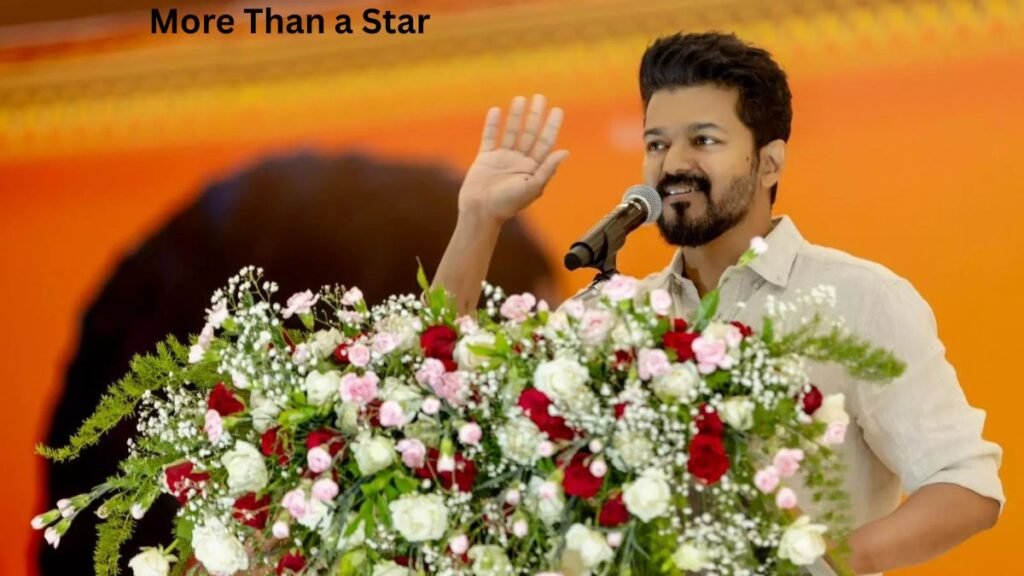
Conclusion: More Than a Star
Thalapathy Vijay’s journey from actor to Jana Nayagan is not a sudden transformation. It is the result of years of trust-building, careful choices, and an unspoken contract with the people.
In the eyes of millions, he is no longer just the hero on screen.
He is the voice they hear when systems fail.
The mirror they see when they question authority.
And perhaps, the leader they believe in when hope feels fragile.
History will decide the final chapter of this story.
But for now, Jana Nayagan Thalapathy Vijay stands not at the end of a career—but at the beginning of a larger responsibility.
A Career Rooted in the Mass Medium
Joseph Vijay Chandrasekhar entered Tamil cinema as a child artist and later as a lead actor during a period of intense competition. His early films received mixed responses, and his rise was steady rather than explosive. Over time, however, Vijay consolidated his position as a dependable commercial star, delivering consistent box-office performances.
By the mid-2000s, Vijay had become a familiar presence across urban and rural Tamil Nadu. His films were widely accessible, his screen image relatable, and his popularity particularly strong among young audiences. Yet, at this stage, his stardom remained largely apolitical.
The shift came later, as the themes of his films began to align more closely with social and political issues.
Cinema as Political Messaging
In the last decade, Vijay’s choice of roles has drawn attention for their overt engagement with public concerns. Films addressing farmers’ distress, corporate exploitation, educational inequality, national security, and political corruption found resonance beyond cinema halls.
Importantly, these narratives did not position the hero as a flawless authority figure. Instead, Vijay’s characters were often depicted as ordinary citizens confronting institutional failures. This portrayal contributed to a growing perception of Vijay as a representative of public frustration rather than an elite celebrity detached from reality.
Political commentators note that such films functioned as soft political communication—raising issues without aligning with a specific party or ideology.
The Emergence of “Jana Nayagan”
The title “Jana Nayagan”—meaning “People’s Leader”—began appearing in fan discourse, social media campaigns, and grassroots activities associated with Vijay’s fan organizations. Unlike traditional fan clubs focused solely on cinema celebrations, these groups increasingly engaged in welfare initiatives, including disaster relief, educational assistance, and health camps.
These activities, while unofficial, contributed to a perception of organized social presence. Vijay’s public responses to these efforts were restrained, often emphasizing discipline and responsibility rather than personal glorification. This restraint has become a defining feature of his public persona.
A Calculated Public Silence
In contrast to many public figures, Vijay has maintained limited direct engagement with the media. He avoids frequent interviews and rarely responds to political controversies directly. When statements are issued, they are typically brief, formal, and focused on broader principles rather than immediate political disputes.
Analysts argue that this silence serves two purposes. First, it prevents premature political positioning that could alienate sections of the public. Second, it allows space for interpretation, enabling different groups to project their expectations onto him. In a media environment driven by constant visibility, Vijay’s low-profile approach stands out.
Youth Appeal and Institutional Critique
One of the most notable aspects of Vijay’s influence is his sustained appeal among young voters. His films often center on students, first-generation professionals, and unemployed youth—demographics that play a crucial role in electoral outcomes.
His public gestures recognizing academic achievement, particularly among students from government schools, were widely discussed. While symbolic, such actions reinforced his image as someone attentive to structural inequality.
Education policy experts note that this focus aligns with long-standing political priorities in Tamil Nadu, particularly around social mobility and access.
Political Context and Timing
Tamil Nadu’s political landscape is currently shaped by generational change, governance debates, and the absence of towering mass leaders comparable to earlier decades. This vacuum has intensified public interest in alternative leadership figures.
Within this context, Vijay’s name frequently surfaces—not as a declared candidate, but as a possibility. His actions suggest preparation rather than immediacy, prompting speculation that any formal political move would be carefully timed.
Observers also point out that Vijay has avoided direct confrontation with established political parties, choosing instead to position himself as an independent moral voice.
Support and Skepticism
As Vijay’s political relevance grows, so does scrutiny. Supporters view him as a disciplined, corruption-free figure capable of connecting with ordinary citizens. Critics question his administrative experience, ideological clarity, and ability to transition from cinematic symbolism to policy-driven governance.
Vijay himself has not directly addressed these critiques, reinforcing the perception that he is conscious of the expectations and limitations associated with public leadership.
The Cinematic Dimension
Despite increasing political interpretation, Vijay continues to operate primarily within cinema. His films remain major commercial events, and his screen image retains its heroic framing. This dual identity—actor and perceived leader—creates a unique dynamic.
Film industry insiders note that Vijay’s recent projects appear designed to balance entertainment with social commentary, avoiding overt political propaganda while sustaining relevance.
This balance has allowed him to retain a broad audience base while gradually shaping a more serious public image.
Conclusion: A Figure at the Crossroads
Whether Thalapathy Vijay formally enters politics remains an open question. What is clear, however, is that his role in Tamil Nadu’s public discourse has expanded beyond cinema.
The emergence of Jana Nayagan Thalapathy Vijay reflects a broader shift in how leadership is imagined—less reliant on loud declarations and more on perceived integrity, consistency, and connection with public sentiment.
As Tamil Nadu approaches future political milestones, Vijay’s position will continue to be closely watched—not just as a film star, but as a figure operating at the intersection of culture, power, and popular expectation.
For now, his journey remains unfinished—poised between the screen and the state, between performance and politics.