
On the evening of 10 November 2025, a powerful and deadly explosion ripped through a vehicle at a traffic signal near the historic Red Fort in Delhi’s Old City, leaving at least eight dead and scores wounded, and sending shockwaves through the capital.
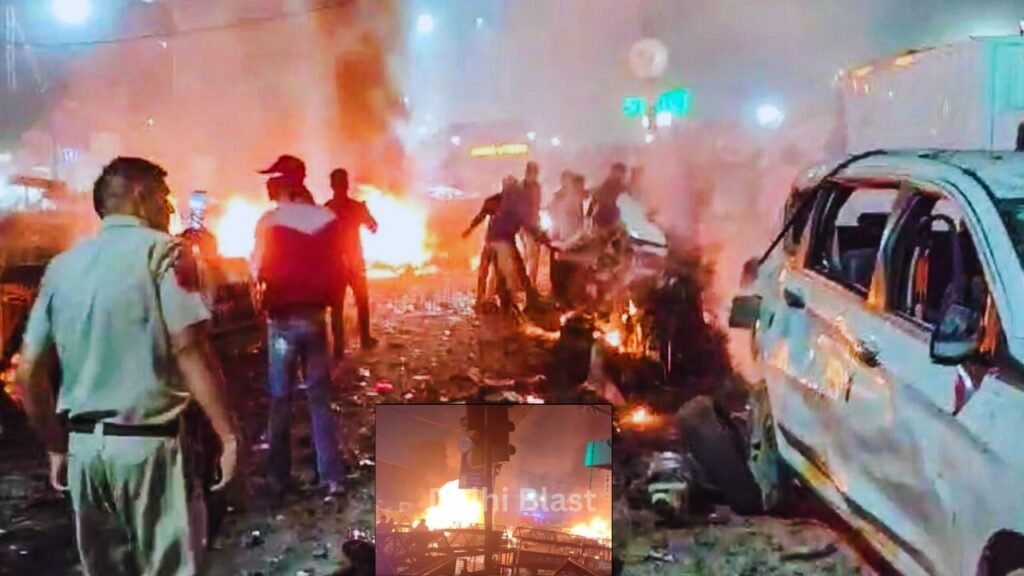
The incident occurred at approximately 6:55–7:00 pm local time (IST) when a slow-moving car—identified as a Hyundai i20—came to a halt at a red light near the Gate 1 exit of the Red Fort Metro Station before an explosion destroyed the vehicle and set other nearby vehicles ablaze.
As the flames and debris settled in the narrow lanes of one of Delhi’s busiest heritage‐zones, horror dawned: charred vehicles, rickshaws ablaze, body parts strewn on the road and panicked crowds streaming away from the scene. One witness said:
“I saw someone’s hand on the road… Delhi blast shook the windows, the vehicle in front of me burst into flames.”
This tragic incident is now the focus of a large‐scale investigation, with security forces placed on high alert across Delhi and neighbouring states.
Scene of Devastation
The location—Netaji Subhash Marg, close to Gate 1 of the Red Fort Metro Station—is significant in its density of foot traffic, heritage tourists, commuters and street vendors.
What Happened
Eyewitness accounts and official statements indicate that the vehicle under question was waiting at a red light when the explosion occurred. The car burst into flames, engulfing adjacent vehicles—two e-rickshaws, an auto‐rickshaw and multiple cars.
Delhi Fire Services received the first call around 6:55 pm and dispatched at least seven fire tenders; by 7:29 pm the primary blaze was under control.
The scale of damage was enormous for the brief moment: vehicles melted, glass shattered from nearby shops, traffic snarled, and the whole locality plunged into chaos.
The Human Toll
As of the latest official count, eight people have been confirmed dead. Initial reports said at least 20 to 24 people were injured, many of them pedestrians or drivers in nearby vehicles.
Some of the wounded are in critical condition, and hospitals in the area (including the Lok Nayak Jai Prakash (NLJP) Hospital) are treating burn victims and those with severe trauma injuries.
Chaos and Response
Within minutes, law enforcement had sealed the area, diverted traffic and began evacuations. A team from the Delhi Police’s Special Cell, forensic experts, and eventually the National Investigation Agency (NIA) and the National Security Guard (NSG) arrived on the scene.
Nearby metro services were disrupted for a brief span, and the street adjacent to the blast site was cordoned off; the public was advised to avoid the area as investigators combed through debris.
Delhi Blast Investigation Underway
Official Responses
Union Home Minister Amit Shah visited the blast site and hospital, stating that “all possibilities are being kept open”. He confirmed that the vehicle involved was the Hyundai i20 and that CCTV and traffic‐camera footage are being examined.
Delhi Police Commissioner Satish Golcha said preliminary investigations show the explosion occurred in a slow‐moving or stationary vehicle that had halted at a red light.
Key Lines of Inquiry
Investigators are focusing on several major questions:
- Was the blast caused by a mechanical failure, gas cylinder explosion, or an improvised explosive device (IED)? Early comments note no crater was found at the spot and no pellet/splinter injuries typical of bomb blasts were yet confirmed.
- Who owns or was driving the vehicle? Reports indicate the car bore a Haryana registration and that its owner has been detained for questioning.
- Was the location the target or did the device detonate prematurely? Officials are examining if the waiting at the traffic signal was incidental or planned.
- Is there any linkage to other recent seizures of explosive materials? Notably, earlier on the same day authorities retrieved roughly 2,900 kg of suspected explosive material in Faridabad (Haryana). While authorities say there is no confirmed link yet, the coincidence has raised concerns.
Evidence Being Collected
Forensic teams are collecting debris from the vehicle, remnants of the device (if any), analysing chemical traces, and downloading CCTV footage from the immediate area and nearby routes. Witnesses are being interviewed, and mobile phone records of the vehicle occupants are under scrutiny.
Police have also heightened vehicle screening in the region and are coordinating with neighbouring states for intelligence sharing.
Security Measures & Wider Implications
Alert Across Regions
Following the explosion, a high alert was declared in Delhi and across neighbouring states such as Uttar Pradesh, Maharashtra, Tamil Nadu and Punjab. Key markets, tourist zones and transport hubs were placed under heightened surveillance.
The Central Industrial Security Force (CISF) stated that the Delhi Metro, airports, and other important installations are on full alert.
Political and Heritage Significance
That the blast occurred so close to the Red Fort—the 17th-century monument and a national symbol—adds profound symbolic weight. The area is heavily trafficked by tourists, commuters and heritage visitors, making it especially vulnerable.
Political leaders swiftly voiced their concern. The Prime Minister offered condolences; state governments demanded immediate answers and accountability. Calls for tighter intelligence, urban security redesign and heritage‐zone protection are expected to be renewed.
Urban Vulnerabilities in Focus
The nature of the blast—occurring in a vehicle at a queue of traffic—highlights structural urban vulnerabilities:
- Vehicles waiting at signals are static for brief periods, making them potential targets.
- Crowded heritage zones with mixed traffic (cars, rickshaws, pedestrians) are difficult to secure comprehensively.
- Rapid fire and collision risk due to dense vehicle proximity.
Urban planners and security analysts will likely revisit models of vehicle access, waiting zones near monuments, and rapid response capabilities in older city fabrics.
Human Stories: Loss, Heroism and Fear
Witness Accounts
Shops near the scene relayed harrowing tales:
“I heard a thunderous roar, the ground shook. I looked out and saw cars in flame and people running. We grabbed what we could and helped the wounded.”
One auto‐rickshaw driver, injured in the explosion, said the car which exploded was only two feet ahead of him. He attributed his survival to ducking just before the blast.
Impact on Lives
For the families of the deceased, the evening turned tragic in an instant. Street-vendors, commuters, tourists—many had no forewarning. Among the wounded were vendors waiting to close up shop, travellers threading through the Old City value-market area, and drivers waiting for passengers.
Hospitals reported multiple critical burn victims, and authorities arranged for counselling and support teams to manage psychological trauma.
Community Response
Despite the horror, the local community stepped up. Shop owners helped retrieve injured, neighbours provided water and blankets, and volunteers assisted the emergency services. Social media buzzed with #DelhiStrong and messages of solidarity—evidence that while terror shakes cities, citizens often respond with compassion.
Historical Context & Threat Landscape
Blast History in Delhi
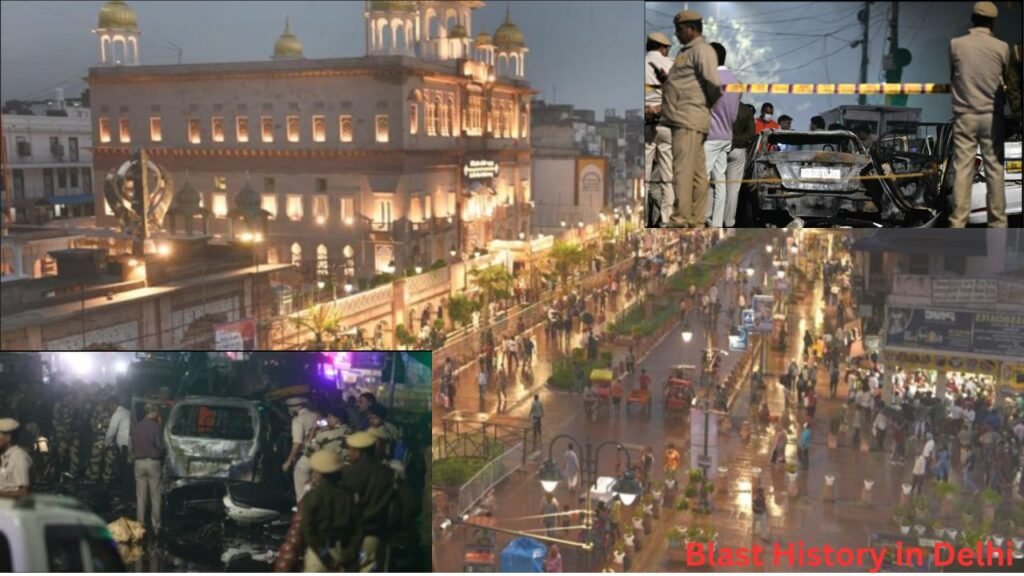
The capital is no stranger to bomb blasts: From the 2005 market‐blasts in Delhi to the 2008 serial blasts and other high-profile terror attacks in transit hubs, the city has periodically been a target.
Security analysts say that while counter-terror capacity has improved, the urban fabric—especially heritage, commercial and mixed traffic zones—continues to pose challenges.
Changing Tactics?
If this incident is terror-related, certain features stand out: use of a vehicle rather than a larger explosive cache; targeting a vehicular queue near a landmark; and possibly limited device size yet high impact. Such tactics might reflect evolving strategies of actors seeking maximum disruption with smaller footprints.
Intelligence & Enforcement Pressure
Earlier on the same day, as noted, 2,900 kg of suspected explosives were seized in Faridabad, pointing to the possibility of an extensive module. Whether there is a direct linkage remains unclear, but the coincidence has raised red flags across security agencies.
What Happens Next?
Short‐Term Actions
- Full forensic and chemical analysis of the blast site.
- Examination of CCTV, traffic camera data, vehicle movement and mobile phone records.
- Identification and questioning of vehicle occupants, owner, registration trail.
- Security sweep of nearby areas, entrances, signals, parking zones.
Medium & Long‐Term Response
- Review of vehicle waiting zones near heritage and crowded areas—access restrictions, screening, barrier design.
- Enhanced intelligence coordination (state + central) on terror modules, vehicle movement tracking.
- Public awareness campaigns: reporting suspicious vehicles, avoidance of standing in vulnerable locations.
- Compensation and support for victims and families; psychological rehabilitation for survivors.
- Possible legislative/administrative review of traffic signal design near vulnerable sites; emergency evacuation protocols for crowded heritage zones.
For Citizens, What to Know & Do
- Remain vigilant: If you notice vehicles parked for long durations in unusual positions near heritage sites or high foot-traffic zones, alert authorities.
- When visiting crowded zones: Note exits, avoid prolonged queuing at traffic signals in heavy traffic zones, be aware of nearby parked vehicles and their occupants.
- Follow official advisories: In the wake of the blast, many areas are under higher security; cooperate with checks.
- For families: If you have loved ones in the area, monitor hospital bulletins, stay in touch with authorities, avoid misinformation on social media.
- For tourists: Be alert to local security updates; deviations may occur in transport access, and the city may implement increased checks.
- Support community resilience: Aid local relief efforts, support victims in your neighbourhood, encourage calm and unity.
In Reflection
This tragic evening has once again underscored the fragility of urban life and the enduring vulnerabilities of even the most iconic and historic cities. A city like Delhi, layered with history and bustle, must constantly balance accessibility, mobility and security.
While the immediate cause of this explosion remains under investigation, the repercussions are clear: lives lost, injuries suffered, a community shaken and a national capital on guard.
Yet, amid the fear and chaos, the human spirit also shows. From neighbours assisting victims, volunteers supporting emergency services, and citizens offering solidarity—the response is not just about crackdown and investigation but also about healing, resilience and unity.
As forensic teams dig through debris, security agencies sift through leads, and policymakers wine-down potential gaps, the greatest challenge will be turning this tragedy into strengthened urban safety, renewed intelligence coherence and a reaffirmation of citizen vigilance and solidarity.
In the end, the physical damage can be repaired—but trust, morale and the sense of everyday safety must be rebuilt. Delhi now transitions from shock to scrutiny. The results of the investigation will matter not just for justice, but for the wider question of how a modern, dense, historic city protects its people while staying open and vibrant.
A City in Shock
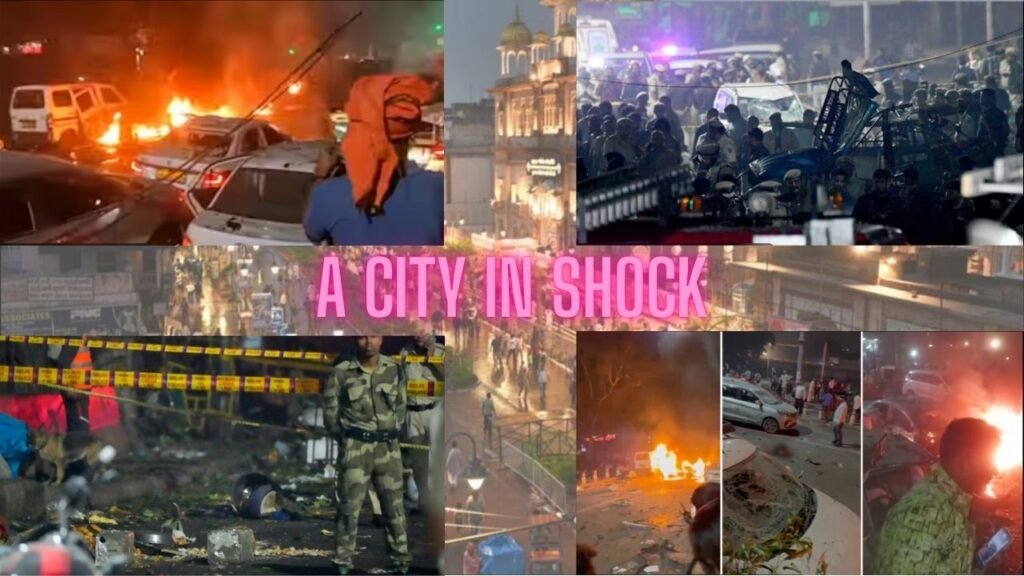
New Delhi — The nation’s capital woke up to horror and disbelief today after a powerful explosion ripped through a crowded marketplace in Central Delhi, leaving behind a trail of devastation, grief, and unanswered questions. The blast, which occurred around 12:45 p.m. near the bustling Karol Bagh Market, killed at least 14 people and injured over 60 others, many of whom remain in critical condition.
Authorities have confirmed that the explosion was a deliberate act of terror, most likely caused by an Improvised Explosive Device (IED) planted inside a parked motorcycle near a food stall. The blast tore through vehicles, shattered windows, and sent plumes of thick smoke rising above one of Delhi’s busiest commercial zones.
Within moments, the city’s regular rhythm of car horns, chatter, and street vendors was replaced by the terrifying sounds of screams, sirens, and chaos.
Eyewitness Horror: “It Was Like the Ground Moved Beneath Us”
Rakesh Tiwari, a shop owner in Karol Bagh, described the blast as a “thunderclap that changed everything in a second.”
I was ringing up a sale when a sudden, sickening sway moved the ground under my feet.Glass flew everywhere. I saw people on fire, others screaming for help. It was like a war zone,” he said, still trembling.
Another witness, 22-year-old student Priyanka Mehta, had just stepped out of a nearby café when the explosion occurred.
“A ball of fire rose up. My ears went numb. I couldn’t see anything but smoke and blood. People were trying to lift the injured with their bare hands,” she recalled, her voice breaking.
Mobile phone videos shared on social media captured the immediate aftermath — overturned carts, shattered shopfronts, twisted metal, and desperate cries for help. Several vehicles nearby caught fire, and the flames spread quickly before firefighters could reach the scene.
Swift Response from Emergency Services
Within minutes of the explosion, Delhi Police, Fire Services, and National Disaster Response Force (NDRF) teams rushed to the site. The rescue operation, led by senior police officials, continued for hours as first responders sifted through rubble and debris to search for survivors.
Ambulances ferried the injured to RML Hospital, Lady Hardinge Medical College, and BLK Super Speciality Hospital, where emergency wards were flooded with victims suffering from burns, fractures, and shrapnel wounds.
Doctors reported that several of the injured were in critical condition due to internal injuries and severe trauma. Blood donation drives were initiated within an hour, with dozens of citizens lining up at hospitals.
Deputy Commissioner of Police (Central) S. K. Meena stated:
“Our teams are on the ground. The area has been completely sealed off. Forensic experts have collected crucial evidence, and we are working closely with central agencies to identify the perpetrators.”
Police Confirm IED Used in Attack
Forensic investigators have confirmed that a low-intensity IED was used, triggered remotely or via timer mechanism. Traces of ammonium nitrate, ball bearings, and metal fragments were found at the site — components commonly used in previous terror attacks across the country.
According to sources, the bomb was concealed inside the compartment of a motorcycle parked near a juice vendor. CCTV footage from multiple shops and traffic cameras in the area is being analyzed to trace any suspects.
A senior investigator revealed under condition of anonymity:
“We have some leads from CCTV footage showing two men arriving on a motorcycle around 12:30 p.m. They parked it and left hurriedly. We suspect this vehicle carried the explosive device.”
The National Investigation Agency (NIA) has now officially taken over the probe.
Political Reactions and National Outrage
Condemnations poured in from across the political spectrum. Prime Minister Narendra Modi expressed his condolences, calling the attack “a cowardly act against humanity.”
“The nation stands united against those who try to create fear and division. The culprits will be brought to justice,” he said in a statement.
Home Minister Amit Shah held a high-level security meeting with the Delhi Police Commissioner, IB, and NIA officials. Additional security has been deployed across the capital, especially in crowded public spaces, metro stations, and marketplaces.
Delhi Chief Minister Arvind Kejriwal, who visited the site later in the evening, announced compensation for victims’ families and free medical care for the injured.
“This attack is an attempt to break our city’s spirit — but Delhi will never bow to terror,” Kejriwal declared, surrounded by rescue workers and local residents who applauded his message of unity.
Opposition leaders also condemned the act, urging the government to strengthen urban security networks and intelligence sharing.
Scenes from Hospitals: Tears, Desperation, and Hope
At RML Hospital, where most of the injured were brought, the scene was heart-wrenching. Families waited outside the emergency ward, clutching photographs and begging for updates. Nurses moved quickly through crowded corridors, calling out names from patient lists.
One man, Mohammad Irfan, had been searching for his brother, a rickshaw driver, since the blast.
“I’ve checked three hospitals already. Nobody can tell me if he’s alive,” he sobbed.
Doctors, overwhelmed but determined, worked tirelessly. “We’ve treated over 40 patients so far. Many have shrapnel wounds. Every second counts,” said Dr. Shalini Gupta, head of the emergency unit at RML.
Volunteers from NGOs like Delhi Cares and Red Cross India arrived to distribute food and water to waiting families. The city’s compassion shone through the darkness — a reminder that even amid tragedy, humanity perseveres.
Security Tightened Across Delhi
In the aftermath of the blast, security was heightened across all major transport hubs, including New Delhi Railway Station, Indira Gandhi International Airport, and key metro lines. Bomb disposal squads were deployed at crowded areas like Connaught Place, Chandni Chowk, and Sarojini Nagar to prevent further incidents.
Traffic diversions caused significant congestion across the central district, but citizens largely cooperated with the authorities. The Delhi Police appealed to residents to remain calm and avoid spreading misinformation online.
In a late-night briefing, the Commissioner announced:
“We have increased patrolling and surveillance across the city. Random vehicle checks are being conducted, and we are verifying all suspicious movements caught on camera.”
International Reactions: Support and Condemnation
The global community reacted swiftly to the tragedy. The United Nations Secretary-General condemned the attack, expressing solidarity with the people of India. Leaders from the United States, United Kingdom, France, and Japan extended condolences, calling the blast a reminder that terrorism knows no boundaries.
The U.S. State Department issued a statement saying:
“We stand with our strategic partner India in the face of this cowardly act. The resilience of the Indian people continues to inspire the world.”
Pakistan’s Foreign Office also released a rare message of sympathy, expressing “deep sorrow” over the loss of innocent lives and reiterating that “violence has no place in our region.”
Investigation Widens: Clues, Suspicions, and Breakthroughs
By evening, intelligence sources revealed possible links to a lesser-known extremist group that had been under surveillance for several months. Officials are also investigating whether the attack was part of a broader network operating across North India.
Cyber units are monitoring online chatter, especially encrypted messages on social media platforms, to trace communication patterns linked to the suspects. The NIA is coordinating with state police forces in Haryana, Uttar Pradesh, and Jammu & Kashmir to track down possible hideouts.
Sources have also indicated that the chemical composition of the explosive matches samples used in a 2019 Delhi court complex blast, suggesting a possible connection.
A City’s Spirit: From Fear to Unity
As night fell, hundreds gathered at India Gate and Jantar Mantar for candlelight vigils. People from all walks of life — students, journalists, doctors, and vendors — stood shoulder to shoulder, holding placards reading “We Will Not Be Afraid” and “Delhi Stands Together.”
Social media was flooded with hashtags like #PrayForDelhi, #DelhiStrong, and #StandAgainstTerror, with millions expressing solidarity. Citizens shared emergency helpline numbers, arranged blood donations, and offered transport for victims’ families.
“They wanted to divide us, but they only made us stronger,” said Neha Bhatia, a 24-year-old teacher attending the vigil. “We’ve seen tragedy before, but Delhi always rises.”
Echoes of the Past: Revisiting Delhi’s History of Blasts
The capital has faced terror before. The 2005 Diwali blasts, the 2011 High Court bombing, and several smaller attacks have left indelible scars on the city. Yet each time, Delhi’s people have shown resilience beyond measure.
Experts say that while security has improved significantly, the city’s open nature — with thousands of markets, public events, and transport hubs — makes total prevention nearly impossible.
Retired IPS officer Kiran Bedi noted:
“We need stronger intelligence coordination, better public awareness, and faster technology deployment. Every citizen must become a partner in national security.”
The Morning After: Searching for Answers
As dawn broke over Delhi the next day, the market that once buzzed with life was now a cordoned-off zone of silence. The smell of burnt rubber and smoke lingered in the air. Forensic experts continued collecting samples, while police officers guarded the perimeter.
Traders gathered outside, uncertain about the future of their livelihoods but united in their grief. “We will rebuild,” said Ramesh Verma, a shopkeeper who lost his cousin in the explosion. “They can destroy our walls, not our will.”
The Home Ministry announced an inter-agency task force to coordinate the investigation and recommended a nationwide alert for potential related threats.
Conclusion: The Road Ahead
The Delhi blast has once again reminded the nation of the fragile line between peace and chaos in a world where violence seeks to disrupt normalcy. But it has also reaffirmed India’s collective strength — the courage of citizens, the dedication of first responders, and the unity of a people who refuse to succumb to fear.
In the words of one survivor, Anita Sharma, still bandaged and weak but determined:
“I saw death today. But I also saw strangers saving strangers. That’s what Delhi is — hurt, but never broken.”
As investigations continue and justice is sought, one truth stands clear: the city may be scarred, but its soul endures — fearless, defiant, and unbowed.
More news :-India vs Australia: (4th T20I) A Clash of Cricketing Titans
https://blindspotnews.com/india-vs-australia/



4 thoughts on “Delhi Blast: Fear, Chaos, and Resilience in the Heart of India 2025”