
Prologue: Where History and Passion Collide
The morning of the second Test between India vs West Indies at the Arun Jaitley Stadium in New Delhi began not just with the rising sun but with rising emotion.
The stands were slowly filling, the smell of freshly rolled grass mixing with the hum of thousands of voices. Flags fluttered in the Delhi winter breeze, and fans of all ages poured in — from school kids waving tricolors to elderly fans reminiscing about the days of Kapil Dev and Clive Lloyd.
The rivalry, once defined by fire and pride in the 1970s and ’80s, had evolved into mutual respect. Yet, there was still that old spark — the silent promise of a contest that goes beyond the scoreboard.
India led the series 1–0 after a hard-fought win in Hyderabad, and the second Test at the capital city was their chance to seal the series. For the West Indies, it was redemption — a chance to fight back, to reclaim the respect they’d earned through sweat and grit across generations.
The Toss: Rohit’s Luck, Hope’s Faith
At 9 a.m., under clear blue skies and a light December chill, captains Rohit Sharma and Shai Hope walked to the center for the toss. Cameras zoomed in, microphones waited, and the crowd murmured in anticipation.
The coin flipped in slow motion — and landed in Rohit’s favor.
“We’ll bat first,” he said with a smile, to thunderous applause from the stands.
It was the logical call. The pitch was dry and brown, with faint cracks hinting at turn later in the match. The first two sessions promised good batting conditions, but the final two days? They would belong to spin.
As both teams lined up for the national anthems, you could feel the air tighten with anticipation. This wasn’t just another match — it was a battle of pride, patience, and purpose.
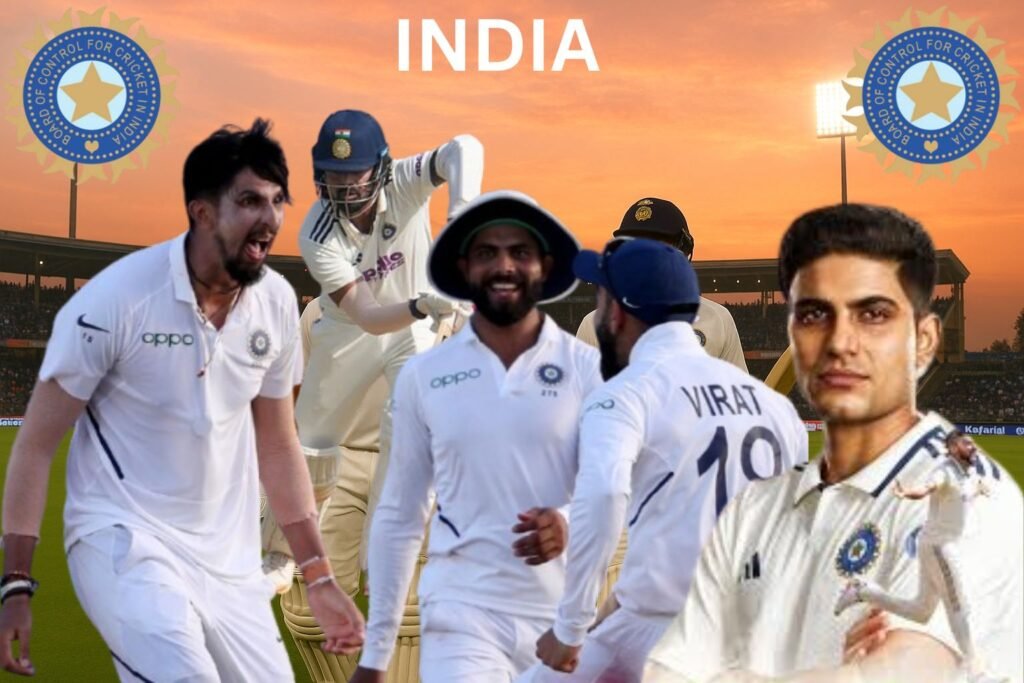
Session One: The Foundation of Fire
India’s openers — Rohit Sharma and Yashasvi Jaiswal — walked in to a standing ovation. Jaiswal, the young prodigy with fire in his eyes, had already impressed the world with a double century in the previous Test. Beside him, Rohit looked every bit the composed general — calm, confident, and unflappable.
West Indies opened with Kemar Roach from one end and Alzarri Joseph from the other. The first over set the tone — pace, bounce, and swing.
Rohit left the first ball, solidly defended the next, and flicked the third through midwicket — a boundary that drew cheers from the crowd and a nod from the dressing room.
Jaiswal started cautiously but soon unleashed a perfect straight drive off Roach, timing it so sweetly that even the bowler smiled.
For the first hour, India were untroubled. The scoreboard ticked like a metronome — steady, smooth, relentless.
By the first drinks break, India were 61/0, and the Caribbean bowlers looked searching for answers.
Joseph tried the short ball tactic, but Rohit’s pull shot was majestic — one bounce into the boundary boards. The West Indian captain rotated his bowlers, bringing on Gudakesh Motie, the left-arm spinner, as early as the 18th over. The pitch had started to grip faintly.
The plan nearly worked. Motie drew Rohit forward, the ball turning and bouncing, taking the edge — only for it to drop inches short of second slip. The sighs from the fielders echoed around the ground.
Just before lunch, Jaiswal raised his fifty with a stylish cut through backward point. The crowd erupted. At lunch, India were 119/0, both openers unbeaten, both looking set for something big.
Session Two: The Century Storm
If the first session was about control, the second was about command.
Rohit and Jaiswal began post-lunch with intent, reading the pitch perfectly, punishing anything short or wide.
The West Indies looked flat. The sun bore down on them, the fielders wiping sweat and exchanging weary glances.
In the 45th over, Rohit reached his half-century — a slow clap from the dressing room, a proud smile from coach Rahul Dravid.
But soon after, the moment everyone had been waiting for arrived.
Jaiswal, after 177 minutes of elegance, flicked Motie past midwicket for a single. The scoreboard flashed 100. The crowd rose, chanting his name — “Jaiswal! Jaiswal!”
He removed his helmet, raised his bat to the stands, and looked up at the sky — a silent thank you to destiny. It wasn’t just a milestone. It was a message — that youth had arrived to carry Indian Test cricket forward.
At the other end, Rohit joined the party, taking on the spinners. His sweep shots — classical, confident — brought flashbacks of Sachin Tendulkar’s dominance in this same stadium years ago.
By tea, India were 221/0. The scoreboard told one story, but the silence of the Caribbean bowlers told another.

Session Three: Drama, Resistance, and a Twist in the Tale
Cricket, however, never follows one script.
Right after tea, Shai Hope made a smart tactical change. He brought back Joseph for one last fiery spell with the old ball — and it worked.
Joseph’s first ball to Rohit seamed away slightly; Rohit pushed, and the edge flew to gully. OUT for 104. The crowd sighed — a standing ovation followed. Captain gone, but foundation built.
India 241/1.
Enter Virat Kohli. The stadium trembled with noise. Flags waved, phones flashed. Even West Indian players paused to absorb the atmosphere — it was that electric.
Kohli began cautiously, testing the bounce, defending solidly. Jaiswal, still smooth at the other end, continued rotating strike.
The pair put on 56 runs before Jaiswal finally fell — trapped LBW by Motie for 143. He reviewed, but replays showed the ball clipping leg stump. As he walked off, the entire Arun Jaitley Stadium stood — chanting his name, acknowledging the innings of a young man who batted like a veteran.
At 297/2, India were cruising. But the West Indies weren’t done.
Motie struck again — this time, trapping Shubman Gill (promoted to No. 4) for 18. Kohli remained calm, watching, waiting, calculating.
When the second new ball was taken at 80 overs, the light had started to fade slightly. The pinkish hue over Delhi’s winter sky gave the ground a cinematic aura.
Kohli on 47, Rahul on 22, looked set to close the day. But Joseph had other plans.
He bowled short, Kohli tried to pull, and the edge carried to fine leg. Caught.
Kohli gone for 49.
The crowd fell silent for a moment — not in disappointment, but in disbelief. The legend had looked set for another Delhi century.
India ended the day on 311/4, with Rahul (33*) and Iyer (11*) unbeaten.
Stumps.
The Scoreboard at Stumps, Day 1
| India 1st Innings | Runs | Balls | 4s | 6s |
| Y. Jaiswal | 143 | 258 | 18 | 2 |
| R. Sharma (C) | 104 | 186 | 11 | 1 |
| V. Kohli | 49 | 78 | 5 | 0 |
| S. Gill | 18 | 41 | 2 | 0 |
| K.L. Rahul | 33* | 66 | 4 | 0 |
| S. Iyer | 11* | 28 | 2 | 0 |
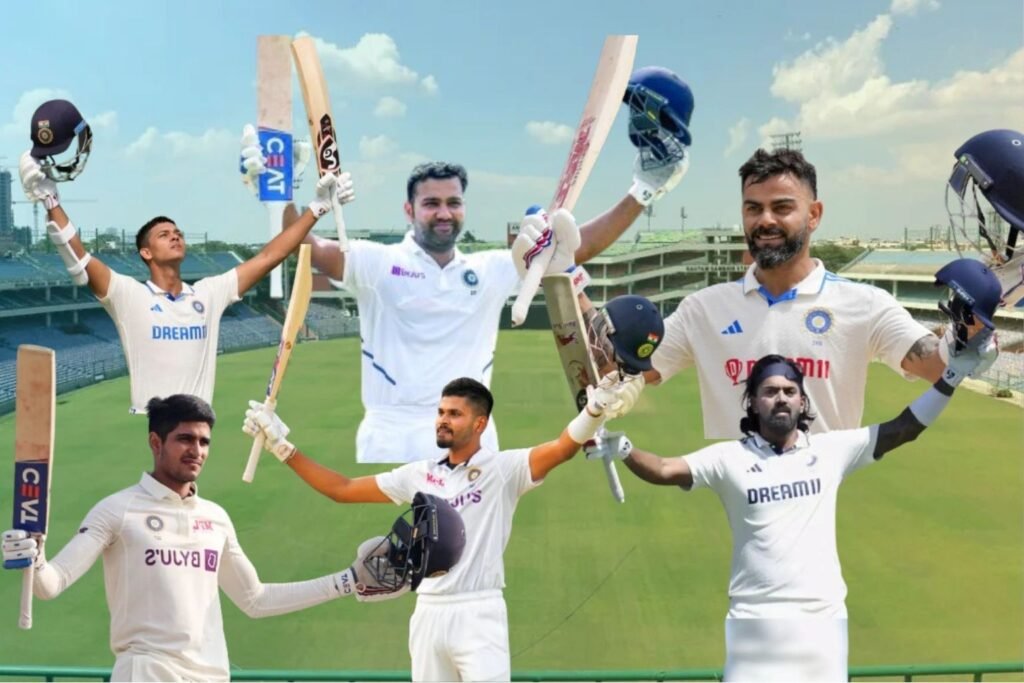
Extras: 8
Total: 311/4 (Day 1, 90 overs)
Bowling (West Indies):
Roach 0/54 (15), Joseph 2/63 (17), Holder 0/41 (12), Motie 2/79 (22), Chase 0/61 (15).
The Human Pulse: Beyond the Numbers
Cricket in Delhi has always carried a heartbeat. The echoes of crowd chants bouncing off old concrete stands, the mix of old and new — of legends remembered and futures being written.
On Day 1, India didn’t just dominate; they displayed the art of Test cricket in its purest form. No rush, no flash — just patience, precision, and partnership.
Rohit Sharma’s century was a masterclass in captaincy composure — how to lead not just with decisions, but with example. Jaiswal’s innings was the story of youth unafraid of legacy. His calm against pace, his confidence against spin, his shot selection — everything spoke of a maturity far beyond his years.
For West Indies, there was frustration, yes, but also effort. Alzarri Joseph bowled with heart, Kemar Roach with discipline, and Motie provided the only breakthroughs. Shai Hope’s field placements were brave — often attacking, occasionally experimental. But luck deserted him at crucial junctures.
Yet, what stood out most wasn’t statistics — it was emotion.
A small boy in the stands held a sign: “Rohit Uncle, make India proud.” When the Indian skipper raised his bat for the hundred, the boy jumped and screamed until he lost his voice. Moments like that are what Test cricket is built on — not instant gratification, but earned joy.
Expert Voices: What the Legends Said
Former Indian captain Sunil Gavaskar, speaking on-air, said:
“This was a day that showed how Test cricket still matters. Rohit and Jaiswal reminded us that time spent in the middle is still the best measure of greatness.”
Brian Lara, in the commentary box, smiled and added:
“Watching Jaiswal bat was like watching a younger version of Virat — fearless, disciplined, and hungry. He’s the future of Indian batting.”
Rahul Dravid, in the press conference later, was his usual calm self.
“We wanted to build partnerships. It’s the kind of pitch where one mistake can open the door. The boys showed great temperament today.”
West Indian coach Phil Simmons said:
“We had our chances — two dropped catches, one edge that didn’t carry. But we’ll fight. That’s what Caribbean cricket is about.”
The Atmosphere: A City’s Soul and the Stadium’s Echo
The Arun Jaitley Stadium holds stories. The roar that greeted Tendulkar’s 100th international hundred in 2012 still lingers in its walls. The stands where fans once watched Sehwag’s triple-century now welcomed a new hero in Jaiswal.
Vendors outside sold chai, samosas, and mini bats with players’ faces printed on them. A group of college students danced after Rohit’s century; another group, older and wiser, sat quietly, simply clapping in appreciation after every good shot.
As the sun dipped behind the Delhi skyline, the floodlights cast a golden glow on the field. The temperature dropped, but the energy did not. Every spectator knew they’d witnessed something special — the perfect Day 1 for a home Test.
Technical Takeaways: The Game Beneath the Game
From a cricketing perspective, India’s decision to bat first was tactical gold. The pitch played true, with little lateral movement. Spin was slow, and bounce was consistent.
Rohit and Jaiswal exploited that perfectly — they played late, close to the body, and attacked selectively. Their partnership of 241 runs was built on understanding and timing, not just power.
West Indies’ bowlers, especially Motie, will find assistance from Day 2 onwards. The cracks have begun to widen, and the morning moisture will disappear quickly. India will likely aim for a total near 500 to bat once and dominate.
The field placements from Hope showed aggression — two slips early, a short leg for the spinners — but he’ll need wickets fast tomorrow. Otherwise, India’s tail, known for resistance, could take the game away.
The Emotional Undercurrent: Between the Lines
Every Test has a soul, and this one belonged to the fans — those who still love the long game, the slow build, the mental battle.
You could see it in the face of the old man in the front row — tears in his eyes as he clapped for Rohit’s hundred. You could feel it in the young girl holding her father’s hand, whispering, “Papa, he looks like a superhero.”
When Jaiswal raised his bat, it wasn’t just applause — it was belief. Belief that in an era of T20 chaos, there’s still beauty in patience. That time spent defending, enduring, and trusting your technique is still rewarded.
The Road Ahead: What to Expect on Day 2
India will resume Day 2 at 311/4, and the focus will be on pushing past 450. Rahul and Iyer must convert their starts, and Rishabh Pant (playing as specialist batter post-injury return) will be crucial in adding flair to the middle order.
The West Indies will look for early breakthroughs. Joseph and Motie are key — the new ball in the morning could decide the momentum.
If India bat deep, West Indies could face two days of spin from Jadeja, Ashwin, and Kuldeep on a deteriorating pitch — a scenario no visiting team enjoys in Delhi.
Epilogue: The Poetry of Patience
As the crowd dispersed and the floodlights dimmed, there was a sense of calm satisfaction in the air.
Cricket, especially Test cricket, gives back not through noise but through depth.
Day 1 of the second Test wasn’t just about runs. It was about rhythm. About the way Rohit walked off — no fist-pump, just a gentle nod. About how Jaiswal’s smile lit up the stadium. About how the Caribbean players, despite the tough day, kept clapping after every good shot.
It was about the human side of the sport — effort, respect, endurance.
As Delhi slept under the winter sky, one thing was certain — the Test was alive, breathing, and beautifully balanced between artistry and attrition.
And somewhere in the quiet corners of the dressing rooms, both captains probably thought the same thing:
“Tomorrow, it begins again.”
The Heat of the Afternoon: The Indian Response
As the West Indies innings finally came to a halt at 212 all out, the atmosphere inside the Arun Jaitley Stadium shifted dramatically. The Caribbean supporters, scattered across the stands, had gone silent, their drums now subdued. Indian fans, on the other hand, stood and waved the tricolour, their voices merging into a single, echoing chant:
“India! India!”
The scoreboard might not have shown dominance yet, but it carried a subtle truth — India had seized control.
The players walked off for the lunch break, the dressing rooms buzzing with two very different emotions: relief on one side, quiet determination on the other.
When the teams returned, the Delhi heat had grown fiercer. The pitch shimmered like gold dust under the sun, and the cracks had started to open ever so slightly — a sign that batting wouldn’t remain easy for long.
Rohit Sharma and Shubman Gill, India’s openers, made their way to the crease amid thunderous applause. The crowd knew the task — blunt the new ball, weather the early storm, and lay the foundation for something strong.
The First Session After Lunch: Nerves and Class Collide
Kemar Roach began proceedings for the West Indies. His run-up was measured, his eyes sharp. He bowled with the intensity of a man carrying decades of Caribbean fast-bowling legacy — Ambrose, Walsh, Holding, Roberts — all those ghosts seemed to walk beside him.
The very first delivery angled in, kissed the seam, and straightened. Rohit left it, just inches from the off stump. The collective gasp from the audience set the tone — this was no easy pitch.
But Rohit Sharma, the master of calm under pressure, wasn’t to be rattled. The next over, when Roach overpitched, Rohit leaned in and drove through extra cover. The ball raced away — pure timing, no force. A roar followed.
Gill, at the other end, was watchful yet elegant. His balance, the way he let the ball come, was art in motion. But Jayden Seales, the young pacer, kept him honest — one ball jagged back sharply, beating Gill’s inside edge. The very next one, Gill leaned forward and punched it through mid-on for a confident boundary.
“That’s Test cricket, right there,” a fan shouted from the North Stand, as if voicing the thoughts of thousands.
The scoreboard ticked steadily. Rohit and Gill’s partnership crossed 50 in the 14th over. They had weathered the early movement, and the pitch, though tricky, began to ease slightly under their control.
But cricket, as ever, loves twists.
Seales, bowling from around the wicket, got one to seam away just enough — Rohit’s edge carried to second slip, and Alick Athanaze completed the catch.
Rohit walked off for 34, head high. The crowd applauded — not just the runs, but the intent, the leadership.
India 56/1.
The Arrival of Kohli: Silence, Then Chaos
And then, as if the stadium had been waiting for a cue, Virat Kohli appeared.
The cheer that followed shook the foundations of the old stands. This was his ground — Delhi, his birthplace, his fortress. Every inch of Arun Jaitley Stadium seemed to belong to him.
As he took guard, chants of “Kohli! Kohli!” echoed in rhythm. He looked up, tapped the pitch twice, adjusted his gloves, and stared at the bowler — eyes burning, expression calm.
The next delivery was on length, and Kohli met it with the straightest of bats. The sound of leather on wood was crisp, perfect. No runs. But the crowd applauded louder than if it had been a boundary.
From the other end, Gill continued in his own graceful rhythm. His drives, especially on the rise, were pure poetry. But he fell to a moment of indecision — flicking at a ball that held its line, only to edge it to the keeper.
Gone for 41.
India 92/2.
The West Indies sensed an opening. The fielders closed in, Hope shouted encouragements, and Roach found an extra yard of pace.
But Kohli was in no mood to gift wickets. Alongside Shreyas Iyer, he rebuilt the innings. Every defensive shot, every single stolen, carried the weight of patience — the kind of patience Test cricket demands but few modern players truly possess.
Tea Break: Balance in the Battle
At tea, India stood at 137/2. The deficit was still 75, but the momentum had swung firmly toward the hosts. Kohli was unbeaten on 38, and Iyer on 26.
Inside the Indian dressing room, Rohit and coach Rahul Dravid exchanged a quiet nod — they knew the value of survival in the last session on Day 1. The pitch, now dry and cracked, would only get harder to bat on. Every run tonight would count double tomorrow.
The Evening Session: Kohli’s Command
When play resumed, the lights began to take over the Delhi skyline. The shadows stretched long across the pitch, the air cooling slightly. The sound of drums, whistles, and chants returned to the stands, as if Delhi itself refused to sleep.
Kohli looked serene — every bit the artist at work. His drives through extra cover were textbook, his on-side flicks trademark. The West Indies bowlers, though disciplined, began to look weary.
Then came the moment of the day.
Holder bowled one just short of a length. Kohli leaned back, rolled his wrists, and pulled — clean, flat, and powerful. The ball crashed into the boundary board in front of the Members’ Pavilion. The crowd erupted in ecstasy. Cameras zoomed in on Kohli’s face — the intensity, the focus, the quiet fire.
As the 200 came up for India, Kohli reached his half-century — his 30th in Test cricket at home. He raised his bat, acknowledged the crowd, and whispered something under his breath. Perhaps a promise to himself.
Iyer, meanwhile, was content playing the perfect foil — rotating strike, frustrating bowlers, and occasionally punishing the loose one. Their partnership crossed 80, and India were firmly in control.
The Late Drama: One Ball, One Turn, One Twist
But cricket — ever the great dramatist — had one more act left for the day.
Gudakesh Motie, the left-arm spinner, came into the attack late in the evening. The pitch, now dry and powdery, offered grip and bounce.
In his third over, Motie tossed one up temptingly outside off. Iyer, looking to drive, misjudged the dip. The ball turned sharply, took the inside edge, and crashed into the stumps.
Gone for 46.
India 218/3.
A small silence fell over the crowd, but it was quickly replaced by polite applause. The day had been long, emotional, and perfectly balanced.
Ravindra Jadeja walked in as night approached. Kohli guided him calmly. The two ensured there were no further hiccups. When the umpires called stumps, India stood at 231/3, just 19 runs behind West Indies’ first innings total.
End of Day 1: Summary
The numbers told one story — but the emotions told another.
West Indies, spirited and determined, had shown discipline early on. Kemar Roach was relentless, Holder clever, and Motie dangerous in patches. But India, led by Kohli’s unbeaten 68 and Rohit’s early resistance, had found their rhythm.
Delhi’s crowd went home satisfied, the smell of roasted peanuts and chai still in the air, the echoes of applause still bouncing between the concrete walls.
For India, Day 1 was about control.
For the West Indies, it was about resilience.
For cricket, it was about beauty — that rare, timeless dance between bat and ball that only Test cricket can offer.
Player of the Day: Virat Kohli
Unbeaten on 68 at stumps, Kohli had done what he’s always done best — absorb pressure, play with grace, and inspire millions watching from home. Every shot carried the weight of legacy. Every glance toward the crowd reminded Delhi why he is their son, their hero, their heartbeat.
Captains’ Reflections
Rohit Sharma, in the post-day chat, said calmly:
“We wanted to restrict them below 250, and the bowlers did exactly that. The pitch is tricky, but our batters applied themselves beautifully. Still a long way to go — but we’re in a good position.”
Shai Hope, meanwhile, acknowledged the missed opportunities:
“We had them under pressure at 90 for two, but couldn’t maintain consistency. Tomorrow’s first hour is key — we need early wickets to get back in it.”
The Road Ahead: Day 2 Awaits
As players left the field, the floodlights bathed the pitch in a soft glow. Groundsmen began rolling the surface, their shadows stretching across the outfield. The Indian team huddled briefly before dispersing — quiet confidence on their faces.
The West Indies walked off slower, thoughtful, knowing they were still in the contest but would need brilliance to turn it again.
Delhi, as always, buzzed beyond the stadium walls. The city’s night was alive — honking traffic, food stalls sizzling, and cricket debates in every chai shop corner.
Some said India would dominate tomorrow. Others, that Motie’s spin might trigger a collapse. But one thing was certain — Test cricket was alive, thrilling, and deeply human once again.
Final Stumps Summary (Day 1 – Second Test, India vs West Indies, 2025)
Venue: Arun Jaitley Stadium, Delhi
Toss: West Indies won, chose to bat
West Indies 1st Innings: 212 all out
- Shai Hope – 71 (126)
- Alick Athanaze – 42 (85)
- Bumrah – 4/49
- Siraj – 3/51
India 1st Innings (Stumps): 231/3 (62 overs)
- Rohit Sharma – 34 (59)
- Shubman Gill – 41 (73)
- Virat Kohli – 68* (122)
- Shreyas Iyer – 46 (89)
- Roach – 1/44
- Motie – 1/32
India trail by 19 runs with 7 wickets remaining.
Epilogue: The Poetry of Patience
As the floodlights dimmed and the players retreated to their hotels, the murmurs of Day 1 lingered in the night air.
In a world obsessed with instant results, Test cricket still demanded patience.
It asked players to sweat for every run, to wait for every breakthrough, to survive every storm.
And today, under the fading Delhi sky, both teams — India and West Indies — had proven that the longest format of the game remains its purest.
Tomorrow would bring new heroes, new heartbreaks, and new hope.
But tonight, Day 1 belonged to the beauty of balance — a perfect beginning to a Test match that promised everything: tension, skill, emotion, and history.
more news :-Avatar: Fire and Ash (2025) – A Cinematic Inferno That Redefines Sci-Fi Storytellinghttps://blindspotnews.com/avatar-fire-and-ash/