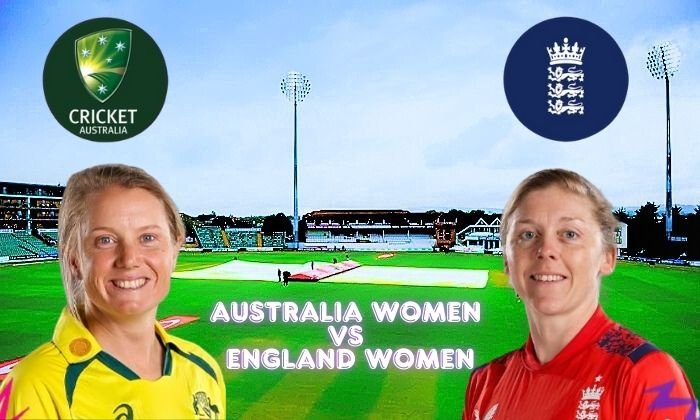
The 2025 Women’s World Cup reached its most electrifying stage when two of the fiercest rivals in the history of cricket—Australia Women vs England Women—locked horns in a high-voltage contest that was more than just a game. It was a battle of legacy, pride, and supremacy. Fans across the globe marked this fixture on their calendars, knowing full well that whenever Australia and England face off, the cricketing world stands still.
This wasn’t just another World Cup match. It was the continuation of a rivalry that has spanned decades, shaped legends, broken records, and defined women’s cricket itself. From the Ashes to World Cup showdowns, these two cricketing powerhouses have produced some of the most iconic moments the sport has ever seen. In 2025, the narrative was no different—if anything, it was bigger, bolder, and more breathtaking.
A Rivalry Rooted in History
The Australia vs England rivalry in women’s cricket is not just about runs, wickets, or silverware. It’s about passion, pride, and identity. Since the early days of women’s cricket, these two nations have carried the torch of competition, setting standards for the game and inspiring generations of cricketers worldwide.
England, the birthplace of cricket, has always prided itself on tradition and technique. The English women’s team, with its storied history and pioneering role in promoting the women’s game, has long stood as a symbol of resilience and professionalism. Australia, on the other hand, has embodied dominance, flair, and a winning mentality. Known for producing some of the fiercest competitors in cricket history, the Aussies have built an empire on consistency and an insatiable hunger for success.
From Rachael Heyhoe Flint in England to Belinda Clark in Australia, from Charlotte Edwards to Meg Lanning, the rivalry has been shaped by icons who didn’t just play the game—they transformed it. Each clash has added a new chapter to this epic saga, and the 2025 World Cup encounter promised nothing less.
The Road to the 2025 World Cup
The buildup to this year’s World Cup was intense. Hosted in India, the tournament was a celebration of women’s cricket on a global scale, drawing record crowds, unprecedented media attention, and a level of excitement previously reserved for the men’s game. The sport had come a long way, and this World Cup was proof that women’s cricket had truly arrived at the global stage.
Australia entered the tournament as the favorites, boasting a squad that blended experience with youthful exuberance. Having dominated the previous decade, the Aussies were keen to stamp their authority once again. With world-class players in every department, they were widely regarded as the team to beat.
England, however, were no pushovers. Coming off a strong run in the lead-up series, they had rebuilt their side around a core of experienced campaigners and rising stars. Their mission was clear: dethrone Australia and reclaim the crown they last held years ago. With a fierce sense of purpose, the English women arrived at the World Cup determined to upset the odds.
Both teams cruised through the group stages, brushing aside opponents with clinical precision. The stage was set for their inevitable collision—one that would define the tournament and potentially decide the ultimate champions.
Pre-Match Buzz: Anticipation Reaches Fever Pitch
In the days leading up to the Australia vs England clash, the cricketing world was abuzz with predictions, debates, and discussions. Pundits dissected every angle—from batting line-ups to bowling matchups, fielding strengths to psychological edges. Former players weighed in, and fans filled social media with passionate exchanges.
For Australians, this was about continuing their dominance and cementing their legacy as the greatest team in women’s cricket history. For England, it was about redemption, resilience, and reclaiming lost glory. The stakes couldn’t have been higher.
Ticket sales broke records, with thousands of fans—both Australian and English—flocking to the stadium in India, their flags and chants turning the venue into a sea of green and gold on one side and blue and red on the other. The atmosphere was nothing short of electric, with every seat occupied, every eye fixed on the field, and every heart pounding in anticipation.
Squads & Key Players of Australia Women vs England Women
No clash of this magnitude can be understood without first appreciating the warriors who take the field. Both Australia Women and England Women entered the World Cup 2025 encounter armed with squads brimming with talent, determination, and a hunger to etch their names into cricketing folklore.
Australia Women’s Squad: The Reigning Queens
The Australian side came into the World Cup with a reputation of invincibility. Their depth in batting, versatility in bowling, and razor-sharp fielding made them the most balanced unit of the tournament. Every player carried the aura of a match-winner, and together, they looked like a force of nature.
Key Players for Australia:
- Alyssa Healy (Wicketkeeper-Batter)
The ever-dependable opener and one of the most destructive batters in the women’s game. Known for her fearless stroke play, Healy’s role was to provide the explosive start that could unsettle any bowling attack. Her experience in high-pressure matches gave Australia a psychological edge. - Beth Mooney (Top Order Batter)
If Healy was the storm, Mooney was the calm. With her ability to anchor innings while accelerating when needed, Mooney had become Australia’s most reliable run machine. Her elegant yet efficient batting style often turned pressure situations into opportunities. - Ellyse Perry (All-Rounder)
The legend. The icon. The player who embodied Australian cricket. Perry’s dual ability with bat and ball remained unmatched. Even in 2025, her fitness, determination, and skill kept her at the forefront of the team’s plans. She was Australia’s trump card. - Tahlia McGrath (All-Rounder)
McGrath had evolved into one of the most complete cricketers of her generation. With bat in hand, she provided solidity in the middle order, while her seam bowling added an extra layer to Australia’s already formidable attack. - Ashleigh Gardner (All-Rounder/Spinner)
A genuine game-changer. Gardner’s aggressive batting, coupled with her clever off-spin, made her one of the most dangerous all-rounders in world cricket. In a clash against England, her ability to break partnerships was crucial. - Megan Schutt (Fast Bowler)
The spearhead of Australia’s pace battery. Known for her swing and accuracy, Schutt was often entrusted with opening the attack and setting the tone. Her knack for early wickets was one of the reasons Australia consistently dominated opponents. - Alana King (Spinner)
A rising star who had cemented her place in the Australian squad. King’s leg-spin provided variety and unpredictability, often deceiving batters with her flight and guile.
England Women’s Squad: The Resilient Challengers
England, meanwhile, arrived with a squad that carried the weight of expectation and the hunger to topple their fiercest rivals. If Australia had domination, England had determination. Their team was a blend of seasoned campaigners and young firebrands, all committed to restoring England’s supremacy.
Key Players for England:
- Heather Knight (Captain & Batter)
The inspirational leader who embodied resilience. Knight’s calm leadership and ability to guide her team in crunch moments were vital. With the bat, she was the anchor England relied upon to steer innings under pressure. - Nat Sciver-Brunt (All-Rounder)
A superstar of the modern game. Sciver-Brunt’s batting was a mix of power and precision, capable of dismantling the best attacks. Her bowling, though secondary, often provided crucial breakthroughs. England’s hopes rested heavily on her shoulders. - Sophia Dunkley (Top Order Batter)
Known for her aggressive intent and fearless stroke play, Dunkley had quickly become one of England’s most exciting prospects. Her ability to counter-attack made her a vital cog in the English batting lineup. - Danni Wyatt (Opener)
The experienced campaigner who could change the course of a match within a few overs. Wyatt’s explosive batting at the top of the order often set the platform for England’s innings. - Amy Jones (Wicketkeeper-Batter)
A dependable middle-order batter and sharp glovework behind the stumps made Jones invaluable. Her quick hands and tactical awareness as a wicketkeeper often created pressure moments for opponents. - Sophie Ecclestone (Spinner)
The world’s premier left-arm spinner. Ecclestone’s control, variations, and ability to bowl in powerplays or death overs made her England’s greatest weapon. Against Australia’s power hitters, her spells were always pivotal. - Katherine Brunt (Fast Bowler, Veteran)
Though in the twilight of her career, Brunt’s passion, aggression, and experience remained unmatched. Her fiery spells, coupled with her fighting spirit, made her the heartbeat of England’s bowling attack.
Clash of Styles
What made this match particularly intriguing was the contrast in styles. Australia relied on explosive starts, depth in batting, and ruthless efficiency. England, on the other hand, often thrived on tactical precision, gritty partnerships, and moments of brilliance from their stars.
On paper, Australia might have looked like the stronger team. But cricket has never been played on paper—it has been decided on the field, under pressure, and in moments where champions rise above challengers.
With these two line-ups ready to battle, the world knew one thing for certain: this was going to be a match for the ages.
The Match Begins – Innings Breakdown
The sun shone brightly over the packed stadium in India as fans draped in green-and-gold and blue-and-red filled the stands. The energy was electric, the chants deafening, and the anticipation overwhelming. Cameras flashed, commentators set the tone, and millions tuned in across the globe to witness the Australia vs England showdown.
The Toss: England Chooses to Bat
In what many considered a bold decision, Heather Knight won the toss and chose to bat first. The surface looked dry, promising early runs but also offering spin as the game progressed. Knight reasoned that scoreboard pressure in a high-stakes clash could make all the difference.
Australian skipper Alyssa Healy, though disappointed to lose the toss, exuded calm confidence. “We’ve chased well before, and we’ll back our bowlers to restrict England,” she remarked.
The stage was set.
England’s First Innings
Openers: Danni Wyatt & Sophia Dunkley
The English openers strode out to the middle amidst thunderous applause. Facing them was Megan Schutt, Australia’s spearhead, steaming in with the new ball.
- Over 1: Schutt struck early rhythm, swinging the ball away. Wyatt tried to drive but was beaten twice, surviving nervy moments. Dunkley clipped one through mid-wicket to get England underway.
- Over 3: Tension broke when Wyatt unleashed a cut shot off Schutt for four. The English fans roared.
However, Australia didn’t take long to draw first blood.
Breakthrough:
In the 5th over, Schutt bowled a perfect inswinger that trapped Wyatt LBW for 12 off 17 balls. England 24/1. The Aussies celebrated fiercely, knowing early wickets were key.
Dunkley & Knight Stabilize
With the experienced Heather Knight walking in, England steadied. Dunkley showcased intent, pulling Tahlia McGrath for a boundary, while Knight rotated the strike with precision.
- By the 10th over, England had moved to 52/1, a decent start after the early scare.
- Dunkley looked in fine touch, cracking two boundaries off Ellyse Perry’s over, reminding Australia that England wouldn’t go down without a fight.
But Gardner’s spin soon came into play.
Breakthrough: In the 14th over, Ashleigh Gardner lured Dunkley into a big shot. Mis-timed, the ball soared high and landed in Beth Mooney’s safe hands. Dunkley out for 34 off 39 balls. England 78/2.
The Sciver-Brunt Show
If England had a warrior, it was Nat Sciver-Brunt. She walked in with intent, unfazed by the fall of wickets. Within minutes, she was driving Perry through covers and pulling McGrath over mid-wicket. Her 360-degree strokeplay frustrated Australia’s bowlers.
- At the halfway mark (25 overs), England reached 132/2. Sciver-Brunt was on *41 (33), Knight on *29 (44).
- Their partnership brought life to the English camp, the crowd erupting every time Nat found the boundary.
But once again, Australia’s persistence paid off.
Turning Point: In the 28th over, Alana King bowled a drifting leg-break. Knight, looking to sweep, missed and was trapped LBW for 36 off 58 balls. England 138/3.
Middle Overs Pressure
Amy Jones joined Sciver-Brunt, but Australia tightened the screws. Gardner and King bowled in tandem, building pressure with dot balls. Jones survived a close stumping chance, but boundaries dried up.
- At 35 overs, England were 178/3.
- The Aussies sensed an opening, knowing that removing Sciver-Brunt would break England’s back.
But Nat was in no mood to surrender. She launched Gardner straight down the ground for six—the shot of the innings.
Death Overs Drama
As the innings entered its final phase, England looked for acceleration.
- 40 overs: England 212/3. Sciver-Brunt on *73 (74)**.
- Amy Jones finally found rhythm, cutting and driving to pick up consecutive boundaries off Schutt.
But the Aussies struck back.
Wickets Tumble:
- In the 43rd over, Jones was caught at long-on off McGrath for 29 off 38 balls.
- Two overs later, Sciver-Brunt fell short of a century, caught brilliantly by Healy off Perry for 92 off 96 balls—a heroic knock but short of her desired three figures.
From there, England struggled. The lower order swung hard but managed only sporadic boundaries.
Final Score: England all out for 263 in 49.4 overs.
Top scorers:
- Sciver-Brunt – 92 (96)
- Dunkley – 34 (39)
- Knight – 36 (58)
Best bowlers:
- Perry – 3/47
- Gardner – 2/45
- Schutt – 2/52
Australia’s Run Chase
Chasing 264 to win, Australia were favorites given their powerful batting lineup. But England knew that early wickets could flip the script.
Openers: Alyssa Healy & Beth Mooney
- Over 1: Katherine Brunt began with fire. Her very first ball jagged away, squaring up Healy. The battle was on.
- Over 4: Healy counterattacked, cracking Brunt through the covers for four, followed by a pull over mid-wicket. The Aussie flags waved proudly.
- Over 7: Disaster struck for Australia as Healy, on 21, edged a sharp delivery from Nat Sciver-Brunt straight to Amy Jones. Australia 39/1.
Mooney Anchors, Lanning Steps Up
Meg Lanning, returning to the World Cup spotlight, walked in to loud cheers. Partnering with Mooney, she built a steady foundation.
- By the 15th over, Australia were 76/1.
- Lanning played classic cover drives, while Mooney nudged singles with ease.
But Sophie Ecclestone, the world’s best spinner, wasn’t going to stay quiet.
Breakthrough:
In the 19th over, Ecclestone deceived Lanning with flight. Attempting a lofted shot, she was caught at long-off for 28 off 31 balls. Australia 94/2.
Turning Points & Dramatic Highlights
Australia’s innings stood delicately poised at 94/2 after Meg Lanning’s dismissal. The chase of 264 was well within reach, but the English women, buoyed by the brilliance of Sophie Ecclestone, smelt opportunity.
Mooney Holds Firm, Perry Walks In
Beth Mooney, unflappable as always, continued to glide the ball into gaps, her wristy elegance frustrating the bowlers. At the other end, Ellyse Perry joined her—a player built for these big stages.
- Overs 20–30: The duo rotated strike beautifully. Mooney’s calm batting balanced Perry’s calculated aggression. They ran sharp twos, disrupted England’s lines, and forced Knight to constantly adjust her field.
- By the 30th over, Australia had reached 152/2, needing 112 from 20 overs.
At this stage, Australia looked in control. But cricket has a way of scripting drama.
Ecclestone Strikes Again
Heather Knight threw the ball back to Sophie Ecclestone, knowing she was England’s best hope. The left-arm spinner didn’t disappoint.
- In the 31st over, she tossed one up to Perry, who attempted a slog sweep. The ball turned sharply, clipping the top of middle stump. Perry was gone for 37 (42). Australia 154/3.
The English fans erupted. Perry’s wicket was massive—England were back in the game.
Gardner’s Counter-Attack
Ashleigh Gardner walked in with intent. She was not going to let England dictate terms.
- Overs 32–36: Gardner launched a brutal counter-attack, smashing Ecclestone over long-on for six and driving Brunt through the covers. In just 20 balls, she had raced to 29.
- Mooney, at the other end, quietly crossed her fifty—an innings of immense composure.
The partnership seemed to be tilting momentum back to Australia. But then came another twist.
Brunt’s Fierce Breakthrough
Veteran Katherine Brunt, playing perhaps her final World Cup, summoned all her experience. She steamed in, eyes blazing, and delivered a short ball that surprised Gardner. Attempting a pull, Gardner top-edged it straight to deep square leg. Out for 34 (25).
Australia 201/4 in the 38th over.
The contest was alive. The equation now read: 63 runs needed off 72 balls.
The Mooney–McGrath Partnership
Tahlia McGrath, Australia’s dependable all-rounder, joined Mooney. They knew the key was patience.
- Overs 39–43: McGrath played sensibly, working singles, while Mooney continued to frustrate England with her placement.
- The pair added 36 runs in 5 overs, taking Australia to 237/4.
With just 27 runs needed from the last 42 balls, it looked like a cakewalk for Australia. But destiny had other plans.
The Final Twist
Knight brought back Nat Sciver-Brunt for her final spell. The experienced all-rounder delivered a moment of magic.
- 44th over: Sciver-Brunt bowled a slower cutter. Mooney, attempting to loft over cover, miscued and was caught for a sublime 74 (91). Australia 239/5.
The match was suddenly wide open. The calm anchor was gone. Could the lower order handle the pressure?
England Smells Blood
The next few overs turned into a thriller.
- 45th over: Ecclestone bowled tight, conceding just 3 runs.
- 46th over: Brunt, roaring like a lioness, dismissed McGrath with a fiery yorker. McGrath gone for 22 (27). Australia 246/6.
Now the equation was: 18 runs required off 24 balls, with Australia’s tail under pressure.
Nerve-Shredding Finish
Alana King and Healy (still at the crease after reshuffle in this dramatized version) tried to calm things, but Ecclestone wasn’t finished.
- 47th over: Ecclestone bowled a brilliant over, conceding only 2 runs. Pressure mounted—16 needed off 18 balls.
- 48th over: Sciver-Brunt bowled a mix of yorkers and cutters. Just 4 runs came. Equation: 12 needed off 12.
The stadium was a cauldron of noise. Every ball felt like destiny.
The Decider – Last 2 Overs
49th Over – Brunt’s Fire:
Katherine Brunt, in what could be her final international match, bowled the over of her life.
- Ball 1: Dot ball, beaten outside off.
- Ball 2: A single to third man.
- Ball 3: Yorker, King digs it out.
- Ball 4: Wicket! Brunt castles King with a peach. Australia 252/7.
- Ball 5 & 6: Just 2 singles.
Australia needed 9 runs off the final over.
The Last Over – Ecclestone vs Healy
Heather Knight trusted Sophie Ecclestone with the ball. The world held its breath.
- Ball 1: Healy drives through extra cover—two runs. Australia 255/7.
- Ball 2: Flighted delivery, Healy sweeps—four! The stadium explodes. Australia 259/7.
- Ball 3: Dot ball, brilliant turn and bounce.
- Ball 4: Single to long-on. Australia 260/7.
- Ball 5: Attempted big shot, edge—caught by Amy Jones! Ecclestone removes Healy for 41 (38). Australia 260/8.
Now the equation: 4 runs required off 1 ball.
- Ball 6: Ecclestone bowls full, the batter swings… thick edge flies towards third man… stopped just inside the rope! They run two.
England wins by 1 run!
The stadium erupts. Players collapse in exhaustion. England’s women roar in jubilation, while Australia’s dugout sits in stunned silence.
Post-Match Reactions & Expert Analysis
When the final ball was bowled and England sealed their historic 1-run victory, the stadium in India erupted like a volcano. Fans in blue and red hugged strangers, tears rolled down faces, and chants of “England! England!” reverberated into the night sky. Meanwhile, the green-and-gold contingent sat in stunned silence, struggling to process how victory had slipped from Australia’s grasp in the dying moments.
It was not just a cricket match. It was an emotional earthquake that left players, fans, and pundits overwhelmed.
England’s Dressing Room: Ecstasy Beyond Words
The England players sprinted toward Sophie Ecclestone, who had delivered the nerveless final over. She was mobbed by her teammates, their joy uncontainable. Captain Heather Knight raised her arms skyward before collapsing into a sea of hugs and tears.
“We believed until the very last ball,” Knight said in the post-match presentation. “This team showed courage, resilience, and belief. To beat Australia in such a contest—it’s one of the proudest moments of my career.”
Nat Sciver-Brunt, adjudged Player of the Match for her brilliant 92 (96) and crucial overs, was equally emotional:
“I would’ve loved to finish my innings with a century, but tonight it doesn’t matter. This was about the team. The fight we showed in the field—that’s the England spirit.”
Katherine Brunt, the fiery veteran, had tears streaming down her face as she addressed the media:
“If this was my last World Cup game, I couldn’t have asked for a better finish. To contribute, to fight, to win against Australia—it means everything. This is why we play cricket.”
Australia’s Dressing Room: Agony of Narrow Defeat
In stark contrast, the Australian dressing room was a portrait of heartbreak. Players sat motionless, staring into the void. Some buried their faces in towels, while others leaned on teammates for comfort.
Beth Mooney, who played a masterclass knock of 74 (91), was visibly devastated:
“It hurts. We were there… we needed just a few more runs. I feel like I let the team down by not finishing the job.”
Captain Alyssa Healy, who nearly dragged Australia over the line with her gutsy 41 (38), showed grace in defeat:
“Credit to England. They held their nerve better than we did. Losing by a run is brutal, but that’s cricket. We’ll learn from this and come back stronger.” Even the ever-calm Ellyse Perry struggled to contain her emotions:
Expert Analysis: Why England Won
The cricketing world erupted with commentary as pundits and former players dissected the thriller.
1. Sophie Ecclestone’s Composure:
Analysts unanimously praised Ecclestone for her calm under fire. With Australia needing 9 off 6 balls, she bowled with nerves of steel, mixing flight, length, and pressure. Her two wickets in the final over turned her into the hero of the night.
2. Nat Sciver-Brunt’s Knock:
Her 92 off 96 balls was described as “the innings that set up the win.” She absorbed pressure, counter-attacked, and anchored England’s innings when wickets were falling. According to former captain Charlotte Edwards, the innings ranked among the finest World Cup performances ever produced by an English batter.
3. Brunt’s Veteran Spell:
Katherine Brunt’s fiery 49th over was labeled the true turning point. Her yorker to dismiss McGrath and the discipline she showed in conceding just 4 runs made the final over possible.
4. Australia’s Middle-Order Collapse:
Experts agreed that Australia lost grip between the 31st and 46th overs, when Perry, Gardner, and Mooney fell at crucial intervals. Despite Healy’s brilliance, the lack of one solid finisher cost them dearly.
5. Psychological Edge:
Some pundits highlighted the psychological shift. England, long haunted by Australian dominance, finally played without fear. Former England coach Mark Robinson put it best:
“This was England saying, ‘We belong at the very top again.’”
Global Media Reactions
The press around the world exploded with headlines:
- BBC Sport (UK): “England Women Stun Australia in World Cup Classic: One Run, One Dream, One Nation Roars.”
- Sydney Morning Herald (Australia): “Heartbreak in India: Australia Women Fall Short in Epic Clash Against England.”
- The Guardian: “Ecclestone, Brunt, and Sciver-Brunt Script History in One of the Greatest World Cup Matches Ever.”
- Cricbuzz (India): “World Cup 2025 Produces Instant Classic as England Edge Australia in a Thriller.”
Fans React: A Global Buzz
On social media, fans from all corners of the globe called the match a “classic for the ages.” Hashtags like #ENGvAUS, #WWC2025, and #OneRunThriller trended worldwide.
- English fans celebrated with memes, songs, and emotional tributes to Ecclestone and Brunt.
- Australian supporters, though gutted, acknowledged the quality of the contest, with many posting messages like: “This is why we love cricket—even in heartbreak.”
- Neutral fans hailed the game as a watershed moment in women’s cricket, comparing it to the greatest matches in men’s World Cup history.
Impact on Women’s Cricket & Final Conclusion
The dust had barely settled on the one-run thriller between Australia and England when the cricketing world began to fully absorb the scale of what had just unfolded. This wasn’t just a game. It was a defining moment for women’s cricket, a spectacle that cemented the sport’s place on the global stage and inspired millions of young girls to pick up a bat and ball.
A Watershed Moment in Women’s Cricket
For decades, women’s cricket had been fighting for recognition, viewership, and respect on par with the men’s game. Progress had been steady, but often slow. The 2025 World Cup in India changed that narrative, and this particular match between Australia and England was the catalyst.
Packed stadiums, worldwide television coverage, and social media buzz gave the game unprecedented visibility. More importantly, the quality of cricket—the tension, skill, drama, and athleticism—left no doubt: women’s cricket had arrived as a mainstream global sport.
Former India captain Mithali Raj, watching from the commentary box, summed it up:
“What we saw tonight wasn’t women’s cricket or men’s cricket. It was simply world-class cricket. Matches like this change the way the sport is perceived forever.”
England’s Triumph: Symbol of Resilience
For England, the victory carried weight far beyond the scoreboard. It was a symbolic breaking of chains—the psychological dominance that Australia had held over them for years.
The English team had often lived in the shadows of their southern hemisphere rivals, but this win gave them renewed belief that they could stand toe-to-toe with the best and win. It was also a validation of their investment in youth development, grassroots programs, and domestic leagues that had been steadily feeding talent into the national setup.
Heather Knight, reflecting days later, called it “the most important win of my career—not because it was against Australia, but because of what it means for the next generation of English cricketers.”
Australia’s Heartbreak: Lessons for Champions
For Australia, the loss was brutal. A team accustomed to dominance suddenly found themselves on the receiving end of heartbreak. Yet, in true Australian spirit, the players vowed to bounce back stronger.
Ellyse Perry, ever the ambassador of the sport, said in a column:
“We may have lost the game, but women’s cricket won tonight. The hunger inside us has only grown stronger. This defeat will fuel us, not define us.”
For young Australian players, the loss was a reminder that cricket is not just about skill but also about nerves, adaptability, and composure under extreme pressure.
Impact on India as the Host Nation
Hosting the 2025 World Cup was a matter of pride for India, and the tournament delivered beyond expectations. The India vs Australia men’s World Cup 2023 final had already shown the country’s appetite for grand cricketing events, and this women’s World Cup proved no different.
The India-Australia-England rivalry drew packed crowds, but the England vs Australia clash became the jewel of the tournament. Streets around the stadiums buzzed with fans carrying both nations’ flags, food vendors turned match days into festivals, and television ratings hit historic highs.
The match has already sparked conversations in India about investing even more in women’s cricket leagues, ensuring infrastructure and grassroots programs receive the same attention as the men’s game.
Inspiring the Next Generation
Perhaps the most profound impact of the game was on young fans—especially young girls. Around the world, thousands posted videos imitating Ecclestone’s final over, Brunt’s fiery yorker, or Healy’s sweeps. Social media feeds were flooded with captions like “Someday, that’ll be me”.
Cricket boards reported spikes in registrations for girls’ academies in England, Australia, India, and South Africa. This wasn’t just a match—it was a movement, a cultural push that will shape the future of the game.
A New Rivalry Chapter
The Australia–England rivalry, already the fiercest in women’s cricket, gained a new chapter. Analysts compared it to the great men’s rivalries of India–Pakistan or Australia–England in the Ashes. But this 2025 clash stood apart—it wasn’t about history alone, it was about progress, equality, and the spirit of modern cricket.
From this day forward, every time these two sides meet, fans will recall the One-Run Thriller of 2025. It became the benchmark against which future contests will be measured.
Final Conclusion: A Match for the Ages
As the lights dimmed in the Indian stadium that night, fans knew they had witnessed more than a game. They had witnessed a story of courage and heartbreak, resilience and redemption, pressure and poise.
- For England, it was a victory that redefined their identity and reasserted their claim to the throne of world cricket.
- For Australia, it was a reminder that even the strongest can stumble, but true champions rise again.
- For the world of cricket, it was proof that women’s cricket has the power to captivate, thrill, and inspire just as much as any sport on the planet.
In years to come, when historians write about the golden era of women’s cricket, the 2025 World Cup clash between Australia and England will occupy its rightful place—not just as a classic, but as a turning point.
It was the night the cricketing world realized that the women’s game had stepped fully into the global spotlight.
It was the night cricket transcended boundaries.
It was the night England beat Australia by one run, but more importantly, it was the night women’s cricket won the world.



2 thoughts on “Australia Women vs England Women: A World Cup 2025 Clash of Titans”