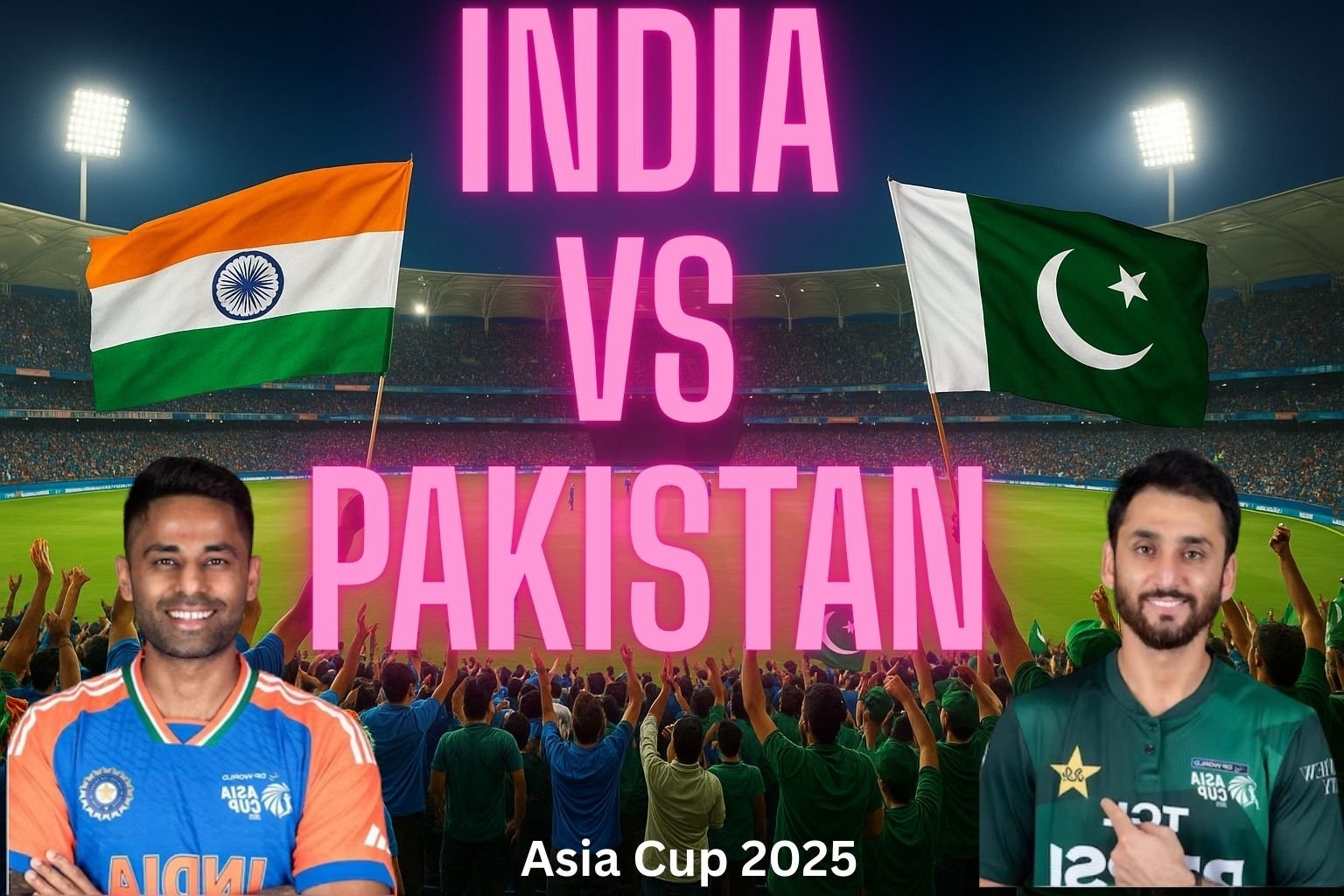
The Asia Cup has always carried an aura of drama, passion, and high-octane cricket, but nothing compares to the match when India vs Pakistan lock horns. The 2025 edition of the tournament has once again delivered the most anticipated fixture in world cricket: India versus Pakistan. This clash goes far beyond boundaries, runs, and wickets—it is about pride, history, politics, and above all, the raw emotion of millions of fans on both sides of the border and across the globe.
As the teams lined up under the bright lights of the Dubai International Cricket Stadium, the roar from the stands made it clear—this wasn’t just another cricket match. It was the match.
The Build-Up: Hype, Anticipation, and Pressure
Whenever India and Pakistan are drawn into the same group in a tournament, the world takes notice. Tickets are sold out within minutes, broadcasters prepare for record viewership, and social media trends explode with predictions and banter.
The lead-up to the 2025 Asia Cup clash was no different. Cricket experts debated team combinations for weeks. Fans flooded airports to send off their heroes with chants of “Jeet ke aana!” and “Pakistan Zindabad!” Political leaders, Bollywood celebrities, and sports icons added fuel to the hype with messages of support.
This fixture is always layered with pressure. Indian players carry the weight of over a billion people hoping for glory, while Pakistan’s cricketers see this match as a chance to etch their names in history.
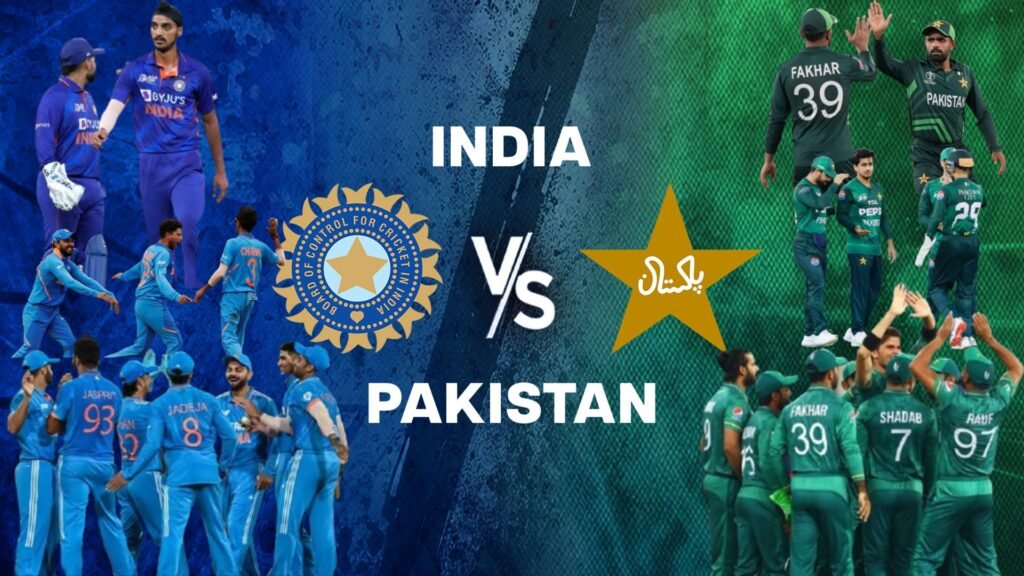
Historical Context: India vs Pakistan
The India vs Pakistan rivalry is steeped in history, beginning in 1952 when Pakistan toured India for the first time. Since then, political tensions have often interrupted cricket ties, but global tournaments like the Asia Cup and ICC World Cups have kept the rivalry alive.
From Javed Miandad’s last-ball six in Sharjah in 1986 to Virat Kohli’s unforgettable T20 innings in Melbourne in 2022, these encounters have produced legendary moments. Every generation of fans has its own memory of heartbreak or triumph from these contests.
For players, too, the India-Pakistan match is career-defining. A great innings or a match-winning spell in this fixture can immortalize a cricketer, while failure often lingers in public memory for years.
The Atmosphere in Dubai
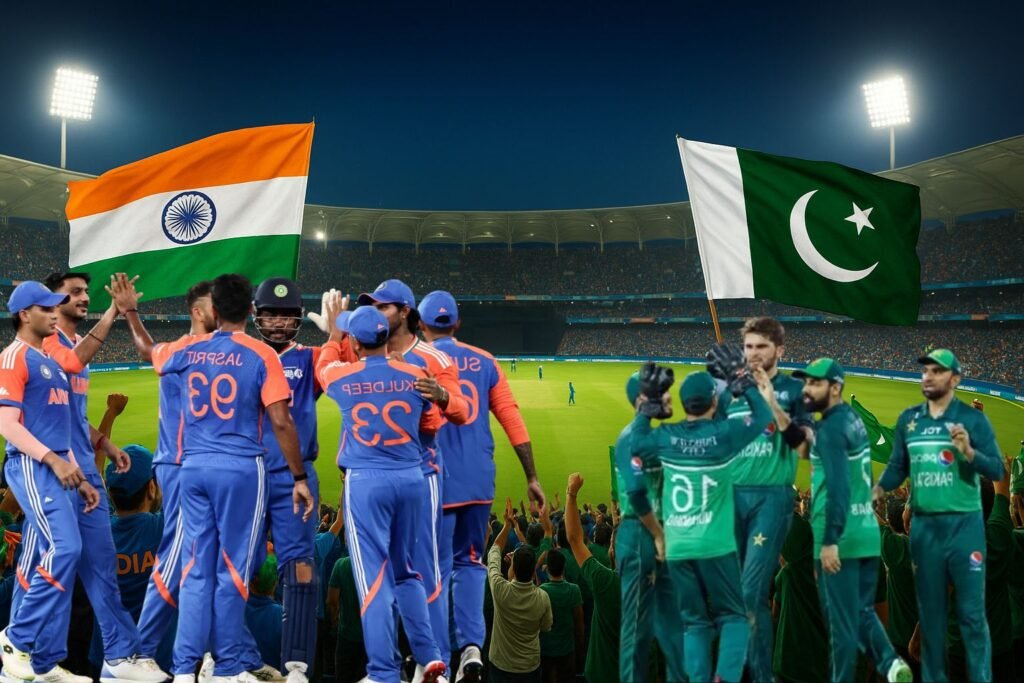
The Dubai International Cricket Stadium was a sea of color. On one side, tricolor flags waved proudly, chants of “India, India!” echoing across the desert night. On the other, green flags fluttered as “Pakistan, Pakistan!” reverberated with equal intensity.
Security was tight, but the atmosphere remained festive. Families, expats, and passionate fans flew in from across the globe—London, Toronto, Sydney, New York—to witness history. For many, attending an India-Pakistan game live is a once-in-a-lifetime dream.
Broadcasters captured the emotions perfectly: children with painted faces, old fans recalling past encounters, and nervous parents clutching prayer beads.
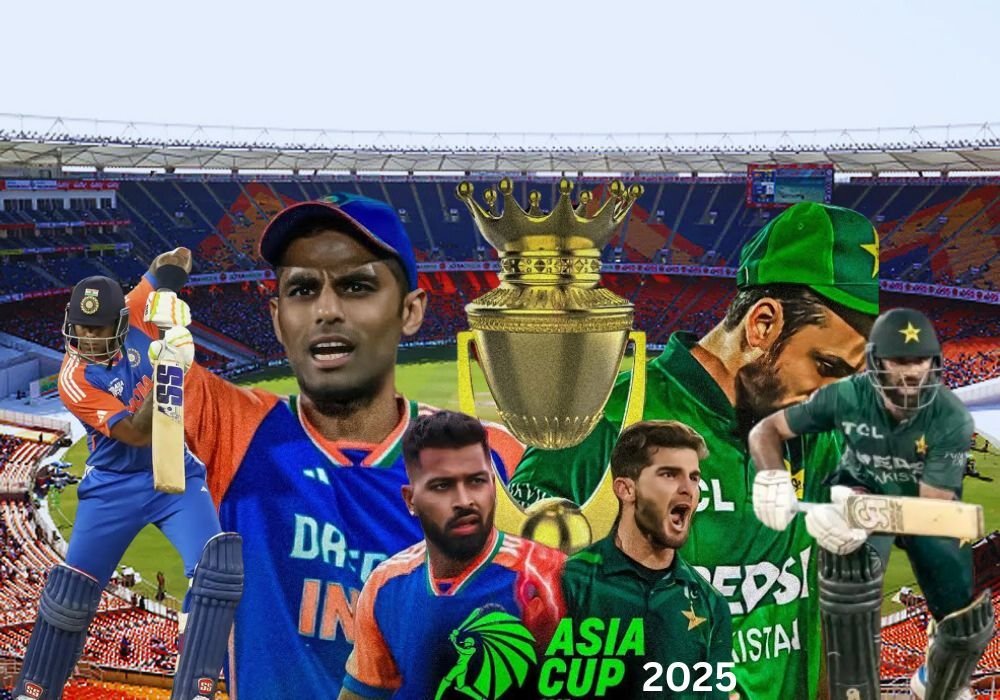
Team Preparations
India’s Camp
India entered the game with a strong squad blending youth and experience. Rohit Sharma, the veteran opener, provided stability at the top, while young stars like Shubman Gill and Yashasvi Jaiswal promised aggression. Virat Kohli, despite being in the twilight of his career, remained the heartbeat of the batting order.
The Indian bowling attack was spearheaded by Jasprit Bumrah, whose yorkers remain a lethal weapon, along with Mohammed Siraj and Kuldeep Yadav in the spin department.
Coach Rahul Dravid emphasized calmness: “It’s just a cricket match. Focus on your roles, play as a team.” But everyone knew the emotions ran deeper.
Pakistan’s Camp
Pakistan, meanwhile, boasted one of the world’s most dangerous pace attacks. Shaheen Shah Afridi, Haris Rauf, and Naseem Shah formed a trio that could rattle any batting lineup. Skipper Babar Azam carried the hopes of the nation on his shoulders, supported by Fakhar Zaman and Mohammad Rizwan.
Coach Gary Kirsten, who had once guided India to World Cup glory in 2011, now plotted Pakistan’s strategy. His mantra was clear: “Discipline in bowling, partnerships in batting.”
The Toss and Lineups
Under clear skies and perfect conditions for cricket, the toss became a crucial moment. Rohit Sharma called correctly and chose to bat, banking on scoreboard pressure in such high-stakes games.
India XI: Rohit Sharma (c), Shubman Gill, Virat Kohli, Shreyas Iyer, Rishabh Pant (wk), Hardik Pandya, Ravindra Jadeja, Kuldeep Yadav, Jasprit Bumrah, Mohammed Siraj, Arshdeep Singh.
Pakistan XI: Babar Azam (c), Fakhar Zaman, Mohammad Rizwan (wk), Saud Shakeel, Iftikhar Ahmed, Shadab Khan, Shaheen Shah Afridi, Haris Rauf, Naseem Shah, Mohammad Nawaz, Usama Mir.
First Innings: India’s Batting Drama
India started cautiously. Rohit Sharma stroked a few elegant boundaries, but Shaheen Shah Afridi struck early with a trademark inswinger that uprooted Gill’s stumps. The roar from Pakistan fans shook the ground.
Kohli walked in, and the stadium erupted. Every ball he faced was greeted with deafening cheers or boos, depending on which side of the stands you sat in. Kohli responded with classic drives, his timing immaculate.
Rohit and Kohli built a steady partnership, but Pakistan’s bowlers kept things tight. Haris Rauf dismissed Rohit with a short ball, leaving India at 80/2.
The middle order struggled against disciplined bowling. Shreyas Iyer fell cheaply, and suddenly India was wobbling. But Rishabh Pant, with his fearless stroke play, counterattacked. A six over midwicket off Shadab Khan had the crowd gasping.
Hardik Pandya joined Pant, and together they lifted India past 250. Pant’s aggressive 75 and Pandya’s composed 55 were crucial. Bumrah added a few handy runs at the end, taking India to 278/8 in 50 overs—a competitive but not unassailable total.
Second Innings: Pakistan’s Chase
Pakistan began the chase with Fakhar Zaman smashing boundaries. Bumrah, however, had other ideas. His early breakthroughs removed Zaman and Rizwan, silencing Pakistan’s fans.
At 30/2, Babar Azam took charge. Calm and composed, he anchored the innings. His cover drives were poetry in motion, and he rotated strike beautifully. Saud Shakeel provided support, frustrating Indian bowlers.
The game tilted when Kuldeep Yadav trapped Shakeel lbw and then dismissed Iftikhar Ahmed in quick succession. Pakistan slumped to 120/4.
The match became tense. Every dot ball was celebrated like a wicket; every single run brought relief.
Babar reached a classy fifty, but India’s bowlers kept chipping away. When Siraj dismissed Babar for 68, Pakistan’s hopes dimmed.
Yet Shadab Khan and Shaheen Afridi fought back bravely, adding vital runs. The equation came down to 30 needed from 18 balls. The crowd was on its feet.
Pandya bowled a brilliant over, conceding just six runs. Bumrah returned for the penultimate over and yorked Shaheen. Pakistan needed 18 off the final six balls.
Arshdeep Singh, entrusted with the last over, held his nerve. Despite a six from Haris Rauf, India clinched the win by 8 runs. The stadium erupted—Indian fans danced, while Pakistan fans sat stunned.
The Aftermath: Emotions Overflow
Indian players hugged each other, smiles breaking across their faces. Kohli pumped his fists, Pant was mobbed by teammates, and Rohit lifted Bumrah in delight.
For Pakistan, heartbreak was evident. Babar Azam looked dejected but dignified. “We fought hard, but small mistakes cost us,” he admitted at the post-match ceremony.
Rohit Sharma credited the team’s composure: “Against Pakistan, it’s never easy. But we trusted our process and held our nerves.” Pant was named Player of the Match for his counterattacking 75. “I just wanted to express myself,” he confessed, a smile breaking through.
The Bigger Picture
The India-Pakistan match once again proved why it is the biggest spectacle in cricket. Over 1.2 billion viewers tuned in globally, making it one of the most-watched sporting events of the year.
Beyond numbers, the game showcased the spirit of cricket. Players from both teams shared handshakes and smiles, showing respect despite the fierce competition. For fans, it was a night of unforgettable memories.
Conclusion: A Rivalry That Unites and Divides
The 2025 Asia Cup clash between India and Pakistan will be remembered as another classic. It had everything—drama, skill, pressure, and emotions. While India emerged victorious, the real winner was cricket itself.
For fans, these matches are not just about runs and wickets; they are about identity, pride, and stories passed down generations. The rivalry continues to capture the imagination of the world, and as long as cricket exists, India versus Pakistan will remain its most cherished contest.



2 thoughts on “India vs Pakistan in Asia Cup 2025: A Rivalry Beyond Cricket”